“Without reproducibility, you have nothing”

High-precision mechatronics is one of the strengths of the region. To maximize the system performance, it is crucial to have a good metrology and calibration strategy. “Think ahead,” advises Rens Henselmans, teacher at High Tech Institute. “And beware what is really needed.”


Suppose you want to build a machine that can drill a hole in a piece of metal. The holes have to be drilled with such a level of accuracy that, once drilled, two separate pieces will fit perfectly together and can be connected with a dowel. What would that machine look like? And how will you reach the required precision? When you drill both holes slightly skewed in the same way, the pin will probably still fit. But if the deviation is not the same from one piece to another, you are screwed. And what if you place two drilling machines next to each other and combine their outputs; what will be the requirements then? Or more extreme, what if you buy the first part in China and the second in the US, what measures are necessary to ensure the dowel fits?

Even in an example as simple as drilling a hole, it turns out that it isn’t at all trivial to reach a superhigh level of accuracy. Parameters such as measurement uncertainty, reproducibility and traceability must be well defined. If you haven’t mastered that as a system designer, you can forget about accuracy.

The term accuracy is often misused, says Rens Henselmans, CTO of Dutch United Instruments and teacher at High Tech Institute. “It is a qualitative concept: something is accurate or not. But there is no number attached to it,” he explains. That in itself is not a bad thing, he has experienced, “as long as everyone knows what is meant. Usually, it concerns the measurement uncertainty. That is, a certain value plus or minus one standard deviation.”

Rens Henselmans: ‘You can’t add calibration in your system afterwards.’


The meter

Reproducibility is often mixed-up with repeatability. The latter term describes the variation that occurs when you repeat processes under exactly the same conditions. “Same weather, same time of day, same history,” says Henselmans, summing up the list of boundary conditions. “Reproducibility is the same variation, but under variable conditions, such as a different operator or even a different location. It is the harder version of repeatability since more factors are in play.” However, that system requirement is essential. “Without reproducible behavior, you have nothing,” declares Henselmans. “If your machine doesn’t always do the same thing, you can’t correct or calibrate system errors. Reproducibility is the lowest limit of what your machine will ever be able to do, if you could calibrate the systematic errors perfectly.”

Then traceability. “Internationally, we have made agreements about the exact length of a meter,” says Henselmans. “At the Dutch measurement institute NMI, they have a derivative of this, and every calibration company has a derivative of that. The deeper you get into the chain, the greater the deviation from the true standard and therefore the greater the uncertainty. When you present a measurement with an uncertainty, you should actually indicate how the uncertainties of all parts in the chain can be traced back to that one primary standard. Very simple, but it is often forgotten when talking about accuracy.”

Fortunately, that is not always necessary. “When you describe a wafer, it doesn’t matter at all whether or not the diameter of that wafer is exactly 300 mm,” says Henselmans. “The challenge is to get the patterns neatly aligned. And even if the pattern is slightly distorted, it’s not disastrous, as long as that distortion is the same in every layer. It only gets tricky when you want to do the next exposure on a different machine, or even on a system from another manufacturer. Then they must at least all have the same deviation. Gradually, you come to the point that you want to track everything back to the same reference and thus ultimately to the meter of the NMI.”


Common sense

What is really needed, depends strongly on the application and on the budget you are given as a designer. “Technicians are prone to want too much and to show that they can meet challenging requirements. But that often makes their design too expensive,” warns Henselmans. His company, Dutch United Instruments, is developing a machine to measure the shape of aspherical and free-form optics, based on his PhD research from 2009. “At the start of that project, we wanted to achieve a measurement uncertainty of 30 nanometers in three directions. At some point, the penny dropped. Optical surfaces are always smooth and undulating. If you measure perpendicular to the surface with an optical sensor, an inaccuracy in that direction is a one-to-one measurement error. That’s where nanometer precision is really needed. But parallel to the surface, you don’t measure dramatical differences. Laterally, micrometers suffice. That insight suddenly made the problem two-dimensional instead of three-dimensional.”

During the training, Henselmans regularly uses the optics measuring machine from his own company, Dutch United Instruments, as an example.

So always use common sense when thinking about accuracy. “It is okay to deviate from the rules, as long as you know what you are doing,” says Henselmans. The required knowledge comes with experience. “You learn a lot from good and bad examples.” That is why Henselmans uses many practical examples during the training ‘Metrology and calibration of mechatronic systems’ at High Tech Institute, including his own optics measuring machine and a pick-and-place machine. “We do a lot of exercises and calculations with hidden pitfalls so participants can learn from their own mistakes.”


Abbe

As for the metrology in your machine, you have to think carefully about where to place the sensors. “Think of a caliper,” says Henselmans. “The scaling there is not aligned with the actual measurement. So, if you press hard on those beaks, they tilt them a bit and you get a different result. This effect occurs in almost all systems, even in the most advanced coordinate measuring equipment. Between the probe and the ruler in those machines you’ll find all kinds of components and axes that can influence the measurement.”

Bringing awareness to these effects is what Henselmans calls one of the most important lessons of the training. “It comprises the complete measurement loop with all elements that contribute to the total error budget,” he explains. Generally speaking, you want to keep that loop small and bring the sensor as close to the actual measurement as possible. “Unfortunately, there is often a machine part or a product in the way which makes it difficult to comply with that Abbe principle. Also, you should realize that you are not alone in the world. The metrologist might indeed prefer short distances to achieve the highest accuracy according to the Abbe principle. The dynamics engineer, however, would prefer to measure in line with the center of gravity, otherwise all kinds of swings will disrupt his control loops. The metrologist will argue that these oscillations are interesting precisely because they influence system behavior. Together, they have to find the right balance.”

Making that decision is one of the discussion points in the course. One important aspect of this discussion is the need to have sufficient knowledge of the various sensors, and their advantages and disadvantages. During the training, interferometers, encoders and vision technology, among others, are therefore explained by specialists.


Reversed spirit level

Once you’ve got the metrology and reproducibility in your system in order, it’s time for calibration. “To correct for systematic errors,” Henselmans clarifies. The second half of the training is about how to do that. “The lesson to be learned is that you can’t add calibration in your system afterwards. You have to consider in advance how you are going to carry out the calibration and where you need which sensors and reference objects. If you wait until the end of your design process, you surely won’t be able to fit them in anymore.”

Before you have painted yourself into the corner, you must have a list of error sources, which ones you need to calibrate and especially how you are going to do that. Henselmans: “During my time at TNO, we once made a proposal for an instrument to measure satellites. A system about a cubic meter in size. We could test that in our own vacuum chamber. We had already set up all kinds of test scenarios when one of the optical engineers pointed out that you had to do a certain measurement at a distance of about seven meters, since that was where the focal point lay. So we had to carry out the calibration in a special chamber at a specialized company in Germany, which costed thousands of euros per day. It’s nice that we found this out before we sent our offer to the client.”

There are certainly calibration tools and reference objects available on the market, but in Henselmans experience you get stuck pretty quickly. “Certainly for larger objects, the list of options dries up quickly,” he says. Designers then have to fall back on ingenious tricks like reversal. “A wonderfully beautiful and simple concept,” says Henselmans and he explains: “Think of a spirit level. You can hold it against a door frame to determine how skewed it is. Then turn the spirit level over and see if the bubble is now exactly on the other side of the center. If not, the vial is apparently not properly aligned within the spirit level. You then have two measurements, so two equations with two unknowns which means you can calibrate the offset of the spirit level and the door at the same time. You can use that trick in more complicated situations, with more degrees of freedom and nanometer accuracy. That means you can get much further than with tools available commercially.”

Even better is to incorporate this technique in your design so that the machine can calibrate itself. “Make it part of the process of your machine,” advises Henselmans. “Then the stability requirement of the system drops drastically, and the system design becomes much simpler.”


This article is written by Alexander Pil, tech editor of High-Tech Systems.

Recommendation by former participants

By the end of the training participants are asked to fill out an evaluation form. To the question: 'Would you recommend this training to others?' they responded with a 8.7 out of 10.


Decades of experience drives one-of-a-kind switched-mode power supply training

For 40+ years, Frans Pansier has worked designing, developing, teaching and training advanced power supplies. According to him, challenging the mindset of young engineers is how he draws his energy. His favorite part? Sharing his knowledge and information that people simply can’t get at university – or anywhere else.

Power supplies are probably not something you spend a lot of time thinking about when you purchase a new laptop or TV. Most people just plug them into the power source and never think about them again. In reality, though, power supplies are a crucial part of fueling just about every piece of electronic equipment you own. They do this by taking the full power of the alternating current (AC) input from the grid, known as mains, and converting it into the usable voltage that gives life to electronics.

“Essentially every piece of electronic equipment, with the exception of a very few, needs an AC adaptor, externally or internally, to make use of the energy from the mains,” explains Frans Pansier, former Philips and NXP power supply specialist and High Tech Institute instructor with more than decades of experience in the domain. “Otherwise, the full flow of the 230 volts from the mains would fry the electronics and cause a lot of safety issues.”

HTI Frans Pansier 04 Joyce Caboor

Credit: Joyce Caboor

Development of modern power supplies really took off during the 1980s. Led by television technology companies, it was brands like Panasonic, Sony, Siemens and Philips, among a few others, that really made power supplies producible for industrial use. “Back then, every part, piece and component had to be developed in-house, because there were no manufacturers of suitable transformers, capacitors, and so on. There was really no market for that sort of thing at the time, so we had to do it all ourselves,” explains Pansier, who joined the Philips television division in 1986 to spend twenty years developing receivers, power supplies and other power electronics.

Outrageous

Conventional wisdom, perhaps guided by Moore’s Law, would suggest that as electronics continue to advance, newly developed technologies will become more efficient and less costly. However, when it comes to powering these modern technological marvels, wisdom is anything but conventional. In fact, according to Pansier, the information lining the textbooks at technical universities has hardly any relation with reality, and much of what the industry is using today stems from developments out of the Philips consumer electronics division – some forty years ago.

'With power supplies, you get the best performance for the lowest price when you know exactly what you can do with each of the components, and just as importantly, the things you better not do'

With a master’s degree in electrotechnical materials from Delft University of Technology, Pansier was familiar with a full spectrum of electronics components, ranging from semiconductors to magnetics, capacitors and more. But it wasn’t until he got several years of professional experience at Philips that it all came together. “With power supplies, you get the best performance for the lowest price when you know exactly what you can do with each of the components, and just as importantly, the things you better not do,” jokes Pansier. “But let me tell you, there aren’t a whole lot of people in the world that simply have this kind of knowledge.”

In fact, when Pansier looks back at his time at Philips, it becomes even more clear just how strong their development work really was. “In hindsight, I see just how outrageous and cutting edge our work was,” suggests Pansier. “Most evident is that, both then and now, consumer electronics companies are lightyears ahead of the TUs when it comes to this technology. It’s not a criticism of the TUs, it’s just that development in the area of power supplies can only come with years and years of experience, not a four-year PhD project. Even today, you’ll find that much of the material being taught at the TUs is the same as what I was learning and working with since 1980.”

HTI Frans Pansier 02 Joyce Caboor

Credit: Joyce Caboor

One of a kind

After years of working on development of power supplies, including the tedious work of patent applications for new designs and technology, Pansier was asked to set up a course, together with other specialists. Realizing how uncommon his experience was, from both the electronic components and industry standpoints, he wanted to help spread his knowledge and really challenge the mindset of younger and less experienced engineers. So, he became a trainer in Philips CTT, teaching about the ins and outs of power electronics, which at the time also focused on the picture tube and how to generate high voltage and deflection.

Pansier: “That course was completely designed by us, and I wrote five or six different parts for the training. It was so unique because, during my work, I visited various factories manufacturing the components and spoke to the design engineers to get the complete story, from characteristics to the physical parts. This information got woven into the one-of-a-kind course.”

By the end of the 90s, though, Philips had abandoned its TV development and the CTT course as well. But compelled to continue sharing information, Pansier took the decades-worth of accumulated knowledge and continued spreading it at NXP, where he worked as a power supply architect. Simultaneously, he worked with TU Delft to help guide students just getting into power electronics, and ultimately back at ‘home,’ as an instructor for High Tech Institute – the legacy of Philips CTT.

In the six-day “Swith-mode power supplies” training, Pansier walks participants through his long tenure in power electronics and helps increase their knowledge and comforts, as well as aids them in avoiding a number of the pitfalls that many engineers encounter. “We’ve put a lot of effort into cultivating a training that’s informative and thoroughly comprehensive,” describes Pansier.

“From the boundary conditions of both continuous and non-continuous modes in power electronics to the basic topologies of power supplies to the design, simulation and calculation methods needed to evaluate them, and reaching compliance standards for safety, reliability, EMI and efficiency – we really cover it all. That’s what makes this course stand, as it offers a unique view of the whole process and system, a view that has been built over several decades. And the biggest draw for people to come is easy. You simply can’t find this accumulation of information and experience anywhere else.”

This article is written by Collin Arocho, tech editor of Bits&Chips.

Raising awareness about electrical intricacies

A trip to Philips Semiconductors in the US made his reputation as an electronic design specialist within Philips. Ever since, Jack Leijssen has been spreading his holistic view on EMC, signal integrity and the like, both inside the company and out, through High Tech Institute in his training “Signal integrity of a PCB“.


Before his “Signal integrity of a PCB” training, Jack Leijssen’s career in electronic design really took off with the plane to the States he was put on at the turn of the millennium. “Philips Semiconductors was making cable modem chips there, based on a reference design from Philips CFT in America. But they couldn’t get the design to pass the EMC test. They had issues with the emission and the signal-to-noise ratio. Working as an electronic designer for CFT in Eindhoven, I was sent to help them out. It took me a year and a dozen round trips, but I solved the problems.”

'The IC designers screwed up and I got to clean up their mess'

“The IC designers screwed up and I got to clean up their mess,” recounts Leijssen. “They failed to adequately separate the analog and digital parts on the chip. Fixing that was not an option as that would have meant that they would have to start all over again. I had to look for solutions outside the chip. Moving the power supply, for example. And with all kinds of resistors, I was able to curb the currents, thereby reducing the crossover between the digital nets and improving the signal-to-noise ratio to the analog part. I fixed the IC design screwups on the board level.” With this, he cemented his reputation as an electronic design specialist within Philips.

Out of the box

Leijssen spent the formative years of his professional life at the famous Natuurkundig Laboratorium (Natlab). “I started there in 1975, maintaining and repairing spectrum analyzers. In 1986, I switched to the electronics design group, which at the time was largely populated by analog experts. The work, however, was getting increasingly digital. As no one wanted to do it, they offloaded it to me – being the new guy and one of the few who had gained some experience in microcontroller programming at school. Back then, I wasn’t a big fan of digital electronics either, so I volunteered for another project no one wanted to do – the ion implanter.”

A part of the infamous Megachip project, the ion implanter could be used to contaminate silicon with a wide range of periodic elements to create three-dimensional transistors. “Many people were put off by the radioactive and toxic materials we worked with and the megavolts we used to accelerate ions across 20-30 meters to write the small patterns in the wafer. Not me. I had the best time there. Being the only electronics engineer among mostly chemists, I could basically do anything I liked as no one was knowledgeable enough to correct me. I also learned a lot. I had some brilliant supervisors from my Natlab department, who taught me to think out of the box – which has been very instrumental to me in the rest of my career.”

The 2.5 years at the ion implanter were followed by a string of projects. Leijssen: “I was sent to Geldrop, where Philips was working on its Domestic Digital Bus, D2B, in a failed effort to set the standard for connecting consumer devices. After that, I moved to the Digital Compact Cassette, DCC – not a big success either, although it landed Philips a profitable front-row seat in MPEG. Since 1993, except for a few stints elsewhere, I’ve basically been deployed at ASML, developing analog electronics but also DSPs – for the wafer scanner prototype, among other things.”

Meanwhile, Leijssen went from the Natlab to CFT, to Research, to Innovation Services, which recently changed its name to Engineering Solutions. “I’ve never had to apply for a job,” he says, smilingly. “I just had to move my chair.”

Practical examples

The CFT-commissioned trip to Philips Semiconductors in the US, one of the “stints elsewhere,” set the stage for Leijssen’s side job as a trainer. “After I solved their problems, they proposed that I return on a regular basis to teach my American colleagues about stuff like EMC, signal-to-noise ratio, signal integrity and power integrity. I declined but it did trigger me to put together a presentation for Philips, which later developed into a training course. Within the company, I must have taught it a hundred times by now, to colleagues but also management. All new employees at Philips Engineering Solutions are required to take it.”

Through High Tech Institute, Leijssen also teaches the course outside Philips. “It targets true electronics engineers who run into design issues on a daily basis. The training is about making them aware that things like EMC emission, EMC immunity, signal-to-noise ratio, signal integrity, power integrity and noise classification mustn’t be viewed separately; they’re all linked together. I haven’t had many EMC specialists in my class because they tend to focus on only one aspect, and that’s not how it works. You can’t optimize for one and forget about the others.”

HTI Jack Leijssen 02

Taking this holistic view, Leijssen shows the participants what a printed circuit board needs to look like. “A data bus has a relatively low EMC footprint, but a clock line has a big EMC effect, exceeding all the limits. Such a clock line is therefore best placed on an inner layer, while it’s perfectly fine to put a data bus signal on an outer layer,” he illustrates. “One of the assignments in the training is to make a PCB with a very simple piece of electronics on it and encase it, first in plastic and then in metal. How does that affect the electrical characteristics? What happens when you put all the inputs on one side and all the outputs on the other side? Actually, that’s the worst thing you can do. I want the participants to get a feeling for all the electrical intricacies.”

Because of its practicality, Leijssen’s “Signal integrity of a PCB” training is actually more like a workshop. “I’m drawing a lot on personal experience. Being bound to NDAs for my recent assignments, I use examples from years ago, like the American job. But also the work we did for Bang & Olufsen. They set the bar extremely high, certainly for a consumer electronics company but even for medical standards: demanding a 100 dB signal-to-noise ratio and performing ESD tests at 16 kilovolts, where 2 kV is normal for consumer devices and 8 kV is common for medical equipment. The examples might not be new, but they’re definitely not outdated.”

Keep things simple

Although Leijssen has seen a change for the better over the years, there’s still some missionary work to do. “I’m part of a little club tackling the really tough EMC problems within Philips. We used to get a lot of calls for help from people running into electrical trouble nearing the end of a project. I’ve seen my share of project plans outlining a year of development followed by one week of EMC optimization, while you really should be doing this at the start. Yes, it makes it more expensive, but we’re talking about products that end up in homes or even hospitals. It’s gotten much better, although I still have a bone to pick once in a while.”

“Another positive trend,” Leijssen notes, “is that the board designs are getting simpler. There’s a growing awareness among chipmakers that they need to solve the problems themselves, instead of unleashing them on the PCB. So we’re seeing more and more signal integrity facilities being incorporated on chip, making the lives of electronics designers much easier. And then it’s up to them to also keep things simple on the board level. Why use eight layers when four is enough? Why use both sides of a PCB when you can put all the components on one side? Why choose a thin board that has a high risk of breaking when a thicker, more robust one does the trick equally well? It’s exactly this awareness that I aim to raise in my training.”

This article is written by Nieke Roos, editor in chief of Bits&Chips.

Recommendation by former participants

By the end of the training participants are asked to fill out an evaluation form. To the question: 'Would you recommend this training to others?' they responded with a 8.7 out of 10.

Time management skills help “get more done with less stress”

Time management training
Distractions and disruptions are the enemies of work efficiency. To push through and keep your daily tasks on track, time management skills are a necessity. Looking for tools and tips to enhance your workplace efficiency? High Tech Institute’s “Time management in innovation” training has you covered.

 
Despite the economic slowdown brought on by the Covid-19 pandemic, many businesses are finding that productivity has increased, as we’ve completely altered the way we operate. While working from home might mean no travel time and a more relaxed start for some, others are finding themselves behind the computer morning, noon and night. Combine that with the incessant flow of disruptions ranging from instant messages, e-mails and calls to pets, people and package deliveries – sometimes it feels like there just aren’t enough hours in the day to get everything done.

 
The good news is, it doesn’t all have to be done at once, and a little prioritization and good time management can make all the difference in the world. But, just like any of the technical skills you display in your work, this particular set of skills also needs to be developed. Enter: High Tech Institute’s “Time management in innovation” training – aimed at providing engineers and innovators with the tools to help relieve stress and enhance workplace efficiency.


Bram Bergen, software development engineer at Adimec. 


Sooner rather than later

“All at once, I found myself sitting in several different difficult projects, feeling stressed to get everything done,” explains Bram Bergen, software development engineer of Adimec Advanced Image Systems – a specialist in developing high-performance industrial camera systems used by global OEMs, system integrators and government contractors for three main market segments: machine vision, medical and global security applications. “We develop customized cameras for a wide assortment of applications, but that means we have to tailor our cameras to the customer’s specific needs while maintaining ruggedness and reliability.”

 
To meet those stringent expectations, Bergen works closely with Adimec’s development, production and prototyping teams to build test software to put these cameras through extreme challenges like temperature, vibration and calibration tests. However, as orders and projects continued to pour in, Bergen started to notice he was being spread thin, as the work piled up.


'I wanted to see how I could get more organized and keep from forgetting things on my growing list'.'

 
“That’s when I decided I wanted to enroll in the course. I still felt like I was at a place where I could handle everything, but as soon as it all started to run together and overlap, I knew it would be trouble. That’s why I opted to take the course sooner rather than later,” explains Bergen. “My goal was to get some tips and tricks on how to get more structure in my work and how to create more time for focused work throughout my day. But also, I wanted to see how I could get more organized and keep from forgetting things on my growing list.”


Time registration

Part of the growing problem for Bergen, as many can relate, is that he was traditionally a yes-man. His ambition to help his team thrive meant that he would take on nearly any task he was asked for, and all of them became a priority. “I always had the feeling that I had to spend my time immediately replying to e-mails and Skype messages because they were very important – my colleagues were depending on me and needed me. But in doing that, I was continuously distracted, which lead to working overtime to get everything finished,” describes Bergen. Clearly, this way of working wasn’t sustainable. “What I really needed was to learn some techniques to take control of my agenda and prioritize my work.”


'Your brain is interrupted and forced to switch directions – a well-known killer of working efficiency'.'

 
This became even more clear when Bergen completed the daily time registration exercise for the course, which asks you to log your entire workday – every call, every e-mail, every minute spent on focused work, all of it. The goal: to show you how many times your brain is interrupted and forced to switch directions – a well-known killer of working efficiency.

 
“There were a lot of good lessons to be learned in the training, some new and some old, but the time registration was really an eye-opener for me. In one day of logging, I counted some 60 switches – and that felt like an easy day without a lot of disturbance,” illustrates Bergen. “That’s when I really started to realize the number of interruptions I was getting every day. Answering an e-mail, now someone’s calling, oh, here’s a colleague at my desk, there’s Skype again. That’s when it all sort of clicked. Maybe I don’t have to respond to everything immediately.”


Decline

Here Bergen saw an opportunity to really employ some of the tactics he learned in the course like blocking time out of his calendar to focus more on projects, declining meetings that weren’t absolutely necessary and minimizing distractions. “I found that turning off notifications for Skype and e-mail was crucial for me. I first tried to leave them on in the background while I worked, but it really proved to be a distraction,” says Bergen. “The truth is, making my colleagues wait a little while before responding, so I could focus on my work, really wasn’t a problem for anyone. If it was really important, they’d just call or walk by.”

 
One of the biggest things Bergen walked away with is that it’s important to think about himself a little more. “In the past, family and colleagues would give me instructions on how to balance my time, but I didn’t understand their reasoning behind it. Now, I feel like this course really gave me insight and reasoning as to why that’s so important,” expresses Bergen.

 
“Because of that, I now make sure to plan time for myself. If one week is extremely busy and I start feeling tired, then I try to take it a little easier the next week or take a long lunch and go cycling to clear my head. By using some of the tools we got from the training at High Tech Institute, I find I’m much more structured and organized in my work and it feels like I’m getting more done with much less stress.”

 
Time management training
During the time management training, theory is immediately put into practice.


This article is written by Collin Arocho, tech editor of Bits&Chips.


Recommendation by former participants

By the end of the training participants are asked to fill out an evaluation form. To the question: 'Would you recommend this training to others?' they responded with a 9 out of 10.

Nexperia turns to training as a tool to continue its legacy of innovation

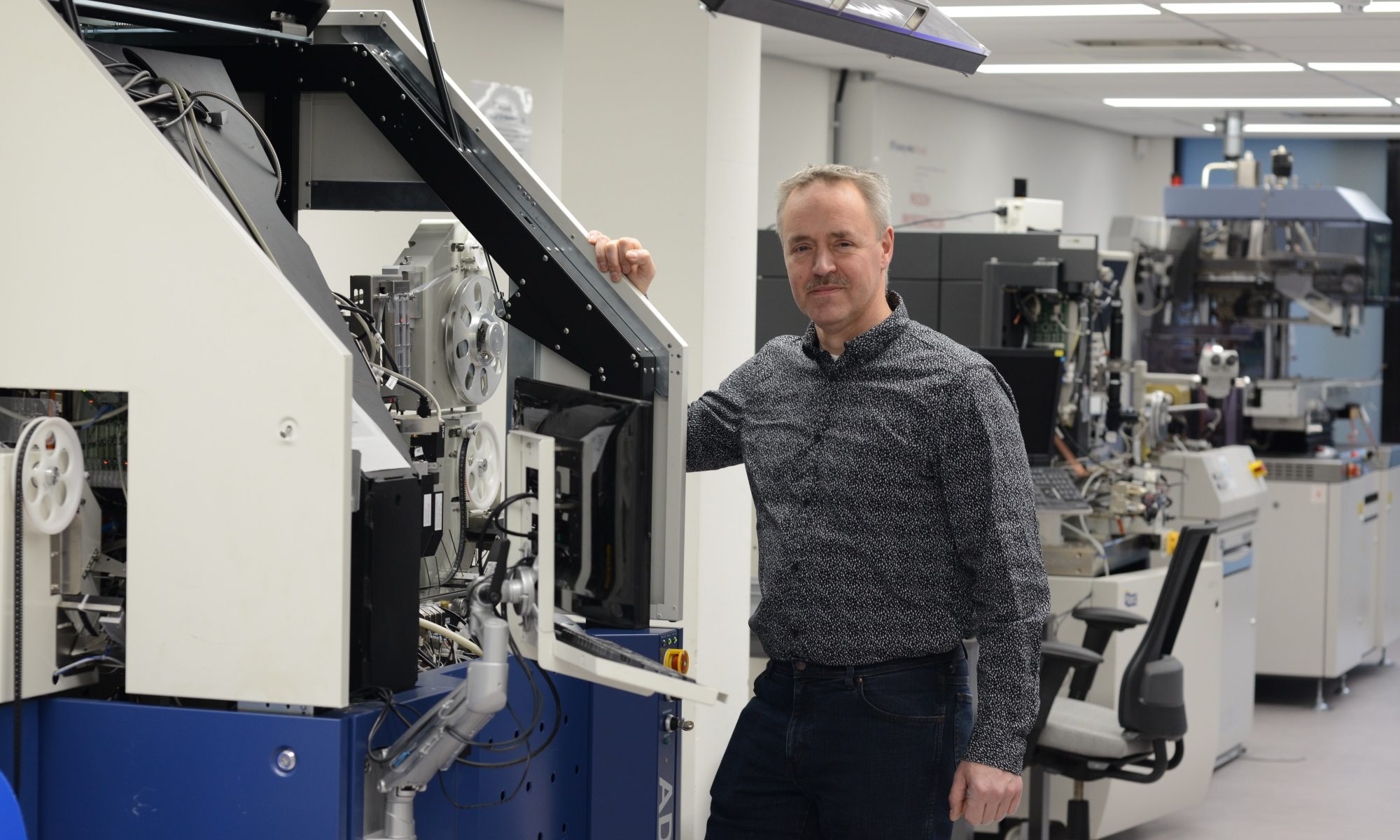
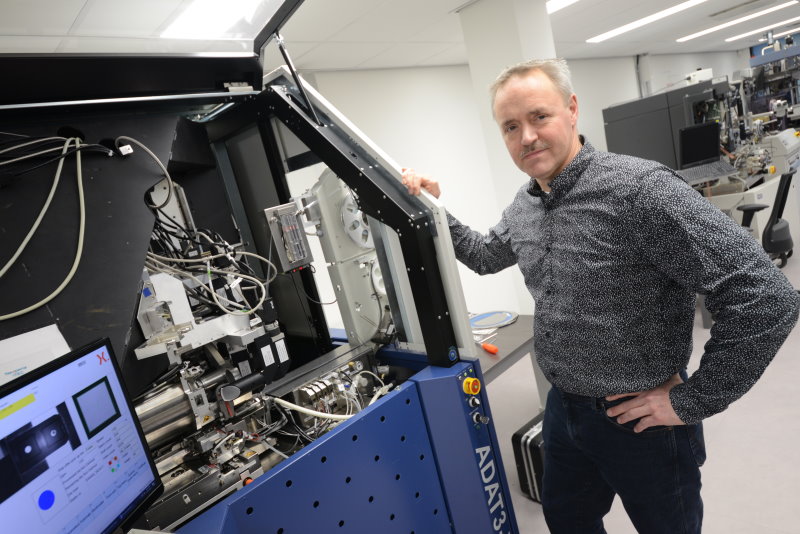
Nexperia’s Industrial Technology and Engineering Center (ITEC) has a rich history in developing state-of-the-art products and industrial production solutions for the semiconductor domain. But when the group ran into the difficult task of balancing deliverables with its target costs during the development of its cutting-edge ADAT3-XF, senior mechanical designer Theo ter Steeg and the ITEC team turned to the training “Design for manufacturing” to help streamline the design process and get a better overview from the start.

Finding the path to a spot on the leading edge of technology development is certainly no easy feat for any company. But to hold that edge, over the span of decades, is an accomplishment shared by far fewer. However, with a lineage that extends back to NXP and even further to Philips, Nexperia and its Industrial Technology and Engineering Center, more commonly known as ITEC, has held on to such position for more than 30 years – with no plans to relinquish its spot any time soon.

“Since I joined the original ITEC team at Philips in the late 90s, the goal has always been to continue to push the boundaries and improve our offerings,” describes Nexperia senior mechanical designer Theo ter Steeg. Since 2000, he’s dedicated his energy to innovating on one of the company’s featured pick-and-place die-bonding machines, specifically the ADAT3.

“Early on in the development phase of the ADAT3, we already made big steps in improving the speed and accuracy over its predecessor, the ADAT2. Then as the system became more mature, and transitioned from development to the product group, I moved along with it,” recalls Ter Steeg. “Our focus was on the sustainment of the product and creating new features and modules to enhance the entire ADAT3 platform and meet the increasing needs and demands of our customers, specifically in die bonding, die sorting, taping, strip-to-strip glue bonding, flip bonding and more.”

Targets

Meeting these customer demands and working on a continuous innovation cycle, however, also comes with a steep price, both literally and figuratively. As the group poured energy and resources into the project, it found that the established cost targets were often in direct competition with what it aimed to deliver – sending the project a little off the rails. Something had to give, a fact that became abundantly clear while designing the die-bonder strip glue module for the ADAT3-XF platform.

“We always know that the targets for our deliverables are going to be tight, in this line of work, that’s almost always the case. But like on any innovation project, we were enthusiastic and convinced we could hit our marks,” suggests Ter Steeg. “What we encountered, though, was that we were setting these targets early in the process, without all the necessary information at hand, which isn’t sustainable. Quickly, it became apparent we were going to miss our targets; the question was by how much.”

Confident that the project could be saved and put back on track, Theo and his team began discussing their options. In his mind, Ter Steeg remembered an article he’d read in Mechatronica&Machinebouw about the “Design for manufacturing and assembly” training from fellow Philips descendant High Tech Institute. Having looked further into the course content and seeing that the key points of the training aligned with the areas he wanted to improve, Ter Steeg reached out to the course instructor Arnold Schout.

Ter Steeg’s particular interest in the Design for manufacturing training was spurred by two specific topics: cost calculations and improvements in determining lead times. “From the first conversation, Schout showed us that he had a clear understanding of our challenges with a clear vision on how we could address them,” says Ter Steeg. “He worked with us to design an in-company edition of the training. Working in tandem, we were able to customize the training to be precisely tailored to our specific needs.”

20210113 Nexperia Theo ter Steeg RRA_8932

Eye-opener

To help address ITEC’s cost-calculating needs, Schout worked directly with team members to create an internal detailed spreadsheet that can take into account the cost of various parts and modules within the machine. By linking this to a CAD model of the system, engineers can see precisely how any individual part, motor or module affects the total cost – including material, machine and man-hours.

“This was an eye-opener for us. Normally, we would design something with a rough estimation of what the various parts and components would cost, but as we go forward in the process, we often make on-the-go decisions to improve performance specifications or fulfill function requests from our customers, without knowing exactly how the cost will be affected down the line,” explains Ter Steeg. “And on a machine like this, with more than 8,000 parts, those changes really add up. Of course, we like to make improvements, but at some point, the question must be, at what cost. With this new way of working and the detailed document, we could gain a lot of clarity on this and improve our system and our way of working.”

Similar to the cost calculation form, Schout also helped the ITEC team to design a lead-time document, where the group could again enter detailed information for all of its parts and modules, which would then provide much more precise information on what the expected lead times would be for specific solutions.

“Working with Arnold and High Tech Institute in the ‘Design for manufacturing’ training has really opened the doors to evolving our processes and our continued innovation. Their level of knowledge and ability to guide the training to fit our specific needs have enabled us to work in a much more sophisticated way, with a clearer understanding and better-defined goals throughout the entire manufacturing process,” illustrates Ter Steeg. “While we only recently just finished this training and perhaps it’s still a bit too early to say definitively, we can already see many of the benefits we hoped to gain.”

This article is written by Collin Arocho, tech editor of Bits&Chips.

Design thinking leads to a higher success rate in innovation

Design thinking trainer Rex Bierlaagh
The high-tech industry is extremely innovative, but what if you want to innovate more effectively and even faster? Design thinking is an effective method for that, says Rex Bierlaagh, trainer of ‘Customer-centric systems design‘. “Everyone can learn it. It changes the mindset of organizations.”

 
His father was a techie who invented multiple things at the Philips Natuurkundig Laboratorium (Natlab). At least, that’s how Rex Bierlaagh remembers it from his youth. Father and son still talk about it regularly. In retrospect, they’re always surprised at how few inventions from the Natlab have actually reached the market.

“For Philips, that success rate was apparently good enough,” says Bierlaagh. “But when I look back with my father at the 70s and 80s, he says, ‘What if we’d had a method that was even faster, more effective, cheaper and more in line with customer requirements so that we could have put more successful products on the market with less money? Surely that would have been wonderful.’”

Rex Bierlaagh - design thinking training
Rex Bierlaagh: “IBM and Walt Disney claim they use design thinking to innovate even more effectively and faster.”

That’s why father Bierlaagh actually likes the fact that his son is now a design thinking specialist. Rex Bierlaagh: “I actually do process coaching. Teaching people to take steps to innovate faster and more effectively. My father saw this kind of method emerging in his time, but it didn’t exist when he started. Techies can also go a long way with stubbornness – so to speak – but what if you combine that with a powerful innovation method?”


Start with the person

At companies like IBM and Walt Disney, design thinking is at the core of their strategy. “They claim they can innovate even more effectively and even faster with design thinking,” notes Bierlaagh, who also points to the existence of the Design Value Index (DVI), a benchmark for companies that apply design thinking. According to the creator of the index, Jeneanne Rae of consultancy firm Motiv Strategies, companies that integrate design thinking into their business strategy outperform their peers threefold.


Many sources link the term “design thinking” to the work Tim Brown’s marketing agency IDEO did for Apple’s iPhone and iPad. “What they did very well was ask questions to customers to find out exactly what they wanted, and based on that, come up with concepts and make very quick development moves,” observes Bierlaagh. “The cell phone was already there; the question was how Apple could design and market the iPhone in such a way that it connected with the customer straight away. In the end, this resulted in an innovation method that’s now called design thinking.”

'Design thinking starts with the person, rather than the product, service or technology.'

The anecdotes about Steve Jobs always tell that he didn’t do market research because he knew better than consumers. “Yet, Steve Jobs was at the forefront of using design thinking. With the help of IDEO, Apple immediately started testing whether its products worked. They checked whether or not specific ideas were catching on. Jobs did say: if this is the product, what’s a customer missing? How can we use those answers to change it into something he likes even better. Design thinking starts with the person, rather than the product, service or technology.”

Still, product developers often start with the technology. “To see how if can fit in the market. Design thinking means talking to stakeholders first, internally in your organization or externally to customers or consumers. Where exactly is their friction? What are they up against? What do they want, what do they want differently? Based on that, you think of new things and you keep repeating the process. That makes design thinking unique.”


Trainer Rex Bierlaagh.


Gain momentum

The high-tech industry is bursting with analytical skills, has intensive relationships with customers and often delivers highly successful services and products. On the other hand, high tech is littered with failures, although you could put a positive spin on that and also file it under the heading of ‘innovative capacity.’ Anyway, high-tech companies already invest a lot in innovation and certainly in R&D. So what does design thinking add?

“A fair question,” acknowledges Bierlaagh. “What I often hear, also from technical organizations I work with, is that they do innovation on intuition. There’s nothing wrong with that, but it can be more efficient if you know exactly which steps to take. An R&D environment is pre-eminently suitable for dealing with customer questions in a structured way and design thinking is a very good tool for that. It allows you to innovate much faster and much more efficiently. You go through innovation processes in less time, so it’s cheaper. Especially in technical companies where innovative capacity and inventing new products are paramount, design thinking helps to gain momentum.”


What changes in organizations once they start applying design thinking?

“Their own patterns of thinking and behavior change. The reason innovations often fail has to do with self-imposed limitations. Because we continue to think in patterns, continue to assume our own truths and don’t take enough of a customer perspective. To do that, you need empathy, creativity and imagination. That’s the key to successful innovation. You also need tools, a method. Design thinking offers beautiful, easy, effective, practical tools. They help to break through patterns of thinking and behavior. That change of mindset, that’s the most striking change in organizations that get going with this.”

Penetrate deeper

In Bierlaagh’s experience, as much as twenty weeks is needed for a design thinking project. “That’s what you need for a really successful innovation, something that’s original, something that really acts on what customers want and resolves their frictions.”

Thats quite a lot of time.

“Twenty weeks of development time is already pretty fast. Most of the time is spent talking to customers and discovering what they actually want. You can’t do that in a one-hour conversation. The moment you have that on the table, things can go pretty fast. Then you can test and validate something within four to eight weeks. If you invest time in contact with customers, then things can start to fly. I witness that at companies.”

Your training at High Tech Institute lasts two days. What do participants learn there?

“Among other things, it’s about communication techniques. How to penetrate deeper into customers. What information is there but doesn’t come out spontaneously? How do you get that on the table? With the right conversation techniques, people start telling a lot more about themselves and the problems they encounter in their work. I teach those techniques.”

“In addition, I teach participants to step out of their own thinking patterns, to tap into their imagination and to use creative thinking techniques. As a result, they really come up with original, creative ideas. Anyone can do that because everyone has been a child at some point. It’s a muscle you can train, so to speak.”

“I also teach them how to make concepts out of those innovative solutions. How to make ideas tangible, translate them and test them quickly in the market. Participants can apply that immediately after the training.”

This article is written by René Raaijmakers, tech editor of Bits&Chips.

“Prepare to be frustrated and try to remember, it gets better”

Dutch culture training review
For even the most culture-savvy expats, Dutch directness inside the workplace can serve as a bit of a shock. According to ASML design engineer Marco Allegri, who joined the Dutch work culture from Italy, the transition can be a little frustrating. But, he says, once you learn where it stems from, you’ll learn to appreciate the typical Dutch communication style. Recently, he attended the training “How to be successful in the Dutch high tech work culture“.

Joining the Dutch workforce can be fraught with challenges, especially when coming from another country. While some cultural norms are easy to notice, learn and understand, others can be a little shocking or even frustrating for those with green behind their ears. In the Dutch work culture, it’s often that you need to look no further than communication. Not so much in terms of language-ability barriers, as the Dutch are extremely talented in a number of languages, but in their style of communication – where the “Dutch way” can feel a little, well, ouch.

Marco Allegri - Dutch culture training

Marco Allegri.

“Working in the Netherlands has been a relatively smooth transition for me. ASML has gone out of its way to provide me and other expat employees with all the necessary help, resources and a number of on-boarding activities to feel part of the team from the very start,” explains Marco Allegri, a mechanical design engineer who joined the Dutch semiconductor equipment giant after moving to Belgium from Italy. But, despite his positive start with the company, even he has to admit: there are certainly some cultural differences. “Compared to my previous job in Italy, I’ve noticed that the Dutch workplace has a very no-nonsense approach to work, with extreme attention to process, procedures and details, which was all a little new to me. I’ve also found that this down-to-business approach you find in the Netherlands can often result in communication or feedback that’s both instant and rather harsh.”


Can you recall a specific moment when you experienced this?

“Oh yes, definitely. It was the first time I received direct feedback from my previous team leader. We were in a meeting having a discussion, when suddenly he cut me off, almost mid-sentence, in complete opposition to what I was just saying. He totally disagreed,” recalls Allegri. “Let’s just say, this wasn’t something I was used to, and I didn’t dare to try to respond or argue. What would I even say?”

'Even if your opinion contradicts your boss or management, they want you to speak up'.'

In Italy, according to Allegri, 90 percent of the time, people probably wouldn’t speak up in direct opposition. And, if they did, it would have been full of niceties and politeness. “You’d take small steps and ask if you could add something, or mention that you had another perspective to offer, but never would you do it in such an immediate and direct manner,” expresses Allegri. “In Dutch culture, on the other hand, this is an expectation. Even if your opinion contradicts your boss or management, they want you to speak up – you just need to be sure you have supporting facts and evidence. That’s what drives people here. In Italy, it’s very hierarchical. Even if the boss is wrong, he’s right – because he says he’s right and he’s the boss. There’s not really room for discussion and it would never be so direct.”


Giving feedback

This experience served as a real eye-opener for Allegri. As he continued to grow within his role and the company, he saw this sort of communication style being used by nearly all his colleagues, especially those that were Dutch. “At first, you know, it’s really a bit of a shock. But that’s how it’s done here, and I’ve really come to enjoy it. It’s this style of direct communication that gives me a clear understanding of where things stand, what has to be done and how to achieve it,” remarks Allegri. “It’s never personal, it’s always facts first. When you have data to back up your opinion, you can be sure that the people here are open and will actually hear what you have to say. That’s kind of a new idea for me.”

However, for Allegri, there was still a real challenge to this sort of communication. In his experience and with his cultural background, giving this type of feedback was no simple task. That’s when he registered with High Tech Institute for the training: “How to be successful in the Dutch high-tech work culture”. “This training provided us with a really good theoretical overview on why the Dutch communicate in this manner. By far the most impactful information I received though, was in learning to provide this sort of direct feedback as well as how to deal with the vast number of stakeholders in meetings and in our day-to-day work,” highlights Allegri.

'The techniques for dealing with disagreements between or influencing stakeholders were enlightening.'

“The most helpful aspect of the training was learning how to structure my feedback, being sure to kick the ball, not the man – so to speak. Also, the techniques for dealing with disagreements between or influencing stakeholders and creating buy-in from a position without power. This was really enlightening and again put a real emphasis on using facts, data and figures to support ideas – that’s central to Dutch-style communicating. I especially found the exercises and scenarios that put the theory into practice to be useful. I wish we could have done even more because that’s something I’m still implementing in my work today.”

Culture training - participants working in groups
During the training participants work in small groups to practice the theory.


What advice would you give to other expats that are looking to work in the Netherlands?

“Sometimes, the Dutch struggle to put themselves in your shoes. You have to remember that they’ve grown up being integrated into the ‘Dutch way,’ which I’ve come to really appreciate and even favor. But sometimes, they lack perspective from the other side,” illustrates Allegri. “So, my advice to other expats coming to work in the Dutch high-tech is rather simple. Prepare to be frustrated. Prepare yourself for tones that will seem harsh and procedures that will seem endless. But also try to remember, it gets much better. That’s just the way things are done here, and they have a very strong track record.”

This article is written by Collin Arocho, tech editor of Bits&Chips.

Recommendation by former participants

By the end of the training participants are asked to fill out an evaluation form. To the question: 'Would you recommend this training to others?' they responded with a 9.1 out of 10.

EMC knowledge overcomes problems in motion systems

Initiates in electromagnetic compatibility (EMC) will undoubtedly know Mart Coenen. His experience in the field can be traced back to the early eighties when he set up the first EMC training at Philips. In the meantime, he’s earned his spurs with clients such as the Port of Rotterdam and ASML. He still talks about his specialism with undiminished enthusiasm – just ask any of the participants in the training “EMC in Power Electronic Systems” at High Tech Institute.


Trained as an electrical engineer, Mart Coenen started his working life at the Philips Natlab. At that time, there was no legislation or regulation in the field of EMC, but within Philips, they felt it was important for the employees to have a thorough knowledge of the subject. “Together with Jap Goedbloed, I set up the first EMC training course in 1981. At first, it was an internal training at CTT, but soon it was extended to a national course organized by Pato, later PAO. By now, this is perhaps the longest-running course they offer,” Coenen proudly says. In 1988, he became involved in the international standardization of EMC. To this day, he’s still active in all kinds of committees dealing with the laws and regulations concerning EMC, ESD and electrical safety.

Mart Coenen - Trainer EMC for motion systems

Mart Coenen is part of the trainer team, together with Ramiro Serra from the TUE, Mark van Helvoort from Philips Healthcare and Ernest Bron from Analog Devices.

In 1994, Coenen started his own company, EMCMCC, driven by a lot of work with smaller clients, which he couldn’t (or wasn’t allowed to) serve under the Philips’ flag. He worked for the Rotterdam Port Authority, which was forced to automate its container transshipment processes due to the many strikes. From his own company, he also worked as a consultant for ASML, where he was involved in the 450-mm wafer project. For every movement in the process, the exact location of the wafer had to be determined. This was difficult because the disturbances in the system caused measurement errors. “Within nine months, we developed an entirely new concept, which was implemented. Partly because of this, there were fewer disturbances, and therefore, less calculation work was required to determine the exact location. As a result, the manufacturing process of wafers could be scaled up from 200 to 400 wafers per hour.”

Tracking

“During my work, I’ve noticed that people often believe that when a system is CE/EMC approved, it will work properly. Nevertheless, you regularly see operational problems arising, which often lie in the area of EMC,” Coenen emphasizes. “After all, EMC system approval is no guarantee for a reliable operational system. It’s important to be alert to what happens if a system is temporarily disrupted and to realize what consequences this disruption can have on the system. Is it a disruption that has no influence at all? Or one in which there’s a temporary outage but everything continues properly after restarting? Or is a hard reboot of the system necessary, or do parts even need to be replaced? It’s important to realize that the process doesn’t always continue properly. It may be that even the smallest temporary disturbance is inadmissible. For example, if you produce wafers that require an accuracy of 2 nm, then a temporary deviation of 20 nm is unacceptable because that would mean that you have to throw away the exposed wafers. Of course, as a customer, that’s not what you want. A suitable solution has to be found for this type of problem.”

The tricky thing is that the signals are often in an area where regulation is lacking. For both the mains and the inrush currents, everything is fixed, but this isn’t the case for signals in moving systems. This type of signal is typically in the frequency range between DC and 150 kHz. On the one hand, you have the electronic signal controlling a displacement. On the other hand, there’s the signal from a sensor, which retrieves information to determine the location. These two signals can influence each other. In motion technology, you’re bound to the signal frequencies you need for the displacements. These frequencies can cause disturbances that get picked up by the sensors. The trick is to learn how to deal with them.

'It’s the search for a solution and eventually finding it that gives me a pleasant adrenaline rush.'

“Even after all these years, the EMC field is still attractive to me. There’s always that challenge to get something working. And if it doesn’t work, there’s the challenge of searching for the right solution. Sometimes the solution is obvious, sometimes it’s more difficult. It’s the search for a solution and eventually finding it that gives me a pleasant adrenaline rush every time. Also, the field is still very much in motion. More and more is happening via the Internet of Things, with an increasing number of sensors generating data. Still, we have to keep asking ourselves what the reliability of this data is and how useful it actually is. I’m also following these developments with interest.”

Hands-on

During the “EMC in Power Electronic Systems” training, part of the portfolio of High Tech Intitute partner T2Prof, participants gain insight into the problems that can occur in motion systems and learn what to do about them. Coenen: “In this training, we focus on the area that falls outside the norms and teach our students to create a reliable system that is operational 24/7. Although this training is relatively new for High Tech Institute, as a teacher for CTT, Pato, Mikrocentrum, Avans and Fontys University of Applied Sciences, I’ve already gained a lot of experience. My experience is that students find the material very difficult at first, but if you offer them the right theory during the course and let them practice it themselves, they can put what they’ve learned into practice very well afterward.”

Training EMC for motion systems

'There are demos and students can do their own simulations on setups. '

The training is intended for mechatronics engineers, electrical engineers and system architects who in their work have to deal with low-frequency disturbances (from DC to about 150 kHz) caused by motion and energy conversion systems. Students learn about systems thinking and how to anticipate problems they encounter in practice. Coenen: “In addition to signal theory, which is based on physical laws, network theory and knowledge about the behavior of cables, there’s also a hands-on part. There are demos and students can do their own simulations on setups. It’s important that during the training, they learn what they can measure and how they should do it. I’m looking forward to introducing the students to the EMC in Power Electronic Systems together with my fellow teachers Ramiro Serra from the TUE, Mark van Helvoort from Philips Healthcare and Ernest Bron from Analog Devices.”

In November 2020, the team of experts delivered the very first 3-days training to a group of 10 participants. When asked if they would recommend the course to others, participants responded with an emphatic 8.3 points out of a possible 10 and gave the lecturers a score of 8.4. Respondents also offered several praising comments. “Good to receive the theoretical background and the setups were very useful,” one of the trainees commented. Another pointed out that the training exceeded his expectations. Other positive comments: “Love the number of demonstrations” and “Background theory was very helpful. Nice demos! Good interaction.”

This article is written by Antoinette Brugman, tech editor of Bits&Chips.

Recommendation by former participants

By the end of the training participants are asked to fill out an evaluation form. To the question: 'Would you recommend this training to others?' they responded with a 8.3 out of 10.

System architecture and leadership – practical and no-nonsense

High Tech Institute is launching an intensive System Architecting Masters (Sysam) training program for system architects and systems engineers. Ger Schoeber and Jaco Friedrich offer aspiring professionals a robust nine-month program of training and coaching on their own projects.


Central to the new System Architecting Masters (Sysam) program are the current projects of participating system architects and system engineers. “The goal is both to contribute to the competence growth of participants and, at the same time, to add value to the participants’ ongoing projects,” says Ger Schoeber, who has been training system architects for more than 20 years.
Schoeber likes to put his nose to the grindstone. He works four days a week at Lightyear as a group leader and domain expert in systems engineering and spends one day on another passion: his systems training courses at High Tech Institute. “It’s very nice to help people grow in their experience through training,” he says. “The satisfaction for us as a training institute is even greater when we see direct effects in the improvement of actual industrial projects.”
Schoeber teaches Sysam together with Jaco Friedrich, who as a full-time trainer of leadership skills mainly sees technicians. Friedrich has trained several thousand professionals in high tech. “High-tech companies recognize effective communication, giving feedback and influencing without power as essential skills of the system architect,” he says.

Ger Schoeber (left) and Jaco Friedrich (right).  


CAFCR and NASA

The nine-month Sysam program consists of three intensive training blocks of four days each, with several months in between for assignments on the job, coaching and intervision. Guest speakers share their extensive experience in system architecture, systems engineering and complex development. Half of the training consists of essential systems engineering and system architecting topics. Schoeber draws on two sources, Gerrit Muller’s CAFCR framework and the NASA Systems Engineering Handbook.
“CAFCR is all about putting yourself in the shoes of the customer and stakeholders, looking at the system architecture from five perspectives,” explains Schoeber. “Only two of them are about technology, about the solution. The other three are about the customer perspective. That, in my experience, is where the great value of the CAFCR framework lies.”
“The functional view, the F from CAFCR, is about the specification, the requirements: what does the customer actually expect from the product or what do the stakeholders expect from the system, regarding functionality, quality and performance? The application view, the A from CAFCR, requires you to look at the broader context. In which environment is the future subsystem or system located? How will it be integrated, deployed, used, and so on? If you have a good picture of that, then you understand what is or isn’t useful. That enables you to better align the requirements with the actual need.”

'CAFCR allows us to come up with solutions that will help customers even more. '

The first C in CAFCR is all about customer objectives. “What’s his business? How does he make his money? What’s the reality of his customer or the colleague who’s going to integrate my subsystem? If you understand that better, you can better see what he needs to improve his business. CAFCR forces us to not only look at the technology but also at the specifications and the rationale of the requirements. It allows us to come up with solutions that will help customers even more.”

The CAFCR model by Gerrit Muller: www.gaudisite.nl


In addition to CAFCR, Sysam uses the NASA Systems Engineering Handbook. “A systems engineering handbook provides guidance on how to set up, roll out, complete and execute activities in a product creation process,” Schoeber points out. “Developers often use the V model, with on the left side the system definition – from concept of operations, requirements, architecture, design to engineering – and on the right side the system realization – from engineering to integration, verification and validation. NASA’s recently updated systems engineering manual takes this approach and also very frequently integrates short-cycle feedback loops, which is also the basis of agile thinking. The latest revamp has also made it very accessible, readable and applicable.”

Practice in practice

The other half of the training consists of intensive exercises with practical situations, such as convincing stakeholders and being able to turn resistance into buy-in. Friedrich: “Practice takes time. When engineers experience it in a training course, they immediately see the value. The added value is in the experience. What seems easy on paper is not at all easy in practice. By practicing, participants step out of their comfort zone and actually experience how things can be done differently. This gives them self-confidence and motivation to apply it immediately. And it turns out that this practical approach also successfully results in participants doing their work differently. After the training, they often say that they should have done it much earlier.”

'It’s about learning to deal with risks. So, leadership instead of science. '

One of the typical pitfalls that Friedrich deals with while training is daring to take a position, even though not all the facts are known yet. “It’s about learning to deal with risks. So, leadership instead of science. This also includes the ability to manage a team. How do you make time to deal with the big picture? The ability to delegate tasks and responsibilities in an inspiring way is a prerequisite for further growth. Influencing stakeholders and setting parameters take time and mental space. The architect must learn to create this space for himself.”

There are several months between the three training blocks of four days. During this time, Schoeber and Friedrich coach the participants. Intermediate sessions are also planned where the trainees share experiences.
To guarantee quality, the number of participants in Sysam is limited to a maximum of twelve. This also ensures that participants can effectively share experiences about their projects. Because everyone is engaged in their own practice from the beginning, the training program is effective from day one. “This means that they recoup their investment in the very first year,” says Schoeber. “After that, it’s all profit.”

This article is written by René Raaijmakers, tech editor of Bits&Chips.

“It’s not the products we make, but our people that are our greatest asset”

Dutch high-tech is full of talented engineers. But how do companies ensure they keep this talent in house? For Sioux Technologies, it’s all about putting an emphasis on the people, and keeping them happy and challenged with interesting projects, life-long learning and custom training opportunities. Recently, Sioux and High Tech Institute organized a customized software security training with Duncan Stiphout.

Whether you’re fresh out of college or have been in the business for decades, there’s always something to learn. From personal to professional, social to technical skills, staying sharp is key – especially in the high-tech industry.

For Sioux Technologies, this fact is absolute. “We’re a high-tech solutions provider. We don’t make end-products; we deliver services, modules and submodules to our high-tech customers and partners,” describes Duncan Stiphout, group leader of the system control software department and people manager at Sioux. “For us, knowledge and expertise really set us apart. It’s not the products we make, but our people that are our greatest asset – we just prefer to keep calling them people,” he jokes.

Here at Sioux, or anywhere else for that matter, not everyone has the aspiration to become a senior system architect,” says Duncan Stiphout. Photo by Bart van Overbeeke.

Over the last 20 years, Stiphout has learned a lot about people and growth. For the first half of his tenure, he served in highly technical roles – starting as a software engineer right out of college and working his way up to a software architect. “At some point in time, I got a taste of the project management side of the business. And I’ll be the first to tell you, that stuff isn’t for me,” he recalls.

For Stiphout, being responsible for continuous planning and management just didn’t feel like the right fit. A little bit of chaos, as he puts it, is a good thing. “What I learned though, was that was ok. Here at Sioux, or anywhere else for that matter, not everyone has the aspiration to become a senior system architect,” he says. So, roughly 10 years ago, Stiphout decided he’d like to find a role more suited to him – even if he didn’t know what that was at the time.

Hapiness manager

Speaking with his people manager, Stiphout began looking into the various options that best suited him and his career – both inside and outside of Sioux. That’s when a new people manager position opened up and caught his attention. “I talked to some managers and colleagues about my interest in the position and I received a lot of good feedback. A number of people had already worked with me and appreciated my communication style and that I could help guide and lead them in their personal career paths,” says Duncan Stiphout. “I also think that situational management is one of my core strengths and something that I rather enjoy. So, I jumped at the opportunity and took the chance with both hands.”

'My main focus lies in keeping my group challenged and happy in their roles as they further develop in their careers.'

Taking this new position was a big step for Duncan Stiphout. After all, he was stepping away from his more hands-on technical role and moving toward a manager’s role focused on growth. Not only his personal growth, but also that of the business, and now, of his colleagues. “Now, my focus isn’t only on projects but also on the happiness of others. I guess you can call me a happiness manager,” laughs Stiphout. “In this role, my job focuses on recruitment, retention and competence management. My main focus lies in keeping my group challenged and happy in their roles as they further develop in their careers.”

Function house

To keep its people happy and on the cutting edge of technology, Sioux has fully committed to life-long learning opportunities for employees. In fact, the company offers each of its workers an annual personal training budget of 6,000 euros to use at their discretion for everything from books to seminars and training courses. “This really helps us get the best out of our teams, and that’s a big part of my role – helping people find ways to improve themselves and keep them interested,” highlights Stiphout.

In practice, of course, this can take on many different forms – especially as employees grow within the company and climb up the ladder. “When we get new engineers, we help them look at their goals and map what we call their function house. Essentially, this highlights the opportunities and expectations for every level, from junior and senior software engineers to designers up to system architects,” illustrates Stiphout. “What we’ve found is that very early in someone’s career, many engineers are mostly interested in technical courses and improving their technical skills. Once someone reaches the level of designer, however, they often turn toward personal or soft-skills trainings dealing with influence and leadership.”

In the name

To offer employees leading-edge training, Sioux has several options available, offering internal coaching and in-house training, as well as turning to training organizations for their expertise. Stiphout: “We really see the value of training for our people. Of course, it’s difficult to calculate, but I believe there’s a real return on investment when my team members return from good trainings. You can see how inspired they are to try what they’ve learned, or how perspectives of events or their skills have changed as a result.”

Choosing the right training, though, can sometimes be a little tricky for a company like Sioux, so they really try to do their research to see what trainings have the best reviews and what could prove to be most valuable for their teams. “There are a number of different training organizations around, especially in software development – which, despite our multi-disciplined teams, is still a very big part of what we do at Sioux. For a lot of them, though, the trainings focus less on the high-tech domain, and more on other areas, for instance, administrative systems software,” explains Duncan Stiphout.


Photo by Bart van Overbeeke.

“That’s one reason we rely heavily on High Tech Institute and also why we look to contribute our expertise in helping design some courses – with a few specialized trainings, like the System Architecting (SysArch) and Multicore Programming courses, which are instructed by Sioux colleagues. Their reviews are outstanding and their portfolio offers a relevant training for every single level, from junior engineer to senior system architect. We find that so important because it perfectly matches our high-tech ambitions. Which makes perfect sense as ‘high tech’ is already in the name.”

Customization

In addition to sending employees to multiple training courses with High Tech Institute over the years, Duncan Stiphout has also worked with them to plan in-company editions of trainings for larger groups at Sioux. “Of course, they offer off-the-shelf courses, but when looking to make it in-company, the team at High Tech Institute offer the chance to tweak and customize a training to fit our specific needs,” says Stiphout.

'Sometimes, it means that we need to be critical of customer's demands.'

“Recently, I started working with Jaco Friedrich to customize an in-company session of the ‘Leadership for architects and other technical leaders’ training as a follow-up to the system architect’s training. In our work at Sioux, we’re really aimed at building customer intimacy and offering the unique perspective of our technical leadership. Sometimes, that means that we need to be critical of their demands,” explains Stiphout. “But learning how to better communicate that critique is extremely important and we believe that it’s something that distinguishes us from our competition. That’s why we’re looking forward to a continued collaboration with Jaco and the rest of the team, to offer our group at Sioux the chance to really build and enhance these skills.”

This article is written by Collin Arocho, tech editor of Bits&Chips.