“Systems Engineering Is No Longer a Nice-to-Have”

“Systems Engineering Is No Longer a Nice-to-Have”

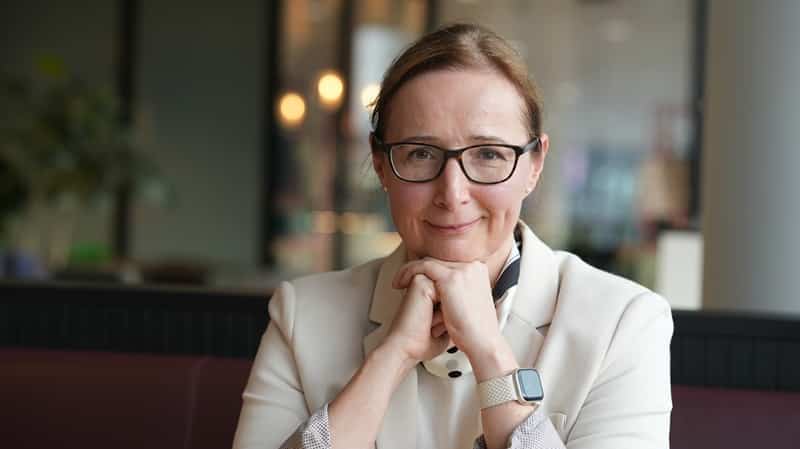
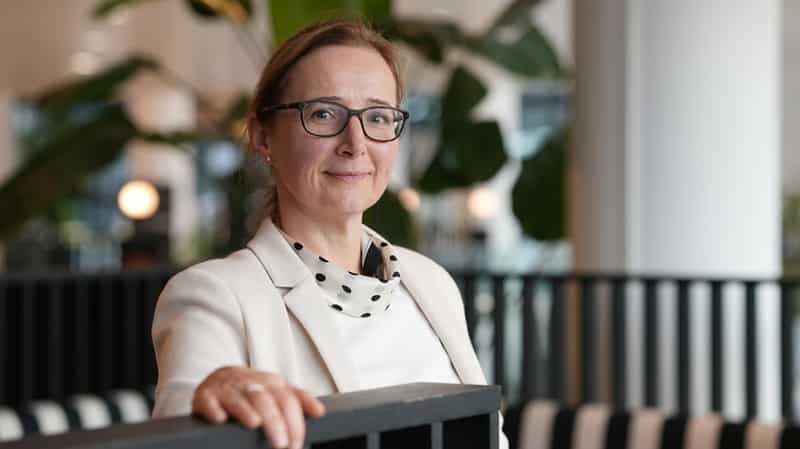
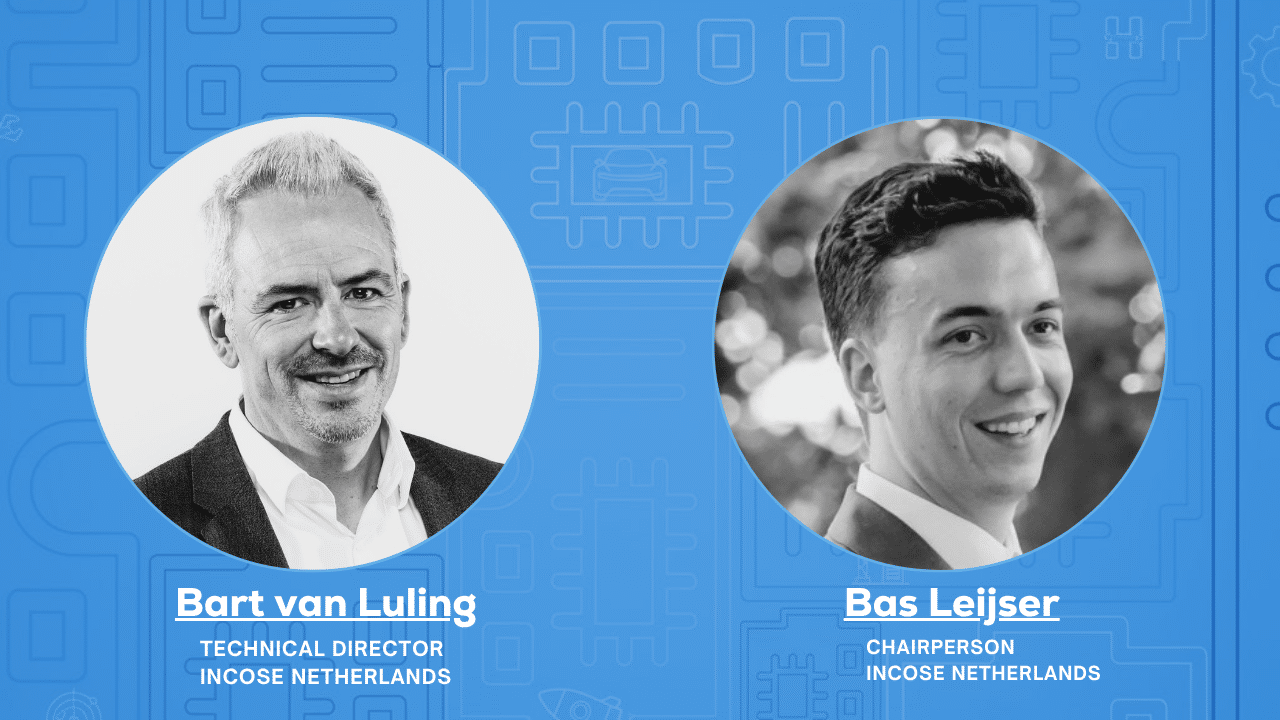
INCOSE NL was founded in 1996 by 25 engineers who believed complex systems needed a discipline of their own. Thirty years and nearly 500 members later, technical director Bart van Luling and chairman Bas Leijser take stock — of what SE has become, where it still falls short, and why the next two days in November might matter more than any event in the organization’s history.

In November, the High Tech Institute will co-organize the Dutch Systems Engineering Days — the largest SE gathering in the Netherlands to date, and the centrepiece of INCOSE NL’s 30th anniversary. To understand what that milestone actually represents, we spoke with technical director Bart van Luling and chairman Bas Leijser across a range of questions: the discipline’s origins, its spread into new sectors, the honest reckoning with AI, and what Dutch industry still consistently underestimates. Their answers are reproduced here in full.


Why SE needed its own organisation

INCOSE NL started in 1996 with 25 people in a country that already had a strong engineering culture. Looking back, why did it take a separate organisation to make Systems Engineering happen here?

Bas Leijser

I can mainly speak for the past decade, but one thing is clear, regardless of when you joined: Systems Engineering seldom emerges organically, even in strong engineering cultures.

SE requires deliberate effort and coordination, rooted in common practices and a shared language. That’s precisely where an organization like INCOSE NL is essential. We provide that foundation and, in addition, serve as a neutral platform connecting industry, government, and academia.

Our network member meetings, workshops, and now the Dutch SE Days facilitate knowledge sharing and networking. Our INCOSE handbook, the work of our Special Interest Groups and international Working Groups, and our certifications together form the backbone of SE practice and professional recognition, ensuring that the discipline grows into something shared and sustained across the field.


The discipline’s evolution

Systems Engineering was originally developed in defense and aerospace, yet INCOSE NL has always attracted members from public infrastructure, process industry, and the high-tech sector. Thirty years on — how would you describe the place Systems Engineering holds in the Netherlands today?

Bart van Luling

SE by now has a strong foundation in multiple sectors. In the 2000s, SE was implemented broadly in the Dutch infrastructure and civil engineering sector and evolved to standardized ways of working for the major public employers like Rijkswaterstaat, ProRail, multiple provinces, municipalities, and water authorities — and the big contractors and engineering companies. In past years, within the energy sector, multiple organisations like TSO TenneT, DSOs Alliander, Stedin, and Enexis have been implementing SE following the trend in infrastructure. Recently there have been first steps within the health sector and urban area development. The SE community is significantly growing across multiple sectors.

Bas Leijser

Systems Engineering in the Netherlands has evolved well beyond its roots in defense and aerospace. We now see strong adoption across energy, infrastructure, and high-tech, and are expanding into new territory like healthcare, driven by a growing recognition that complexity is increasing across all sectors, and that SE plays a key role in managing it.

But perhaps the more interesting evolution is in how people identify with the discipline. Not everyone calls themselves a systems engineer, but more and more people recognize themselves as system thinkers, integrators, system architects, and so on. The boundaries of who “belongs” in SE are widening, and we welcome that at INCOSE NL. The discipline is finding people as much as people are finding the discipline.


The membership curve — and what drove it

Membership grew from 25 at the start to 100 in 1999, 270 in 2005, and over 350 by 2021 — now exceeding 400. Are there moments in that curve that stand out as genuinely pivotal?

Bart van Luling

The growth in the period between 1999 and 2005 resonates directly with the introduction of SE in the civil engineering sector. Since joining as technical director in 2023, our strategy has focused on attracting younger engineers and reaching new sectors — and that paid off. The community is still growing in numbers, in the range of sectors involved, and with younger members.

Bas Leijser

As of March 2026, we had over 490 members and expect to surpass 500 this year.

On the growth itself, the honest answer is that there’s no single pivotal moment. It’s more of a combination of inflection points. What we see is a gradual but accelerating shift in how organisations perceive SE. It used to be something almost niche, but now we see people from a much wider range of sectors and roles joining.

The underlying drivers are clear: systems are becoming more software-intensive, more interconnected, more complex. AI adds another layer of uncertainty on top of that. Better MBSE tooling has lowered the barrier to applying SE in practice, which brings in people who might have found it inaccessible before. The net effect is that SE has shifted from a ‘nice to have’ to something organisations increasingly treat as a prerequisite. That’s what the membership curve reflects as well.

'SE has shifted from a 'nice to have' to something organisations increasingly treat as a prerequisite.'


AI meets SE — including what doesn’t work

One of your recent member events focused on “AI meets Systems Engineering — what works, what doesn’t, and what’s coming.” That framing — acknowledging what doesn’t work — is refreshingly honest. What have been the genuinely disappointing early experiences?

Bart van Luling

For me, there is no disappointment. Results with the use of AI for systems engineering are very promising. But it’s all about expectations. If people expect AI to take over their SE tasks just like that, they come home empty-handed. There is a lot of thinking, experience, and creativity needed in applying systems engineering for complex assignments. AI can reproduce what has been done before and what’s documented, and do easy tasks much faster than people. But it cannot do that without clear instructions and without someone doing the thinking for it — at least, not yet. Just uploading a bunch of SE documents and trying AI to give good advice is a bit short-sighted. We have to treat AI as a very fast-working intern with a photographic memory.

Bas Leijser

Most of the disappointing experiences turned out to be a matter of patience. I’ve had more than a dozen conversations where someone said “AI can’t do X yet” — and then six to twelve months later, that point was moot.

Of course, there are the expected technical limitations, like hallucinations or AI struggling with more complex tasks.

But the toughest disappointment is on the human side: coming to terms with the fact that AI can be genuinely capable, and that the real challenge is adapting ourselves. The disappointment isn’t in AI failing but in AI succeeding, and realizing that many things we thought only we could do with our expertise turned out to be perfectly manageable by AI — with a little guidance. Accepting that and learning to work with it can turn that disappointment into excitement, but that’s not a one-time shift; it’s a continuous process.

'The disappointment isn't in AI failing but in AI succeeding — and realizing that many things we thought only we could do turned out to be perfectly manageable by AI, with a little guidance.'

From document to model

Your MBSE Special Interest Group has been active for years. How far along is Dutch industry actually in making that shift in practice, and where do you still see the biggest barriers?

Bart van Luling

There is not one answer to this question — it differs a lot per sector. In high tech and automotive, MBSE is well developed and broadly applied. In infrastructure and civil engineering it’s still in its infancy, but first steps are being made, for example in the Dutch national standard for tunnel systems. In the energy sector there is a big transition ongoing from a document-based way of working to a data-centric approach, but I personally haven’t seen real MBSE examples yet. I do believe Dutch industry is a bit behind on MBSE developments compared to other countries.

Bas Leijser

The shift from document-based to model-based working is less of a technical challenge and more of a change management and people challenge. It requires a fundamental mindset change. We often hear at INCOSE events that we should get better at social sciences, because that’s really what drives adoption.

As for maturity across Dutch industry, it’s uneven. Some organisations have embedded MBSE and are quite far along. Others are still finding their way — it can genuinely be a multi-year process to get from document-heavy practices to capturing requirements in a structured database.

Across the board, the biggest barriers are not the tools themselves, but adoption at scale: aligning stakeholders, integrating MBSE into existing processes, and making the value visible early enough to sustain the transition.


The Dutch SE Days — who should be in the room

The Dutch Systems Engineering Days in November are shaping up to be the biggest SE gathering in the Netherlands in years. What are you most excited about — and who should be there?

Bart van Luling

I’m especially excited that we are bringing sectors together to learn and get inspired by each other’s SE experiences. We need to share knowledge to bring SE to the next level in the Netherlands. Also, I really like that we have a student track to stimulate our young and new professionals to share their thoughts and research on systems engineering. My personal ambition is to get more young professionals involved in INCOSE, so all the experienced systems engineers with grey hair can transfer their knowledge to the SE community of the future — but also to include new fresh ideas from our younger colleagues. We can all learn from each other.

Bas Leijser

What excites me most is that this is our first two-day event. That extra day changes the dynamic. It creates space not just for more presentations and workshops, but also for more informal interactions. We’ve seen at international INCOSE events that this is often where the most valuable insights emerge — or just plain having fun, which matters too. INCOSE NL is also a community after all.

As for who should be there: I often say that many people are already practising systems engineering, or following SE principles, without identifying themselves as such. So almost anyone is welcome: engineers, architects, managers, policymakers, and anyone dealing with uncertainty, integration, or complexity. Whether you work in healthcare, infrastructure, high-tech, defence, or finance, there’s value here for you.


Why a New Space engineer and a sustainability professor share a stage

The event features keynotes from a New Space startup engineer and a sustainability transitions professor on the same stage. What’s the argument for that combination — and what are you hoping actually happens in the room?

Bas Leijser

Sustainability and space exploration are more complementary than they might appear. Space exploration has driven technologies we now rely on for sustainability — solar panels being one example, in terms of scale and efficiency.

The AI and sustainability combination is another example. We know the energy and water footprint of data centres is significant, but AI also has enormous potential in tackling sustainability challenges. That tension is worth exploring.

More fundamentally, SE is not sector-specific, and one of the things I value most about INCOSE is that it bridges sectors and lets them learn from each other. Defence can learn from how healthcare approaches systems engineering, and vice versa. The same core challenges exist across all of them. What we’re aiming for is that people step outside their own domain and get inspired, or inspire others.

Bart van Luling

Sustainability is one of our biggest societal challenges. It’s INCOSE’s vision to apply SE to solving our societal challenges — not only technical ones. Jan Rotmans’ keynote will be very interesting to follow from a systems engineering perspective. The keynote from Jon Reijneveld will show how The Exploration Company applied SE to their own company growth — another perspective on systems engineering beyond the common technical approach. Both keynotes will be refreshing and also thought-provoking about our daily challenges. I’m really looking forward to them and the audience’s response.

“What we’re aiming for is that people step outside their own domain and get inspired, or inspire others.”
— Bas Leijser


The next 30 years — what Dutch industry still gets wrong

The Netherlands faces some of the most complex systems challenges in the world — water management, energy transition, semiconductor supply chains, defence modernisation. What is the single most important thing Dutch industry and government still consistently underestimate?

Bart van Luling

That’s really about applying systems thinking to our big societal challenges. We still approach them as single manageable assignments — but they’re not. Everything is connected and the world is getting more complex. Systems thinking will be an indispensable competence to get anything done in the future.

Bas Leijser

The core underestimation is twofold. First, we underestimate how non-unique our problems are. There’s a persistent tendency to treat complex systems as utterly unique, leading to excessive customisation and reinvention. In reality, we can often lean far more on existing reference architectures and proven approaches than we do.

Second, we underestimate the value of critical early-phase activities, and chronically underinvest in them — particularly validation, simulation, and modularisation. Validation is often grouped with verification as “V&V,” but in practice only the verification gets done. Modularisation is essential to managing complexity by breaking a system into manageable pieces. And on simulation: at the last INCOSE International Symposium, even an astronaut wondered aloud why non-space projects don’t simulate more, compared to how rigorously they simulate before every mission. They have a point.

'Everything is connected and the world is getting more complex. Systems thinking will be an indispensable competence to get anything done in the future.'


About the Dutch Systems Engineering Days 2026

On 12 & 13 November 2026, INCOSE NL will host the Dutch Systems Engineering Days at Van der Valk Eindhoven-Best. This two-day event marks the 30th anniversary of INCOSE NL and is the largest systems engineering gathering the Netherlands has seen.

The programme includes keynotes by Jon Reijneveld (The Exploration Company) and Jan Rotmans (Professor of Sustainability and Transitions), alongside sector tracks covering High-Tech, Defence, Energy, Infrastructure, AI & Systems Engineering, Sustainability, SE Fundamentals, and a dedicated Student Track.

Contributions are still open. You can submit yours via EasyChair.

High Tech Institute and INCOSE NL

The High Tech Institute is a proud partner of INCOSE NL. Many of our systems engineering training courses are INCOSE-certified, meaning participants can earn internationally recognised INCOSE credits as part of their professional development.

Explore our systems engineering courses →

“A requirement without constraints remains open to interpretation”

Unambiguous requirements are important for successful validation, but they’re difficult to establish in practice. By more clearly defining, structuring, and tracing the development process of a system, many problems at a later stage can be prevented, TMC’s Bart van Liere learned at the System Requirements Engineering training from High Tech Institute.

When a surgical robot needs to place a suture at the microscale, the functional requirement seems clear: position and move with an accuracy of a few tens of micrometers. But when the type of tissue the suture should be placed in has not been specified, this immediately creates room for interpretation. Soft tissue requires a different force buildup than rigid or fibrous material, which affects both the required actuation and the choice of suture material. During validation, it turns out that a specification that looks correct on paper has been designed in practice with assumptions that were not made explicit anywhere.

‘Meeting the requirement’ is what Bart van Liere, Integration Engineer at TMC, seconded to MTA, deals with on a daily basis. He is at the back end of the development process, where he needs to demonstrate that a system does what it was designed to do. “During validation, we find out if a requirement is formulated too vaguely, a restraint has remained implicit or stakeholders have not been able to properly convey what they had in mind for the same ‘functional’ goal.”

Integrator

After completing his bachelor’s degree in mechatronics, Van Liere went on to obtain a master’s degree in AI for Engineering Systems at Eindhoven University of Technology. He is now active as an Integration Engineer through TMC. TMC deploys technically trained professionals, so-called ’employeneurs’, on a wide range of projects at various high-tech clients.

'We learned that clearly and unambiguously formulating the requirements starts with asking the right questions.'

At MTA, he’s currently involved in a project for Microsure, centered on a surgical robot that has to operate with an accuracy of 50 micrometers. In his role as a system integrator, he forms the link between design and practice. He works with engineers on the technical implementation and with stakeholders on translating requirements into concrete specifications and validation criteria.

Van Liere is no stranger to the role. Previously, he co-founded his own company, in which a drone was developed for deployment in high-risk areas. “In that process, we noticed how important it is to get a clear picture of exactly what you are trying to build right from the start,” he says. “If you miss the essence there, you will end up with an end product that does not fully meet the vision you had in mind.”

Difference in interpretation

In practice, this problem rarely arises from incompetence, but from the way in which requirements are established. A stakeholder formulates what the system must achieve, while an engineer tends to implicitly translate that into how the system could do it. These two perspectives are not automatically the same. Without an explicit definition of the primary function and the preconditions, a set of requirements emerges in which intention and implementation are intertwined. As a result, specifications appear to be comprehensive, but on closer inspection allow for multiple interpretations.

To avoid different interpretations of requirements throughout the process, a more structured approach to drawing up these requirements is necessary. This means both documenting what a system should do and keeping track of why choices are made and under what conditions they apply. To get a better grip on this, Van Liere immersed himself in the “System requirements engineering” training course at High Tech Institute, taught by Cees Michielsen.

“In this System Requirements Engineering training, we learned that clearly and unambiguously formulating the requirements starts with asking the right questions,” explains Van Liere. “What is the primary function of the system, and which constraints are decisive? Everything you then put on paper must be tested against these conditions.”

This method forces you to make sharper choices at an early stage. “Engineers tend to include everything in a brainstorming session,” Van Liere says, amused. “You end up with a list that looks complete on paper, but with little focus. Moreover, everything seems important.” By first determining what is minimally necessary for the system to do what it is supposed to do, it becomes easier to distinguish secondary matters from essential requirements and the nice-to-haves. This provides more clarity in the design phase and takes the final validation into account.

Tracking changes

Van Liere was able to apply the method from the training directly in an ongoing project where he was involved in drawing up requirements from the validation angle. “You notice that you look at it from a different perspective,” he says. “Instead of immediately formulating demands, you first go back to the core: What are we actually trying to achieve here?” By making that step explicit, the process became more focused and the distinction between which requirements were essential and which could wait emerged more clearly. “This takes a little more time at the start, but it’s still cheaper and faster than having to modify a prototype because the requirements were not properly formulated.”

'There was enough room to go into depth and bring in your own cases. Michielsen's extensive experience meant that he was able to accommodate the diversity of input well.'

In addition to asking the right questions, trainer Michielsen also addressed recording and keeping track of changes during the development process during the System Requirement Engineering training. He cited examples from his experience at DAF and ASML, among others. “During the development process, insights can change and choices are made for particular reasons,” Van Liere points out. “However, during validation, you want to know whether an outcome is the result of a mistake or a deliberate choice during the development process.” By systematically recording changes and underlying argumentation, the development of a requirement and the basis on which decisions were made remain transparent.

Universal principles

During the training, Van Liere was joined by participants from a variety of areas, from high-tech to the energy sector. “The context differs, but the problems are the same,” he notes. “The discussions I have with my stakeholders are the same as theirs. Apparently, that’s where the challenge often lies.”

For Van Liere, the main value of the training lay in the way it structured thinking around requirements. “You learn to ask more targeted questions and to better capture what is actually meant. It is precisely this structure that helps you make more conscious choices and have sharper discussions with stakeholders.” The course reader now has a permanent place on his desk, as a reference book for moments when he wants to apply that way of thinking again.

The pace started leisurely, but then picked up quickly. “It’s a two-day training on top of your regular work, so the balance is different than for a university course. But there was enough room to go into depth and bring in your own cases. Michielsen’s extensive experience meant that he was able to accommodate the diversity of input well.” The theory was immediately tested against real cases. “You truly learn to follow the entire process, so that later you can trace back why a requirement was established and what choices were made along the way.”

“By applying simple rules, many EMC tests become achievable”

Once electronics move beyond the prototype phase, the focus shifts from functionality to predictability and robustness. Electromagnetic compatibility (EMC) is then no longer an afterthought. That was reason for Dylan Gybels of Magics Technologies to delve deeper into this topic through a training at High Tech Institute.

“Electromagnetic compatibility (EMC) is less important in a prototype phase,” says Dylan Gybels, Electronic Engineer at Magics Technologies. “Problems in this area can often be solved later. But in series production or customer applications, taking EMC into account at an early stage prevents costly corrections later in the process.”

A solid EMC design prevents interference signals via power supply, cables or PCB layout from affecting other systems. “Performance can be temporarily reduced, but at least you won’t be blowing any fuses.”

Magics, a growing chip design company based in Geel, Belgium, is making such a transition toward product development. This created a need for more knowledge about EMC during the design process, so that the chips they develop are ultimately compatible with the equipment they are connected to. In the end, the equipment must be validated. “For these projects, we need to know how much current we emit and receive in relation to the coupling with other equipment. So we have to test for this.”

Magics employs staff from a variety of technical backgrounds. Despite that, knowledge about EMC was limited. “In regular technical education, the subject hardly seems to come up,” says Gybels. “So someone had to dive into it. Since I am a point of contact for several projects, it was logical that I would take this on.”

Theory and reality

After a quick search on the internet, Gybels realized that just basic knowledge would not be sufficient for Magics. He was surprised that just across the border, in Eindhoven, High Tech Institute  offered a four-day training called EMC Design Techniques. The training starts with basic knowledge and then moves on to advanced topics, such as designing and testing  wired handlebars, filters and electrostatic discharge (ESD). That combination is what attracted him.

'By applying a few simple rules, many EMC tests become achievable, which allows the communication between devices using our PCBs and other equipment to run more smoothly and with less interference.'

For four days, Gybels and the other students were immersed in the different aspects of EMC design. “The theory was substantiated with practical examples,” Gybels explains. “The teachers brought a lot of industry experience. They knew exactly what engineers on the work floor need. They had demonstration setups that we could experiment with ourselves, so that the material really stuck.”

Gybels cites a case involving electromagnetic field couplings (EFC) on printed circuit boards (PCBs). Their chip must be able to communicate with other devices via a cable, and he looked for the right filters to limit the influence of EMC on this communication. With the knowledge from the training, Gybels was able to perform specific calculations for these EFCs, after which his team could redesign the PCB, with the right components already in place.

One thing that specifically stuck with Gybels is the explanation of decoupling on a PCB. “I had learned that you should place different decoupling capacitors on a PCB as filters to be able to handle various voltage spikes. Due to the greatly reduced equivalent series resistance (ESR) and equivalent series induction (ESL) of modern capacitors, the effective frequency range has broadened. That means a single high-value capacitor can often be more effective than multiple smaller ones in a row.”

Gybels also remembers discussions on filter design for inputs and outputs, the mechanism behind electromagnetic field couplings, and how ESD behaves in practice. The latter stood out because ESD is often somewhat overlooked. “We do wear protective clothing in the lab, but it is never really discussed what you can do to minimize the risks of unwanted ESD. During the training, we discussed how charge carriers work, as well as what measures you can take to mitigate the risks.”

Simple rules

Now that Magics is moving more towards product development, validation testing further down the manufacturing process, regarding power management, must be taken into account. With the knowledge gained, EMC shifts from an unknown risk factor to a manageable design aspect. This reduces the likelihood of failures in later test phases and makes the development process more predictable.

“By applying a few simple rules, many EMC tests become achievable, which allows the communication between devices using our PCBs and other equipment to run more smoothly and with less interference,” Gybels explains. Applying these rules to Magics’ circuit and chip packaging makes the design process in product development more efficient.

The course material is a good guideline for Gybels himself, and it helps explain to colleagues how EMC actually works and why certain choices are better than others. Moreover, he now has a good idea of what to look for when he encounters an EMC problem for which he does not yet have an answer.

Gybels would recommend the training for companies that do not yet have in-house expertise in EMC design. “It provides a solid foundation and then goes into depth in a useful way. The learning curve is not very steep. Someone who already has the basics may benefit more from a follow-up course.”

For Gybels, this training provided exactly the right information to apply to his work. Moreover, he now has sufficient insight into where to find additional information if needed. He was very satisfied with both the training and the provider. “We are expected to take a course or training every year, so I will definitely see if High Tech Institute has any more interesting topics relevant to my field.”

“MEMS-based miniaturization enables low-cost, distributed sensing at scale”

As devices become smaller, smarter and more complex, sensor technology increasingly determines system performance and reliability. MEMS play an important but often underestimated role in this shift. For engineers, a solid insight into MEMS is essential for the design, integration and adaptation of future systems.

Micro-electromechanical systems (MEMS) quietly power the devices we use every day, from smartphones to cars and medical systems. MEMS play an important role in applications where standard, off-the-shelf sensors are insufficient. Michael Kraft, professor at KU Leuven, points to medical applications such as piezoelectric micromachined ultrasound transducers (PMUTs), which replace bulky, high-voltage ultrasound transducers with MEMS-based arrays of microscopic piezoelectric membranes. This approach potentially enables handheld ultrasound devices.

Kraft also highlights neural technologies, including implantable electrode arrays designed to interface with the brain: “There are currently clinical trials ongoing aimed at stimulating the visual cortex in blind people. I wouldn’t say vision can be fully restored for these patients, but thanks to MEMS, they can be given a perception of vision again.”

'Maintaining Europe’s strong position in MEMS requires continued investment and training.'

Trained as an electrical engineer, Kraft has worked at leading universities, including those of Southampton and Liege in Europe and Berkeley in the US. He’s been active in MEMS since the late 1990s. In Leuven, he currently leads micro- and nanosystems research, runs the university cleanroom and works hands-on with teams developing and fabricating MEMS devices in close collaboration with industrial partners.

Tailored training

“A MEMS sensor is essentially a transducer,” Kraft explains. “It converts a physical input into an electrical signal. While the underlying physics can be complex, the basic principle is often surprisingly intuitive.”

For example, inside the sensor of a MEMS-based accelerometer, a tiny mass is suspended by microscopic springs within a silicon structure. When the device accelerates, the mass moves slightly. This changes the electrical property between electrodes. The resulting electrical signal is then processed by an IC. Although the movement involved may be only a few picometers, smaller than a single atom, the effect is measurable and repeatable. This is what allows a smartphone to detect orientation changes or a vehicle to sense rapid deceleration in an airbag system.

Importantly, the visible chip is only part of the system. A complete MEMS device integrates the mechanical sensor element, electronic readout circuitry (ASIC), electrical interconnects and protective packaging. Together, these form a miniature system that bridges the physical and digital worlds.

The tiny scale that makes MEMS so powerful also makes them difficult to design. A pressure sensor membrane may deflect only a few picometers in response to a meaningful signal. With technology this small, tiny variations in geometry, material properties or manufacturing processes can significantly affect performance.

Kraft offers a three-day introductory course on MEMS through High Tech Institute. This training covers the general aspects of the technology before moving into transduction principles for physical sensors. “Think accelerometers, gyroscopes, pressure sensors, resonant type sensors.” According to Kraft, the course is great for people who are just getting into MEMS or are looking for a refresher of the fundamentals.

Alongside this foundation, a second training for more experienced participants is available on request. This course is tailored to the maturity and interests of the participants and can focus on selected topics, including but not limited to piezoelectric devices, inertial sensors, resonant sensing, state-of-the-art technology and emerging design approaches.

MEMS innovation

Looking ahead, Kraft sees strong growth, driven by data-intensive technologies such as AI and robotics, where small, low-power, scalable sensors are essential. “Sensors detect unbiased, real-world data. MEMS devices are well-suited for this purpose because they’re small, low-power and scalable.”

Another emerging domain identified by Kraft is infrasound, which refers to sound waves well below 20 hertz. Here, the applications range from early warning systems for earthquakes and volcanoes to security monitoring. Today’s infrasound sensors are bulky and expensive, but MEMS-based miniaturization could enable low-cost, distributed sensing at scale.

“Maintaining Europe’s strong position in MEMS,” Kraft argues, “requires continued investment and training.” His courses at High Tech Institute, sitting at the forefront of the current MEMS technology, help engineers and companies build the knowledge needed to translate emerging ideas into practical, competitive sensor solutions while strengthening Europe’s long-term expertise in the field.

Learning actuation from expert engineers

When actuation became central in his Philips projects, Vinayak Kalas wanted more than old university notes. The “Actuation and power electronics” course, taught by Mechatronics Academy’s engineers with real industry experience, offered exactly the practical, structured clarity he needed to apply the fundamentals the next day.

Vinayak Kalas, technologist in mechatronics at Philips, can be asked to handle anything mechatronic, from shaping the performance of a shaver to advising teams on the vibrational behavior of medical imaging systems. “My job is quite hands-on.”

To his group, mechatronics is mainly the interplay of actuation, sensing, dynamics and control. Kalas advises teams, designs concepts and solves increasingly complex problems. For him, actuation plays a central role, but the topic hadn’t been addressed educationally since his bachelor’s. “I wanted to get up to speed with the physics behind actuation,” he explains, “and digging up old university notes wasn’t enough.”

Kalas’ background spans a mechanical engineering degree from Twente, a PhD in precision robotics in France and a position as dynamics architect at VDL ETG, working mainly on wafer handlers for ASML systems. For his work at Philips, he was looking for the structured, expert-level clarity that High Tech Institute is known for. Their “Actuation and power electronics ” course offered several days of structured deep-dive into this material. By sitting down and immersing himself again, he could refresh his theoretical foundation around actuation and reconnect the theory to the tools used in real

Steep learning curve

What stood out to Kalas immediately was how quickly the course moved from first principles to the realities of modern actuator design. It opened with the kind of fundamentals you normally have to dig out of a thick textbook and then built up fast toward linear actuator design at the current technological frontier. “The course had a steep learning curve,” Kalas says, “but the structure stayed clear and approachable.”

The setup reflected real engineering practice: basic concepts in actuation and power electronics on day one, followed by a natural, logical alternation between electronics and actuation on days two and three. Lorentz actuators, practical considerations and thermal issues were stacked into a narrative that made sense.

'If you’re designing, creating or troubleshooting systems like these, this course really helps.'

The mix of theory, exercises and practical adaptations gave Kalas exactly the depth he was looking for, as well as the practice to understand how to apply the theory. “In university, there’s a lot of superfluous theory. Learning on the job gives you hands-on knowledge but can lead to a lack of theory that might help you improve. The theory covered by the course was just relevant enough, while the hands-on exercises helped translate theory into practice.” For him, that combination is what makes High Tech Institute’s courses stand out and what makes the knowledge stick.

One example from Kalas’ daily work brought the course into sharp focus. Faced with a project requiring a specific force, his team had been trying different tricks to get there. Kalas wanted to use magnets but needed a solid mathematical basis to predict the force at the interface. The course gave him both those tools and the mental framework to interpret what the models were telling him. “You never model reality completely,” he explains. “You model a representation of reality.” The training helped him understand how to bridge that gap and make reliable first-order statements about what the application could actually deliver.

Expertise from experience

Actuation, sensing, dynamics and control form the core of most motion and positioning systems Kalas works with, and the training gave him a solid framework for tackling exactly those challenges. “If you’re designing, creating or troubleshooting systems like these, this course really helps,” he says. The closer your work is to the hardware, the more directly applicable the knowledge becomes.

This fits with Kalas’ previous experience with High Tech Insitute’s courses on mechatronic system design, advanced motion control and systems architecting. To this day, he still uses slides from those courses when encountering something that was covered there. The reason, he says, is simple: “These courses are taught by people from the industry, who really know what they’re doing.”

What Kalas appreciated most was the accessibility of the material. The course distilled the fundamental principles into a form that engineers can carry into their daily work. As for criticism? None comes to mind. The course delivered exactly what he expected, which is clarity, depth and tools he could use the next day.

Kalas doesn’t have immediate plans for another course, but that’s not for lack of interest. He prefers to take a training when it directly connects to a topic he’s working on, either now or in the coming months, so the knowledge lands exactly where he needs it. “There are a few interesting ones,” he says, “but I’ve also already followed quite a few courses. Maybe next year, if the timing aligns with a real project. That’s when a course becomes most valuable.”

“Before you can even write, you must know who the user is, how the product will be used, what the context is and which standards apply”

Trainer Katarzyna Kot
Anyone who’s ever been involved in product development knows that misunderstandings in the early stages will cost time and money later on. Yet many projects still struggle to clearly define what needs to be built. Katarzyna Kot, systems engineer and member of the INCOSE Requirements Working Group, sees it happen every day. She has made it her mission to teach professionals how to write and understand requirements more effectively.

“My heart is with product development,” says Katarzyna. “You want to deliver something tangible, but that only works if the foundation is solid. For that, you need clear requirements.”

Katarzyna came to the Netherlands from Poland in 1998 to work at Philips ASA labs in Eindhoven. “I wrote code, designed software, tested products, and became fascinated by what happens before all that.”

Trainer Practical Requirements Writing, Katarzyna Kot
Katarzyna Kot, trainer ‘Practical Requirements Writing’

After twelve years at Philips and NXP Semiconductors, she worked as a consultant for clients such as BAE Aerospace and ASML. The process of writing requirements seems straightforward: elicit, analyse, validate, document. In practice, however, it takes a lot of preparation. “People often get stuck wondering what they should actually do.”

The workshop

To help teams put their requirements on paper, Katarzyna developed her first workshops around 2017. What began as tailored in-company sessions has grown into a two-day training course called ‘Practical Requirements Writing‘, now open to a wider audience.

The workshop is intended for anyone involved in requirements, such as product managers, system architects, QA specialists, and domain experts. “We look at the entire product lifecycle,” Katarzyna explains. “In every phase there are different stakeholders and therefore different types of requirements.”

'It’s helpful when participants bring their own requirements so we can review and improve them together.'

Participants learn how to analyse stakeholder needs, create context diagrams, structure requirements, and assess their quality in terms of completeness, consistency, feasibility, correctness, and verifiability. “We work with real-world cases so participants can apply what they learn immediately. It’s helpful when they bring their own requirements so we can review and improve them together.”

The workshop is particularly useful for professionals with a few years of experience. “They recognize the challenges from practice and immediately consider to handle them better. Once they start asking questions like ‘How do I apply this in my organization?’ or ‘How do I convince my colleagues?’ they are seeing beyond the surface.”

Challenges

Quality requirements can be tricky to define. Vague terms such as robust or user-friendly need to be quantified. “If you say something must be portable, what does that mean? Weight, dimensions? You translate abstract terms into measurable attributes. That’s how quality becomes concrete and testable.”

It’s also important to know when to stop. “Requirements must be appropriate for the level they’re intended for. There should not be too little detail, but don’t over-specify either.”

Participants often become enthusiastic once they understand why requirements are so crucial. “Some people have never had the value properly explained to them. But as soon as they see how the work contributes to the bigger picture, pride kicks in.”

Thinking

Requirements define what must be delivered. They form the foundation for design and testing and even carry contractual value. In industries such as aerospace and semiconductors, having the right requirements is a legal necessity.

Yet many organizations still struggle with them. “People often find it boring or don’t know where to start,” Katarzyna says. “They don’t see the value right away because it’s weeks of thinking without visible output.”

She compares writing requirements to planning a construction project. “Before building starts, you decide where the power outlets go, where the lights hang, and where the kitchen and washing machine connections should be. You document those decisions so the contractor can deliver exactly what you expect. That’s what requirements do, they prevent surprises for both customer and supplier.”

Before you can even write, Katarzyna adds, you must know who the user is, how the product will be used, what the context is and which standards apply. “Those are all engineering skills.”

An important part of the workshop covers templates and writing rules, such as the Easy Approach to Requirements Syntax (EARS). “That helps prevent ambiguity, but it’s not a fill-in-the-blank exercise. You have to understand what you’re writing. A tool can help — but you still have to think.”

Katarzyna also sees potential in artificial intelligence. “AI doesn’t understand context and can’t write requirements, but it can help analyse them — for example, by detecting inconsistencies.”

Her advice for both AI and templates: “Use technology as an assistant, not as a substitute for your own thinking.”

Engineering

What Katarzyna most wants to emphasize: “Requirements aren’t about writing — they’re about engineering.”

'Good specification isn’t administration — it’s designing with words.'

She smiles. “A colleague from the U.S. once said that, and I’d love to have it printed on a tile. Because that’s exactly what it is: good specification isn’t administration — it’s designing with words.”

This article is written by Marleen Dolman, freelancer for High Tech Systems.

“The thermal frequency domain opens up a new way of thinking”

For Nobleo Technology, precision and innovation go hand in hand. Designer Rik Houwers recently deepened his expertise through the ‘Thermal Effects in Mechatronic Systems’ course, gaining new insights into how temperature fluctuations influence high-precision machines and how modelling in the frequency domain can lead to smarter, more stable designs.

“Building something you design yourself is always fun,” Rik Houwers, designer at Nobleo says, “because you get direct feedback. Unfortunately, that is not always possible.” He studied mechanical engineering at Delft University of Technology, specializing in biomechanics and precision mechanics. He was introduced to Nobleo, where he has now worked for nine years. His work consists mainly of mechanical design and analysis of mechatronic systems and metrology machines.

Due to the multidisciplinary nature of mechatronics, the team is essential. “We work with experts from different fields: mechanical, electronical, control, software, purchasing and sometimes thermal or optical. Understanding the basics of each other’s disciplines, allows effective communication and that makes all the difference. Moreover, the best innovative ideas often are found at the border of multiple disciplines.”

'With this tool in my toolkit, I have even more options to develop creative and smart designs for our customers.'

A high impact niche

Houwers recently attended the course ‘Thermal Effects in Mechatronic Systems‘ offered by Mechatronics Academy through High Tech Institute. During an earlier project, he had seen firsthand how temperature variations can impact measurement accuracy. “In the machine I was working on, thermal disturbances turned out to be the dominant cause of deviations in the measurements. Since then, I’ve wanted to understand those mechanisms better.”

Nobleo’s technical director Frank Sperling had already pointed Houwers to courses at High Tech Institute before. Houwers has previously taken courses such as ‘Passive Damping for High Tech Systems’ and ‘Applied Optics’. The knowledge from both of these courses could already be applied in customer projects. According to him, this new training fits perfectly alongside them. “With this tool in my toolkit, I have even more options to develop creative and smart designs for our customers.”


Houwers shows a flexure mechanism, a test sample containing viscous damping rubber that was aimed at damping away problematic vibrations

The training is recommended for mechatronic designers who focus on high-precision applications. “As soon as you design for accuracies better than tens of micrometers, you usually can’t ignore thermal effects.” According to Houwers, this is fairly precise in the field, but no exception. “For reference, machines at ASML need to achieve nanometer-level precision.”

The course matched well with his background in dynamics. “The level was just right. The instructors, including Theo Ruijl of MI-Partners, explained the theory clearly and always linked it to real industrial examples.”

Understanding thermal effects

The three-day course offered a clear structure. The first day focused on the basics of heat transfer and thermal physics. Day two was about temperature measurement and practical examples, and the third day addressed temperature control in systems. “Thermal systems seem simpler than dynamic systems because they don’t have resonances,” Houwers explains. “But if you tune the controller incorrectly, you can still get an instable system. With a few simple design rules you can prevent that.”

The pace was high and not all assignments could be fully completed in the time available, but that did not bother Houwers. After all, the goal of the course was to absorb as much knowledge as possible in three days and that was delivered.

Although he doesn’t have a direct application for the knowledge he has gained, Houwers sees clear value in it. “At Nobleo, we are constantly working on cutting-edge systems. Sooner or later, those thermal questions will come up. When they do, it’s great to really understand the physics behind them.”

'The most valuable insight I gained from the course came from the frequency-domain to thermal problems. This insight is remarkably powerful for us.'

Thinking in frequencies

The most valuable insight that Houwers gained from the course came from the frequency-domain approach to thermal problems. “Temperature fluctuations each have their own frequency. The day-night cycle changes slowly, the air conditioning might switch on and off every half hour, and people walking by cause air displacements that vary over minutes.”

How strongly these variations affect the accuracy of a machine depends on the process frequency and how quickly the different components react to temperature changes. Heavy, massive components, for example, heat up more slowly than lighter parts, and materials with low thermal conductivity cause heating to occur slow and non-uniform. As a result, certain frequency heating often result in a non-synchronised warming, where one part expands, while the other is still cold. This causes deformation and measurement deviations. By modelling the system in the frequency domain, engineers gain insight into which temperature disturbances matter for the required precision.

According to Houwers, this way of thinking is remarkably powerful. “You can predict how heat spreads through a machine, how quickly parts respond and how that affects positioning. This guides design choices in material, construction, and control strategy.”

At Nobleo Technology, everything revolves around high-tech innovation in the broadest sense. The Eindhoven-based company operates in four complementary domains: Autonomous Systems, Intelligence, Embedded & Electronics and Mechatronic Systems. The first focuses on autonomous vehicles and robots, while Intelligence develops smart algorithms, for example for image recognition and quality control. Embedded & Electronics supports the development of intelligent systems by designing and integrating hardware, electronics and embedded software that enable precise control and smart decision-making. Within the Systems branch, the emphasis is on precision, speed and predictable systems for the industry, from complex chip machines to fruit sorting machines. In that regard the training fits very well with Houwers’ career path in mechatronics at Nobleo.

This article is written by Marleen Dolman, freelancer for High Tech Systems.

“Knowing the latest research allows you to make smart decisions”

At high-tech companies, valuable expertise often remains locked in engineers’ minds, making it challenging for new colleagues to grasp the complete picture. This knowledge gap was exactly what mechatronics engineer Eric Dannenberg encountered at Itec with feedforward control systems, which prompted him to take High Tech Institute’s “Advanced Feedforward and Learning Control” course.

Nijmegen-based Itec operates at the forefront of scientific discovery, merging its die-bonding technology with machines taking care of subsequent steps in the chip production process. The company develops high-throughput assembly and test equipment for semiconductors, specializing in optical and electrical inspection and die bonders. One such machine focuses on taking chips from the wafer and gluing them in place on the substrate.

Eric Dannenberg has been with Itec for three years now, the last of which he spent as a mechatronics engineer. Earlier, he worked as a mechanical engineer, amongst other engineering roles, but his interest in mechatronics never wavered. “A mechanical engineer designs the needle that pushes the chip to the right position,” he explains. “The mechatronics engineer is responsible for the needle’s movements, ensuring the right speed and coordination.” Mechatronics, however, is a niche in the mechanical and electrical engineering branch, meaning fewer jobs are available.

'I applied for the course because I noticed that while my colleagues had a wealth of knowledge, their explanations were always -logically- aimed at the matter at hand. I often felt like I was missing context, not getting the full picture.'

As a mechatronics engineer at Itec’s die bonder department, Dannenberg focuses on three main areas. First is the general problem-solving and debugging of existing equipment, helping customers keep their machines operational. Second, he optimizes the current high-end systems, looking for ways to increase throughput speed and precision and decrease errors. Lastly, he and his colleagues work on designing the next generation of machines, using the most recent developments, acting truly at the forefront of their scientific field.

Dannenberg appreciates the alternation in responsibilities. “Only doing repair work might get boring, but getting back to the roots is very helpful, and the small successes are welcome when stuck on an engineering problem for future machines.”

Feedforward control

When Dannenberg started working for Itec, he had a lot to learn. “I applied for the course at High Tech Institute because I noticed that while my colleagues had a wealth of knowledge, their explanations were always -logically – aimed at the matter at hand. I often felt like I was missing context, not getting the full picture.” Itec has a history of using courses from High Tech Institute, some of which Dannenberg had already completed. “Advanced feedforward and learning control was the next logical step, after Motion Control Tuning and Advanced Motion Control.”

Eric Dannenberg at ITEC in Nijmegen
Eric Dannenberg at ITEC, Nijmegen

Feedforward control refers to the machine preparing control inputs in advance, based on the desired path. Instead of waiting for position errors to occur, the actuators are guided to proactively follow the upcoming reference points more accurately. This reduces errors and improves response time, since adjustments happen while the substrate is moving forward.

The course, which took three consecutive days, focuses on iterative learning control, repetitive control and new advanced feedforward algorithms. It thus serves a very niche market segment, where little training is available. For Itec, iterative learning control with basic functions is the form most used from the course, but the entire training paints a complete picture.

Firsthand experience

The course gives insights into developing machines capable of reducing position errors to encoder resolution during repetitive movement. It provides a roadmap of how to get to the point where the encoder resolution, rather than high-value parts, becomes the limiting factor in position error reduction. Here, the close collaboration with Eindhoven University of Technology comes into its own, according to Dannenberg. “The knowledge that High Tech Institute shares in its courses is truly novel. It doesn’t exist in books yet and can only sparsely be found on the internet.”

'A colleague who followed this course was quite enthusiastic and my manager agreed that it would be a good next step for me.'

This knowledge comes in handy both when optimizing existing equipment and when designing new systems. “Knowing the extent of the latest research allows us to make smart decisions on whether to design entirely different mechanical parts for a new machine or adapt what we already have to fit the latest developments in the field.”

Dannenberg gained more than just an overview of the complex material with this course. “We could actually test the knowledge and the algorithms we were learning on real machines. Playing around with these algorithms straight away helped us gain an understanding to a level you can’t achieve just from a Powerpoint presentation. We also got to experience firsthand how the algorithms learned from their interaction with the machine. In one case, for example, we could see the algorithm adapting to the resistance of attached cables, which it hadn’t taken into account before.”

That hands-on knowledge made it easier to put the learnings into practice. When returning to the work floor, Dannenberg could immediately share his ideas and experiences with his colleagues. Having a clearer, bigger picture helped him advance his tasks.

Dannenberg already knows what his next course will be: “Experimental Techniques in Mechatronics.” This training focuses on determining the dynamic properties of mechatronic systems. “A colleague who followed this course was quite enthusiastic and my manager agreed that it would be a good next step for me.”

This article is written by Marleen Dolman, freelancer for High Tech Systems and Bits&Chips.

“To solve complicated problems, we need everybody’s mind on it”

This fall, Jessica Korzeniowska will be teaching her award-winning fantasy-themed training course in basic systems engineering at High Tech Institute. Bits&Chips sat down with her to talk about her background, her experiences as a systems engineer, her teaching method and the importance of reaching out to students, especially girls.

Jessica Korzeniowska hails from a family with a passion for aircraft engineering. Her grandfather was Polish and immigrated to the United Kingdom. Korzeniowska herself grew up in Milton Keynes, “a very normal town in the UK.”

Korzeniowska’s path in engineering started with a campaign during school to get more women into engineering. She thinks that’s what has made her passionate about creating a course that’s accessible for everybody. “Because I’m a product of other people trying to make engineering accessible.”

After a week’s work experience, specifically for girls, at a Royal Air Force base, she decided that engineering was what she wanted to do. “I think for me, it was a good mix of puzzles and problem-solving. I always loved puzzles and I loved building Lego, because you have to think innovatively, you have to think of new solutions. For me, engineering and the technical side of it are a mix of these two things. You can build something, you can create something. You have to problem-solve and think of ways to get there. I still enjoy it after making that decision half my lifetime ago in school.”

'We have to encourage more girls to go into science and engineering.''

Know-it-all

Korzeniowska obtained a master’s degree in aeronautics and astronautics at the University of Southampton, where she specialized in spacecraft engineering. She found it difficult to choose between the different technical disciplines until she took a module on spacecraft systems engineering in her third year.

“The lecturer stood up at the front of the class in the very first lecture and said that systems engineers are know-it-alls. They know little pieces about all the different subsystems that come together. They have a big-picture view of what the whole engineering product must do. And truthfully, the idea of being a know-it-all appealed to me. I also thought, maybe this is what I could do, because I like all these different technical areas, but I don’t like one of them enough to only do that. Then, out of university, I applied for systems engineering jobs and got those and became more experienced in the field. It’s continued to be something I enjoy, and I feel like it was the right choice.”

More girls

Korzeniowska is one of the few women engineers in the UK. Only 9 percent are female. Working in a technical environment with really difficult problems can be challenging, Korzeniowska says.

For women, it’s difficult in another way as well, because there aren’t many female engineers and parts of how companies work are still very male-dominated. You have an additional hurdle as a minority. Not only are you trying to work on technically challenging problems, but you’re also trying to break down stereotypes, challenge people’s unconscious biases, and that can be exhausting. It’s helpful if you have a good group of people around you, if you have people who support you, but it can be quite challenging in both the technical and personal sense. “In the end, I was fed up with having to deal with all the nonsense that women have to put up with, but I still wanted to be an engineer. So, I started my own business.”

Korzeniowska stresses that it’s important to encourage more girls to go into science and engineering, because we need them to end up in an engineering career. To solve all the technical challenges, we need the most diverse set of minds that we can possibly get, Korzeniowska says. “There are all sorts of statistics about diverse teams performing better; they’re able to solve challenges more flexibly, more efficiently. And so, we need everybody’s mind on it. And it’s not just about women; other groups may also be underrepresented in engineering.”

'I’m a product of other people trying to make engineering accessible.''

Model-based

As Korzeniowska progressed in her career, she started to become more and more of a trainer. “I did more outreach for science and I taught science in summer camp in America. I realized that I had the skills to teach and that I was enjoying it.”

Now, Korzeniowska is a partner at Scarecrow, a model-based systems engineering consultancy firm in the UK associated with High Tech Institute. “We do training, but we also do consultancy with a whole range of companies across the UK. We implement model-based systems engineering in their work because it’s a great way to manage the information in complex projects and make sure it’s consistent, and it helps us solve the problems. My background is space and nuclear fusion, so a lot of the consultancy I’m doing is still in the nuclear or energy domain.”

Korzeniowska is also an author of engineering textbooks, but she writes fiction stories as well. She’s using model-based techniques to help her model her fiction stories. “It’s a really great mechanism to handle a lot of information and keep track of everything, like the different characters and locations.”

Adventure quest

In her three-day course, Korzeniowska uses a fantasy-themed adventure quest to guide participants along their engineering training journey. There have been studies that show that people respond to storytelling, particularly in technical aspects, so she uses this to engage participants.

Korzeniowska remembers also her own experience with Lego. “I got into Lego when I was bought a Harry Potter set. I had never shown an interest in Lego before, but having a story associated with it and characters that I knew and to play out a certain scene, really engaged me in a building and construction method. I thought that this was just me, but there was actually a study done in the US that showed girls were more likely to interact with construction and building toys if there was a story to go with it.”

Korzeniowska started to think about how she could use methods that she knew had helped her learn, in her training and maybe also attract people who otherwise wouldn’t be in engineering. That’s where the adventures come from. “I wondered if you could take people through a training course of the V-model, as if they were walking through an enchanted valley. You journey up and down the valley in the same way you would in an engineering project, but then make it like it’s a quest.”

The Netherlands

Korzeniowska also spent a year in Leiden, where she got a job at the European Space Agency. “I graduated and then two weeks later, I turned up in the Netherlands with a suitcase and some euros. I was like, all right, let’s start a new life.”

She worked as a graduate trainee in ESA’s education office. “This is another aspect of my career that has helped me toward the training: we were thinking about how we can take industry-level space standards and translate them in a way that we can teach to students, so they can get hands-on experience of creating spacecraft and launching rockets. I loved living in the Netherlands. I’m hoping to be over here a lot more often, now that I’m delivering this training.”

This article is written by Titia Koerten, editor for High Tech Systems.

Teacher of the Year Claus Neeleman: “Practice, experience and reflect”

claus neeleman
Claus Neeleman has been elected High Tech Institute’s Teacher of the Year for the second time in ten years. After the in-company course How to be successful in the Dutch high-tech work culture, he received the maximum score from the participants. He never would have thought that his expertise would catch on so well with technicians.

“I think training is a fantastic profession,” says Claus Neeleman, “mainly because you can add something. You really touch people. You also get feedback from course participants that they’ve learned something. Some people even made a mental switch when it comes to work. I also like it when they say that what they’ve learned can also be put to good use in their private lives.”

After studying occupational and organizational psychology, Neeleman went to work in recruitment: assessments, potential determinations of applicants, personality tests, role plays and interviews. During the debriefing of such an assessment, a colleague got him thinking. “He said: gosh, you’re good at explaining things, why don’t you become a trainer or a teacher? That was funny, because I was already considering doing that.”

His colleague gave Neeleman that extra push, but becoming a trainer wasn’t easy. “You needed a lot of experience at most training agencies and that meant either a very long development process or you had to find an alternative path.” He ended up at a reintegration company where he was able to teach right away. “That was an opportunity for me to gain experience and see if I liked it. After that, I had a real opportunity to start working for training agencies. That’s how I got into the business.”

Neeleman now specializes in communication. “Communication training is the primary focus, but I do sales training and leadership training as well. I top that off with some acting, also during training. It’s pretty broad what I do.”

'You can make reflecting more effective if you do it together with colleagues.''

Observe and analyze

Claus Neeleman joined High Tech Institute when Jaco Friedrich asked him to provide leadership training for engineers. “I remember thinking at the time: nice, this is something new. I was also curious whether it would work out, because I was more in the consulting world and not in the technical sector. For me, it was a matter of trying it out: does my expertise fit with that technical world? Maybe they won’t find the psychology behind it so interesting, or too soft. But there’s actually a great need for soft skills training among technicians. They also really enjoy it.”

Neeleman sees common ground between the job of a trainer and the high-tech world. “Technicians observe and analyze. So do psychologists. We have models and we work in a detailed way. There’s a big technical side to that, especially in assessments. We look very minutely at a conversation and we attach scores to it. The score can be satisfactory or just below, and then we can explain why that isn’t satisfactory and what someone has to show more of to get a good score. That’s quite technical, too. There are a lot of models behind it. People can be quite complicated. You can also approach that in a technical way and see what you can do with that. I really enjoy doing that.”

Comfortable

Neeleman finds it funny that employees run into the same communication issues nine times out of ten. “It’s always about giving feedback. This is really hard, because a lot depends on it. You have a relationship to maintain; you see them again the next day. Even if you know how to do it, it’s still challenging to have a constructive conversation. Dealing with conflict is another theme that often comes up, as does dealing with resistance. I think that’s about the top three.”

'Training is a fantastic profession, mainly because you can add something. You really touch people.''

Neeleman himself is often told in evaluations that he gives good feedback. That’s also a requirement for a trainer, he believes. “I think what course participants mean by that is that I pay attention to the details. I always watch when they do exercises among themselves and then I really try to help them work effectively and I’m able to explain it well. I also think it’s very important that there’s an open atmosphere and that we can have a laugh during training sessions.”

What he most frequently hears back is his ability to create a safe atmosphere in which people can be themselves, a prerequisite for learning, according to Neeleman. “If you don’t feel safe, you start playing a role or you just don’t show yourself at all. I need it for myself too, to work well. If people aren’t open or there’s tension within the group, I don’t feel comfortable as a trainer either.”

Three tips

The Dutch high-tech world is known for its somewhat confrontational way of communicating. Many companies say they’re successful precisely because of this open, yet somewhat challenging culture, but not everyone can handle it well. For technicians who have trouble with the Dutch corporate culture and find it difficult to have their say, Neeleman is happy to give a heads-up. In a training course, you can actually learn to show yourself more. His three tips are: practice, experience and reflect.

Practice, because it can be uncomfortable in the beginning. The first time you stand up and say “I disagree” with people around you who think differently, it causes a lot of stress. And so, the trick is to experience that stress and then find that you survive despite that stress and that in the end, it’s better than saying nothing. The third tip is: reflect on what you do. Suppose you try something in practice and it works well, or not so well. Look back on it and name what went well and reward yourself for that. Also mention what you can do better next time and don’t be too hard on yourself. Neeleman: “You can make reflecting more effective if you do it together with colleagues. For example, with someone you know who does things differently. If you apply those tips, you’ll come a long way.”


This article is written by Titia Koerten, editor for High Tech Systems.