Basic course into the various aspects of machine dynamics that influence the performance of mechatronic precision systems..
This training is available for open enrollment as well as for in-company sessions.


Basic course into the various aspects of machine dynamics that influence the performance of mechatronic precision systems..
This training is available for open enrollment as well as for in-company sessions.

Life without motion is unimaginable. This statement is also valid in the production industry.
Electro-mechanic actuators, driven by highly efficient and accurate power electronic circuits, are the working horses within the industry. They determine the performance and quality of many industrial processes. In high-end industrial applications the accuracy of the production systems is increasing steadily, enabled by ever more powerful, precise, efficient and cost-effective actuation systems.
Several questions can be asked about dynamic mechanical systems that are related with the actuation;
These and many other questions will be elaborated in the course. For that reason the fundamentals of electromagnetic actuators and motors including the necessary power electronics to control them will be covered. Detailed attention is given to the challenging task of choosing the right actuator type for a certain application from an overwhelming diversity. The impact of different principles of electronic power conversion will be unraveled, ranging from linear to switched mode power circuits, each with their own benefits and drawbacks. The need for current or voltage drive is elaborated while attention is given for power amplifier noise. Especially aspects of element selection and/or development for short stroke or long stroke high precision linear actuation will be treated and special multi-DOF actuators will be presented as challenging examples.
This training is available for open enrollment as well as for in-company sessions.
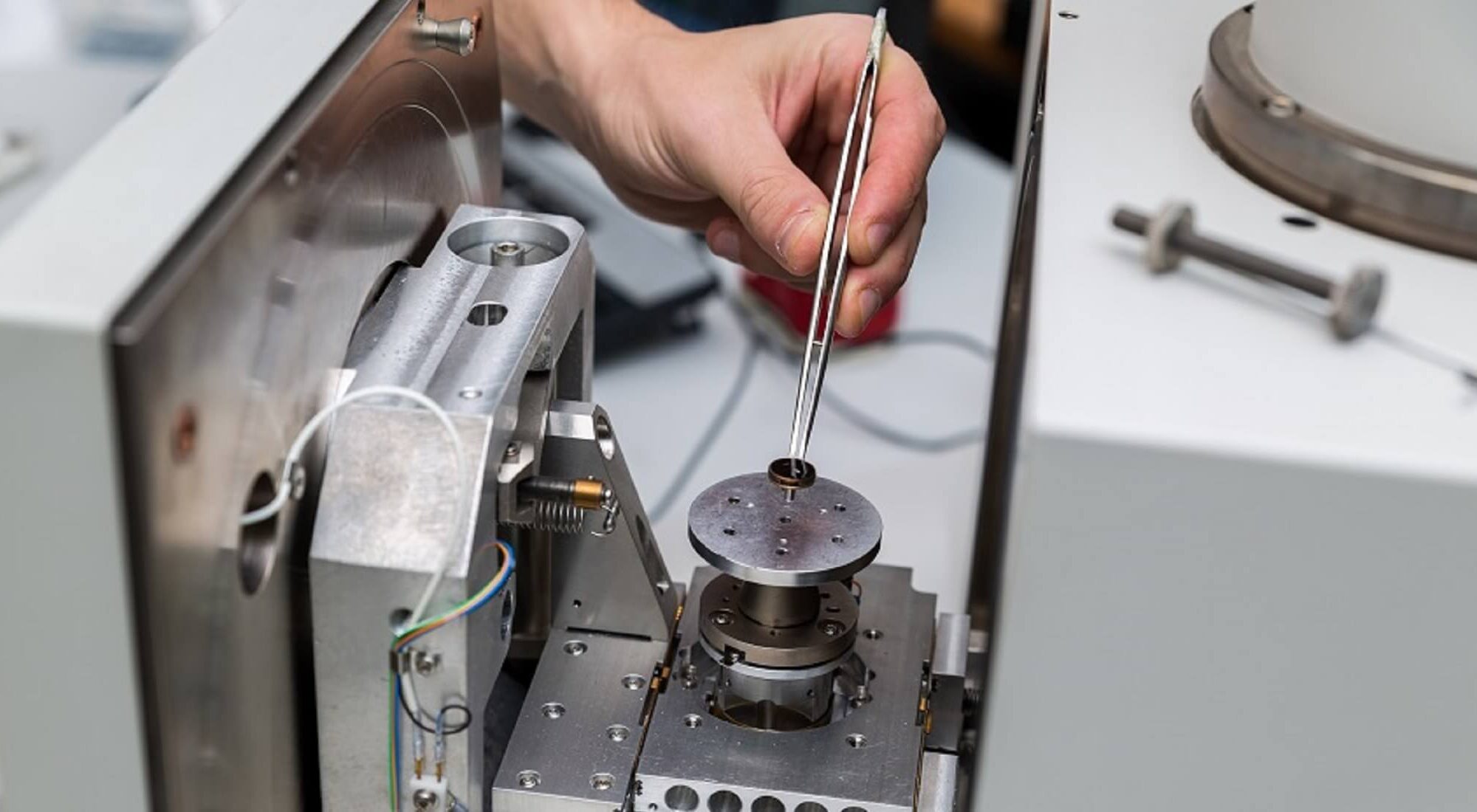
Hands-on course into experimental techniques to determine dynamic properties of mechatronic systems in a reliable way. Participants will acquire a mix of theoretical background, do’s and don’ts and practical hands-on experience.
Please note: limited capacity due to a maximum group size of 8 participants. This encourages interaction and contributes to extra personal attention for each participant.
This training is available for open enrollment as well as for in-company sessions.

Do you also encounter multivariable control designs for industrial systems with multiple sensors and actuators, such as motion systems with multiple axes? In these situations, interaction between different inputs and outputs can deteriorate performance and may even lead to closed-loop instability. The aim of this course is to develop a systematic framework for motion control tuning of multivariable systems, where academic insights and industrial pragmatism are perfectly combined.
In traditional single-input single-output (SISO) motion systems, the performance is generally achieved through PID controllers, possibly extended with notch filters, and designed using time responses and frequency domain techniques such as Bode and Nyquist plots. At the same time, many techniques from academia directly apply to multivariable systems but require a parametric model, which often is very time-consuming to obtain.
This training is available for open enrollment as well as for in-company sessions.


Basic course into all aspects of machine vision as applied in mechatronic systems.
Participants will acquire well-balanced insight of all relevant aspects including imaging (optics, illumination, sensor characteristics), image processing hardware/software and integration aspects of machine vision in an overall system.
The training is available for in-company sessions.

The application of passive damping is becoming a key knob for getting precision engineering applications to meet tighter specifications over time. In particular for high-tech systems, we see high-bandwidth control of systems that are classically designed for high reproducibility, i.e. based on masses and springs, becoming increasingly difficult. Despite the risk of hysteresis related virtual play, passive damping can highly simplify controller design and improve positioning performance.
This course will address the design, modelling and implementation of passive damping in high-tech systems. We will discuss the trade-offs between damping on the one hand, and stiffness and position uncertainty on the other. Various passive damping principles will be discussed, viz. material damping (viscous-, linear viscoelastic- and composite damping), tuned mass- and robust mass damping, and constrained- and free-layer damping. We will focus on different application areas, such as medical equipment, machine tools and semiconductor applications.
This training is available for open enrollment as well as for in-company sessions.

This course focuses on the various aspects related to thermal effects that impact the performance (accuracy, life time or process quality) of precision modules/systems. Participants will acquire theoretical and practical background on design, simulation, measurement and compensation techniques that are essential in the development of precision modules/systems that are subject to internal or external thermal loads.
This training is available for open enrollment as well as for in-company sessions.
Receive our monthly updates

