Machine learning adds another layer to your software security challenge

Although machine learning security research is still in its early stages, it’s clear that input possibilities without barriers increase threats. You don’t need to touch a keyboard anymore to fool a machine learning system. Software security expert Balázs Kiss touches upon a few points in this new field and gives advice on the basic protection measures.

Just like software in general, machine learning systems are vulnerable. “On the one hand, they’re pretty much like newborn babies that rely entirely on their parents to learn how the world works – including ‘backdoors’ such as fairy tales, or Santa Claus,” says security expert Balázs Kiss from Cydrill, a company specialized in software security. “On the other hand, machine learning systems are like old cats with poor eyesight – when a mouse learns how the cat hunts, it can easily avoid being seen and caught.”

Things don’t look good, according to Kiss. “Machine learning security is becoming a critical topic.” He points out that most software developers and experts in machine learning are unaware of the attack techniques. “Not even those that have been known to the software security community for a long time. Neither do they know about the corresponding best practices. This should change.”


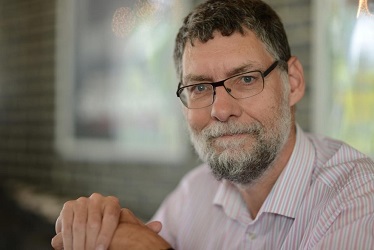
Security expert and experienced software trainer Balázs Kiss recently developed a new course on machine learning security to be rolled out shortly by High Tech Institute in the Netherlands.

Machine learning (ML) solutions – like software systems – are vulnerable in various ways and they increase the security needs. Last year, this was pointed out in a quite embarrassing and simple way by two students from Leuven. They easily managed to mislead Yolo (You Only Look Once), one of the most popular algorithms to detect objects and people. By carrying a cardboard sign with a colorful print of 40 by 40 cm in front of their body, Simen Thys and Wiebe Van Ranst made themselves undetectable as human persons. Another example comes from McAfee researchers who managed to fool the Tesla autopilot by misclassifying speed limit signs and made the car accelerate past 35 mph.

Know your enemy

“An essential cybersecurity prerequisite is: know your enemy,” states Kiss, who is also an experienced software trainer and recently developed a brand new course on ML security to be rolled out shortly by High Tech Institute in the Netherlands. “Most importantly, you have to think with the head of an attacker,” he says.

Let’s take a look at what the attackers are going to target in machine learning. It all starts with exploring what security experts call “the attack surface,” the combination of all the different points in a software environment where an unauthorized user can try to enter or extract data. Keeping the attack surface as small as possible is a basic security measure. Like the students from Leuven proved: to fool an ML system you don’t even have to touch a keyboard.

'Garbage in, garbage out.'

A common saying in the machine learning world is “garbage in, garbage out.” All algorithms use training data to establish and refine their behavior. Bad data results in unexpected behavior. This is possible due to the model performing well on the training data but unable to generalize the results to other examples (overfitting), the model being unable to capture the underlying trends of the data (underfitting) or due to problems with the dataset. Biased, faulty or ambiguous training data are of course accidental problems, and there are ways to deal with them. For instance, by using appropriate testing and validation datasets. However, an adversary feeding in such bad input intentionally is a completely different scenario for which we also need special protection approaches.

Attackers are smart

Kiss: “We simply must assume that there will be malicious users. These attackers don’t even need to have any particular privileges within the system, but they can provide raw input as training data and see the system’s output, typically the classification value. This already means that they can send purposefully bad or malicious data to trigger inadvertent ML errors.”

'Attackers can learn how the model works and refine their inputs to adapt the attack.'

“But that’s just the tip of the iceberg,” finds Kiss. “Keep in mind that attackers are always working towards a goal. They will target specific aspects of the ML solution. By choosing the right input, they can actually do a lot of potential damage to the model, the generated prediction and even the various bits of code that process this input. Attackers are smart. They aren’t restricted to sending static inputs – they can learn how the model works and refine their inputs to adapt the attack.”

In case of supervised learning, it encompasses all three major steps of the ML workflow. For training, an attacker may be able to provide input data. For classification, an attacker can provide input data and read the classification result. If the ML system has feedback functionality, an attacker may also be able to give false feedback (“wrong” for a good classification and “correct” for a bad one) to confuse the system.

Crafted inputs

Many attacks make use of so-called adversarial examples. These crafted inputs either exploit the implicit trust an ML system puts in the training data received from the user to damage its security (poisoning) or trick the system into mis-categorizing its input (evasion). No foolproof method exists currently that can automatically detect and filter these examples; even the best solution, where a system is taught to recognize adversarial examples, is limited in scope.


By carrying a cardboard sign with a colorful print of 40 by 40 cm in front of their body, Simen Thys and Wiebe Van Ranst made themselves undetectable as human persons. Credit: KU Leuven/Eavise

There are defenses for detecting or mitigating adversarial examples, of course. However, an intelligent attacker can defeat solutions like obfuscation by producing a set of adversarial examples in an adaptive way. Kiss points to some excellent papers that highlighted these, like those from Nicholas Carlini and his colleagues at Google Brain.

All in all, ML security research is still in its early stages. The current studies mostly focus on image recognition. However, some defense techniques that work well for images may not be effective for text or audio. “That said, there are plenty of things you can still do to protect yourself in practice,” divulges Kiss. “Unfortunately, none will protect you completely from malicious activities. All of them will however add layers of protection, making the attacks harder to carry out.”

Most important, maintains the Cydrill expert, is that you think with the head of an attacker. “You have to train neural networks with adversarial samples to make them explicitly recognize this information as incorrect.” According to Kiss, it’s a good idea to create and use adversarial samples from all currently known attack techniques. A test framework can generate such samples to make the process easier. There are existing security testing tools that can help with this – like ML fuzz testers Tensorfuzzs and Deeptest, which automatically generate invalid or unexpected input.

Sanity checks

Limiting the attacker’s capabilities to send adversarial samples is always a good mitigation technique. One can easily achieve this by simply limiting the rate of inputs accepted from one user. Of course, detecting that the same user is behind a set of inputs might not be easy. “This is the same challenge as in the case of distributed denial-of-service attacks, but the same solutions might work as well.”

As always in software security, input validation can help. It may not be trivial to automatically tell good inputs from bad ones, but it’s definitely worth trying. We can also use machine learning itself to identify anomalous patterns in the input. “In the simplest case, if data received from an untrusted user is consistently closer to the classification boundary than to the average, we can flag the data for manual review, or just omit it.”

Applying regular sanity checks with test data can also help. Running the same test dataset against the model upon each retraining cycle can uncover poisoning attack attempts. Kiss: “Reject on negative impact, Roni, is a typical defense here, detecting if the system’s capability to classify the test dataset degrades after the retraining.”

The most obvious fact about ML security is often overlooked, notes Kiss. “Machine learning solutions are software systems. We program them in Python – or possibly C++ – and thus they potentially carry all common security weaknesses that apply to those languages.” The Cydrill trainer especially advises us to be aware of point 9 from the OWASP Top Ten. The Open Web Application Security Project is a document that summarizes the ten most critical security issues in web applications to raise awareness and help minimize the risk of attacks. Point 9 warns developers about using components with known vulnerabilities. “Any vulnerability in a widespread ML framework such as Tensorflow or one of its many dependencies can have far-reaching consequences for all of the applications that use it.”

Potential attack targets

The attackers interact with the ML system by feeding in data through the attack surface. Start to think with the head of the attacker and ask questions. How does the application digest the information? What kind of data? Does the system accept images, as well as audio and video files? Or are there restrictions? If so, how does it check the types? Does the program do any parsing or does it delegate it entirely to an open-source or commercially available media library? And after preprocessing the data, does the program have any assumptions (empty field, requirements on values)? Is data stored in a relational database or in XML or JSON? If so, what operations does the code perform on this data when it gets processed? Where are the hyperparameters stored, and are they modifiable at runtime? Does the application use third-party libraries, frameworks, middleware or web service APIs as part of the workflow that handles user input? If so, which ones?

Kiss: “Each of these questions can indicate potential attack targets. Each of them can hide vulnerabilities that attackers can exploit to achieve their original goals.”

These vulnerability types are not related to machine learning as much as to the underlying technologies: the programming language itself (probably Python), the deployment environment (mobile, desktop, cloud) and the operating system. But the dangers they pose are just as critical as the adversarial examples – successful exploitation can lead to a full compromise of the ML system. This isn’t restricted to the code of the application itself. Researcher Rock Stevens from the University of Maryland explored vulnerabilities in commonly-used platforms such as Tensorflow and Pytorch.

Real threats

Kiss’ main message is that ML security covers many real threats. It isn’t just a subset of cybersecurity, it shares many traits of software security in general. We should be concerned about malicious samples and adversarial learning but also about all the common software security weaknesses. Machine learning is software after all.

ML security is a new discipline. Research has just begun, we are just starting to understand the threats, the possible weaknesses and the vulnerabilities. Nevertheless, ML experts can learn a lot from software security. The last couple of decades have taught us lots of lessons there.

This article is written by René Raaijmakers, tech editor of Bits&Chips.

Understanding how to generate value – within time and budget

Luud Engels, trainer of the System architect(ing) training at High Tech Institute
As a project manager, system architect and crisis manager in the high-tech industry, Luud Engels has a reputation for not mincing words. In addition to his consultancy work, he recently started as a system architect(ing) trainer at High Tech Institute. “Clear communication is key in complex development environments.”

You don’t want to start with Luud Engels about how open-minded and communicative we are in the Dutch high tech as a system architect. He’ll be forceful in his response, underlining just how hypocritical it is to believe that. “Here in the Brabant region, we’re not that open at all. Just stand at a coffee machine and listen. We’re not talking with you, we’re talking about you.”

When it comes to direct communication – or rather, confrontation – Engels has a reputation. A few months ago, he was sent packing after strongly expressing – according to his client – what was wrong within the company. “I’m convinced that at the right time, you can say anything to anyone – be it in a team meeting or a discussion between two people. Of course, most Dutch don’t do that. But I don’t seem to excel at it either because I sometimes put things so bluntly that people tell me to get lost.”

Engels’ appreciation of factual and clear communication comes from his many years of experience as a project manager, a system architect, a crisis manager and a member of the management team at engineering firm TMC. His advice for development environments: “Speak your mind. Also, about personal stuff. It’s perfectly fine to tell someone his blue shirt bothers you. But statements like ‘Microsoft sucks and Apple is good’ don’t help. Make it factual: are we going to work object-oriented or process-oriented? Are we going to use glass or titanium? What are the advantages? What are the disadvantages? Talking about glass, I don’t need to know the whole history of glassworks. I want the five key criteria – in numbers, not in positives and negatives. If you know the dominant parameters, you also know how to measure them and we can agree on the first development steps to make the measurements possible.”

'Make sure the whole team is at least on the same path.'

Engels emphasizes that in the development of high-tech systems, several roads lead to Rome and that it’s important to stick to the choice made. “Make sure the whole team is at least on the same path, rather than endlessly searching for the only right solution – which, by definition, doesn’t exist.”

But sometimes, even the simplest of things can go wrong. “Once, after a positive conversation with a client, I received the report in colloquial Dutch. I asked if the client representatives had approved the text. Of course, they had not. So I insisted on writing it down in English, presenting it to the client and asking them for their approval. After all, it’s often about decisions with far-reaching consequences. Still, syncing with the customer proved a daunting task.”

The laws of Luud
  • If the financial people take over, the engineering interest becomes secondary; if the engineers take the lead, it will be financially broken
    (About balancing tech and money in high-tech OEMs)
  • The client who asks for a crisis to be averted is half the culprit or part of the crisis in question (About crisis management)
  • I firmly believe in the power of the outsider (About the crisis manager)
  • We talk past each other: one talks in Newtons per square meter, the other in bits per second (About communication and collaboration in high tech)
  • A crisis doesn’t go away by getting rid of the people who put their finger on the sore spots (About stranded development projects)
The outsider

Engels’ extensive technical career started with a study of electrical engineering, after which he joined Sattcontrol, a Swedish industrial automation specialist. He programmed PLCs for egg-grading machines, dairy factories and automated warehouses. Later, he switched to Fortran for PDP and Vax minicomputers.

After five years, Engels moved to Cap Volmac (later Cap Gemini), where he did projects. While he mainly worked in engineering, Cap’s core was business automation. “I learned a great deal about developing computer systems and software according to the rules.”

Engels started for Cap at ASML, he then worked on highway signaling at the Dutch Department of Waterways and Public Works, eventually taking on leadership roles. Later, audits were added to the mix. He estimates that he’s assessed about twenty projects. “After a day of walking around, you know what’s going on and where the project went wrong,” he says. Smilingly: “And certainly not because I’m so smart, or because I saw so much, but mainly because I was an outsider.”

Engels firmly believes in the power of the outsider. “You arrive at companies where things have gone completely wrong and then you’re allowed to walk around and speak to 5-10 people. They all have an opinion about the project in crisis. You get to hear the whole story. People want to pour their hearts out. You hear what’s wrong, and above all: what others aren’t allowed to say.”

The headstrong technician

Technicians are a stubborn, headstrong type – and Engels should know, as he certainly fits that mold. “We’re engineers, aren’t we? We think like this: ‘I’m an electrical engineer and according to my calculations, it’s 5 volts. If you don’t get it, I’ll explain again, but the outcome remains 5 volts. You’re crazy, not me.’ While in projects, it’s mainly about effective collaboration. That’s the difficult part. One talks in newtons per square meter, the other in bits per second. One talks about the goal, the other about the solution. The high tech is one big Tower of Babel. That starts with requirements and continues through to design, integration and testing. Just as well: if I do a project myself and an outsider comes in, he or she will also shoot holes in it.”


Luud Engels will lead the mid-November edition of the System Architect (Sysarch) training in Leuven.(Belgium).

Engels prefers to step in when the crisis is at its deepest. Take the Fusion project that ran at Philips at the end of the nineties. Its ambitious goal was to use a single platform to cover the mechanical, electrical and software construction for medical diagnostic systems. The idea was that cost savings through reuse would justify the extensive operation. “The director outlined his problem as follows: every month, thirty new developers joined the project and every month, they told him that completion was delayed for another two months.”

'The outsider is allowed to speak up.'

Engels, again, applied the power of the outsider. “The outsider is allowed to speak up. The deeper the crisis, the more receptive one is to outside messages. Usually, other people have already had a look at it. But often, they put their fingers on sore spots that they weren’t allowed to point to and ended up having to leave. They asked me to replace the current project leader because he couldn’t make up for the delay. But a crisis doesn’t go away when you get rid of the people who put their finger on the sore spots. Instead, I went to help the incumbent project leader. Together, we contained the crisis by adjusting the scope and working with early feedback. One of my laws is: the client who asks for a crisis to be averted is half the culprit or has at least a dominant part in it.”

Is it tunnel vision?

“Please note: you’re talking about very competent people with very relevant arguments and tons of knowledge. But gradually, the solution or working method has been placed in different silos. Very skilled people wear down paths, creating trenches that are so deep that you can barely look over the edge. Everyone has his trench and is defending it stubbornly. You hear people say things like: ‘This isn’t negotiable!’ When you hear that, it points you to where it went wrong and where a possible beginning of the solution lies.”

Where does the solution start?

“The first law of crisis management is containment. With Fusion, it meant that they had to stop adding thirty people per month. Instead, they had to cut twenty a month and reduce scope. The deeper cause – in my opinion – was pure self-overestimation. The platform idea for software alone is a major challenge. But when you start including mechanics and electronics, for all diagnostic products, it becomes too much at once. It’s difficult enough to develop electronics, software and mechanics together for a single system, but trying to develop one platform for different product lines in one project is naive, to say the least. At the time, they also had to work with developers in Bangalore, and they wanted to go from CCM level 2 to level 3 at the same time. That had to stop right away. You need to limit the scope of a project in crisis and postpone long-term improvement initiatives.”

'It’s often the case that the technicians already know what’s wrong and so does management.'

“It’s often the case that the technicians already know what’s wrong and so does management. Both are right, but they won’t reach a solution together. Much later, I did a job at Philips DPS, where I saw that Philips had made significant progress. Putting fingers on sore spots, however, was still not allowed, unfortunately.”

How does this get done the right way?

Start small, says Engels. “You need early feedback, preferably a launching customer. I’ve heard Martin van den Brink say it many times at ASML: put everything together, show me that it works. Then he challenges people by stating: ‘Your physics don’t work.’ There was a lot of that during early integration. Much later, the industry introduced fancy words for it, calling it Scrum, Agile and rapid development. But the point is that you need feedback, and it’s important to start getting it at an early stage. The goal has to be to deliver every six weeks and to deliver something that actually works. If not, you have the means available to find out why it failed, why the physics didn’t work. At that point, you might have to accept that you’re not going to meet your deadline. What you definitely shouldn’t do is bring in more people.”

“When technicians tell you they need more time to investigate something, you have to get suspicious. Van den Brink is also a master at assessing or challenging that.”

'Assign a person responsible to each problem, including deadlines for results and decisions.'

Another necessity: “Make people owners of a problem. Certainly in environments with complex developments, where there’s not even a beginning of a solution and new inventions are required, everyone feels like the master of their idea, with their personal insight. We Dutch are also very good at seizing every opportunity to talk about this in a very broad sense. But you simply need to take the next step. That’s the only thing from which a project benefits. So if you’re sitting in a room with thirty people and problems come up, the project manager, the crisis manager or the system architect must assign a person responsible to each problem. This also includes deadlines for results and decisions.”

According to Engels, it’s definitely in the culture of ASML, but there was a point in time when it got out of hand there. “They appointed an owner for everything and called him a project leader. McKinsey once did an analysis at ASML of project leaders and project sizes. They found that, on average, there were 1.2 people on each project, including the project leader! Then you run the risk that these owners, these project leaders, start competing over available resources and the underlying issue disappears into the background.”


Engels has extensive experience as a project manager, system architect and crisis manager in the high-tech industry.

The product manager defines the product that will perform well in the market. He determines the available budget – often too little – and negotiates with the system architect whether it can be made for that money. Engels: “It’s a balancing act. With mature products, it works differently, but with a first development, you want a proof of concept as soon as possible. Or at least a confirmation that your ideas are right and that you’re on the right track.”

To what extent should the system architect, like the product manager, talk directly to customers?

“In high tech, that’s beyond dispute. That’s where the product manager and the system architect come together. They have to. The former has more business focus, the latter looks at the technology and whether it’s feasible. They’re two sides of the same coin. This collaboration between the product manager and system architect is becoming more and more commonplace. However, I still see system architects who downplay the necessary coordination with the project manager or operational management. You then run the risk that a solution that perfectly meets market needs will ultimately fail in the realization phase.”

'The project manager sets hard deadlines and a system architect has to work with them.'

In smaller development projects, with ten to twenty developers, one person can take on the role of both project manager and system architect. In larger projects, with tens or hundreds of developers and several dozen suppliers, it’s important to split up. Engels has experience in both roles. “The project manager sets hard deadlines and a system architect has to work with them.”

“The project manager must define which issues the system architect still has to solve and with whom. Together, you discuss the ins and outs, weigh the benefits and concerns, decide on key parameters, and then the project manager calls the system architect: at the end of next week, we’ll make a decision! It’s all about direction, coming up with a format that involves knowledgeable people to arrive at quantified statements with which you can really make an assessment.”

A system architect has a major impact on product development, yet often has a less than visible role.

“He’s an experienced technician, but his value lies primarily in his view of the business. Ninety-nine times out of a hundred, the system architect knows the market in which his product or system is going to land. This is necessary to translate the market and product requirements into the system requirements and then outline the design.”

It takes quite a bit of experience to reach that level. At the same time, Engels observes that the concept of a system architect is subject to inflation. “Nowadays, there are architects all over the place. A software architect is usually a senior software developer, a requirements engineer or someone in charge of engineering. I wouldn’t say anything to the detriment of such a lead engineer. Still, the difference with the system architect is that the latter has to know the business, understand how value is generated and thus understand why it has to be done within a certain amount of time and money.”

“This is also the case in construction. Your architect asks you what you are going to do with your future house and adapts his design accordingly. Are you going to cook a lot, or do you mainly want to drink wine? That’s why Van den Brink does so well at ASML. He goes to customers and explains what kind of litho systems they need. He knows the market like no other. Even stronger, he dictates the market. That means he understands the goals and the timing of chip manufacturers like no other, including what their production processes look like. If they talk about critical dimension and overlay, he can explain that his machine can do that and also substantiate why.”

This article is written by René Raaijmakers, tech editor of Bits&Chips.

Recommendation by former participants

By the end of the training participants are asked to fill out an evaluation form. To the question: 'Would you recommend this training to others?' they responded with a 8.5 out of 10.

Innovation and character light the path to IMS success

Interview with Martin Langkamp & Martijn Bouwhuis of IMS about system architecting
In today’s high-tech environment, companies of all sizes are looking to stay at the cutting edge of innovation. According to team leaders Martin Langkamp and Martijn Bouwhuis of Almelo-based IMS, the equation is easy. It comes down to a few key factors: keeping the employees interested, keeping the workplace light and focusing on personal development through training.

Dutch innovation in the high-tech sector comes from businesses of all sizes. While big names like ASML and Philips are recognized around the globe, there are also several small and medium enterprises (SMEs) in the Netherlands playing a big role in global high tech. Take, for example, Almelo’s IMS. IMS has been around for just over 20 years, opening its doors in 1999 after it was spun out of Texas Instruments through a management buy-out.

Now, in 2020, the automation and technology expert has delivered more than 750 production lines with an emphasis on the medical device, smart device and automotive domains. “We’ve grown a lot since the early days. Now, we see our role as helping our global customers realize their production goals,” explains Martin Langkamp, technical sales coordinator at IMS. “We do that by delivering our innovative machines all over the world that excel in the high-volume production of small, precise and sometimes extremely complex products.”

Character

While IMS’s global customer base is certainly large, the company itself has a relatively small footprint – employing more than 120 people at its Almelo and Groningen locations in the Netherlands. Despite its small stature, it’s having a big impact on consumer electronics. Currently, the high-tech machine maker is active in delivering machines used in the assembly process for the smart device and automotive sectors, in addition to next-generation headlights and sensors for cars.

“The character of IMS is that we’re always focused on innovation, not just locally, but globally,” highlights Langkamp. “That means we do a lot of international projects, which offers our engineers exciting opportunities to travel, learn and share knowledge. That’s part of our DNA.”

'We use education-based developmental plans in our evaluation process, to help people and the company meet our goals.'

Another focal point in the character of IMS is the focus on the personal development of its employees. “One of our main focuses is on continuing education for our workers. We find that trainings, workshops and conferences are a great way for our engineers to develop both personally and professionally,” comments Langkamp. “In fact, as we look to the future as we continue to innovate, the necessary competencies of a position can expand and the engineers may be guided to specific courses to bolster their skills. We actually use education-based developmental plans in our evaluation process, to help people and the company meet our goals.”

Modularity

Recently, IMS found a golden opportunity to utilize training. Looking to continue to grow and push the cutting edge of complex part manufacturing, the company took on a new role for its customers, helping lead them in the design of production machines by offering series-based machines, rather than one-offs.

“For many years, R&D operated more reactively for development, finding solutions for the customers as they arose,” recalls IMS R&D team leader Martijn Bouwhuis. “More recently, however, we’ve started to adopt new methods to become more proactive in the process and we’ve focused our efforts into making standardized products that can be tailored to fit our individual customers.”

To get these standardized products, IMS decided that modular thinking was the best way to achieve the new goals and it started laying the foundational work to get its workforce aligned on the idea. However, it was during the Bits&Chips System Architecting Conference, the team found that their modular approach fits perfectly with the principles of system architecting. Langkamp: “For a few years, we’d already been adjusting our processes, but we were looking for a better structure with more continuity within the whole of the company.”


According to technical sales coordinator Martin Langkamp, one of IMS’s main focuses is on continuing education for our workers. Credit: Fotowerkt.nl

'It was time to update and professionalize our working methods.'

Bouwhuis: “While we were assessing the best way to progress, we found that often in the design process we would focus on subsystems because that’s where the value was added. Somehow, we forgot to look at things from a system level. But as the complexity of the parts our machines are making continues to explode, it’s clear that software engineering has become more important than ever and it was time to update and professionalize our working methods.”

Rather than sending a few team members to a relevant training, IMS reached out to High Tech Institute to develop its customized in-company edition of the System Architecting training, allowing the Almelo-based company to bring in a broad and diverse group of its team. “It’s important in our transition to establish cohesion among all the different disciplines and departments,” says Langkamp. “From mechanical to electrical and software engineers to the sales team, the goal was to get everyone on the same page, thinking at a system level.”

Added value

“The reason we selected High Tech institute was because of the strength of its instructors. Their knowledge and expertise matched our needs precisely,” emphasizes Bouwhuis. “What we appreciated the most was that the trainers found ways to trigger discussion, which got our group of about 12 trainees really participating. This interaction between the team and the instructors, all with different perspectives, really enhances the training with a lot of added value.”


“This interaction between the team and the instructors really enhances the training with a lot of added value,” says IMS R&D team leader Martijn Bouwhuis. Credit: Fotowerkt.nl

Does IMS use training to attract or keep its skilled engineers? Is it difficult to compete with larger companies in the high-tech domain?

“Yes and no. Yes, training and education opportunities are a great tool to attract and retain our engineers. But, as far as competing or losing our skilled workers to the bigger companies, no, that’s not the case. In fact, I think the size of IMS, the scope of our work and our approach is something that draws people to us and makes them want to stay,” illustrates Langkamp. “In the Brabant region, it’s pretty common for engineers to bounce around from place to place, but here at IMS and in the Twente region in general, it’s just not as common.”

'Sometimes we refer to IMS as a high-tech playground for engineers.'

“Because we’re small, we’re able to keep things light and fun in the workplace. Of course, we’re extremely professional in working with our customers. But the people here are more than just a number and embracing that mentality means we can operate as a family and have fun,” adds Bouwhuis, joking: “Sometimes we refer to IMS as a high-tech playground for engineers.”

“Yes exactly. Because of our roots from Texas Instruments, we sometimes joke about having people working here for 40 years, but the company is only 20 years old,” laughs Langkamp. “By keeping our people interested with exciting projects, a light-hearted informal workplace
and a focus on our workers and their development, IMS is in a strong position to continue innovating.”


Photo credit: Fotowerkt.nl

This article is written by Collin Arocho, tech editor of Bits&Chips.

Recommendation by former participants

By the end of the training participants are asked to fill out an evaluation form. To the question: 'Would you recommend this training to others?' they responded with a 8.5 out of 10.

Master the art of software engineering

Interview with Robert Deckers, trainer of the Good software architecture training at High Tech Institute
With the growing reliance on software in an increasingly high-tech world, it’s more important than ever to master the art of software engineering as software architects. Trainers Robert Deckers and Bart Vanderbeke have taken it upon themselves to turn developers into craftsmen.

“A colleague once told me about one of his former project managers, who, upon realizing that the estimates didn’t align with his timeline, just cut them in half to make them fit. I find it unheard of, not only that you’d do such a thing as a project manager but also that people stand for that kind of behavior. You don’t have to scold him, but you can open your mouth. Instead, at the end of the project, when everything has gone haywire, everyone complains about how this has happened to them.”

Inspired by Google executive Fred Kofman and his book “Conscious business,” Bart Vanderbeke calls on software architects to stop playing the victim. “It’s unacceptable and unhealthy,” he claims. “You’re the craftsman. When someone tells you that you need to do something in half the time, or skip the design, or refrain from reviews, you say no – constructively. Software architects are scarce, so you’re in a comfortable position, certainly no position to self-victimize. Don’t hide behind ‘management.’ As a software craftsman, using a term coined by Kofman, you’re ‘unconditionally responsible’ for everything you do or don’t do.”


“You need to take unconditional responsibility, which literally means that you need to have the ability to respond – in a meaningful way,” says Bart Vanderbeke. Credit: Bart Vanderbeke

At NXP in Leuven, Vanderbeke leads a team of fifteen software architects, working on 2.4 GHz radio applications for personal health – think hearing aids, headphones and earplugs. “Tiny systems containing tiny software stacks,” he notes. “But even if you have a codebase of 100k or 200k, like us, software craftsmanship is of paramount importance. Building the hardware takes about a year, followed by maybe five years of software enhancement. I’ve developed a series of lectures to help my colleagues bring out their inner craftsman.”

The non-functional

A kindred spirit, Robert Deckers, too, aims to increase software craftsmanship, but with a focus on software architecture – “the most difficult trick of the trade,” as he calls it. “It already starts with the question: what is software architecture? You can find hundreds of books that try to give an answer. While some are bad, terrible even, most of them are meaningful, but they all tell a different story.” This was one of two triggers that led him to dive into the subject, develop his own view, write his own book and bestow his insights upon others.

'The real complexity is in the non-functional.'

The second trigger was the realization that in traditional methodologies, there’s too much focus on the functional requirements, whereas the non-functionals are the hardest to get to grips with and therefore take up the most time. “Way back when I was an OOTI trainee at Eindhoven University of Technology, I was the software architect for a copier,” reminisces Deckers. “After two months of design, the anomalous system behavior started to rear its ugly head and I realized that we had to do error handling as well – while obvious to someone with 20 years of experience, it hadn’t crossed my newbie mind. When we were finished, to my big surprise, no less than 85 percent of all our code turned out to be for error handling, so only 15 percent of our efforts had been focused on the functionality. That’s when I first experienced that the real challenge, the real complexity, is in the non-functional.”

After the OOTI traineeship – the PDEng Software Technology, as it’s known today – Deckers sharpened his views at several companies, including Philips Research and Sogeti. Since 2013, he’s running Atom Free IT, coaching organizations and their architects, helping them create architectures, set up the architecture process and embed it. The last five years, he’s combining this with a PhD project at the Vrije Universiteit Amsterdam, researching the cognitive aspects of systems engineering.

Come prepared

Vanderbeke and Deckers are the newest additions to the software and systems portfolio of High Tech Institute. Both want to help software architects be better at their work – become real craftsmen. “As a software craftsman, you know how to organize your work and you have the assertiveness not to accept compromises on the way of working. Instead, you go for the optimum, taking into account the influencing variables and conditions. You don’t do things because someone tells you to, but as you understand the need, you autonomously decide to do so,” summarizes Vanderbeke the values he intends to convey in his workshops.


Robert Deckers stresses the importance of focusing on the non-functional properties, aka the quality attributes.

Learning to say no in a constructive way is a key topic in Vanderbeke’s teachings. “That requires you to come prepared. When you’re asked to plot a course in a project, you need to have a couple of options readily available, not down to the minute detail but to such an extent that you can weigh them and make an informed choice. When someone steps up to you and says something can be done in half the time you estimated and you don’t have your facts straight, he may well be right – you have no way of telling. If you know what you’re talking about, that will not happen. You can have a constructive conversation and you might be challenged, persuaded even, but you won’t let yourself be blown away by unsubstantiated claims. Someone once asked me if we could speed things up by taking shortcuts, upon which I replied: ‘The only shortcut you can take is skimp on the specs’ – and that was the end of the discussion.”

'Learning to say no requires you to come prepared.'

“You need to take unconditional responsibility, which means that you need to have the ability to respond – in a meaningful way,” continues Vanderbeke. “In my workshops, I use several small examples, taken from my everyday work, to get my point across. For instance, someone escaping responsibility would say: ‘I cut my estimation in half because my project manager told me to,’ as opposed to someone keeping ownership, a ‘player’ in Fred Kofman’s terms, who would say: ‘I wanted to avoid a fight with my project manager, so I gave in.’ Likewise, a victim would say: ‘I make estimations because our process demands it,’ whereas a player would say: ‘I want to stay with the company, so I use the established process.’ By making them aware of these little things, people are more inclined to correct their behavior.”


A good architecture is correct, consistent and communicated. Credit: Robert Deckers

Fish nor fowl

In his training courses, Deckers relays his ideas about good architectures. “The role of architecture is to offer a solution approach for the key system properties that are the hardest to realize. As a system architect, you always have to make sure you’re working towards a solution, providing guidance and serving your stakeholders’ needs, while also keeping an eye out for things that could go wrong if not addressed in the architecture. If you’re not doing this, you’re probably not architecting. Also, I want software architects to understand that an architecture needs to offer business value and that it’s feasible to build the system within the organization at hand. You can only be an effective architect when you’re prepared to step out of your technology comfort zone.”

'My advice: hang the top five stakeholder concerns on the wall.'

According to Deckers, a good architecture is correct, consistent and communicated. “A system has to be correct in that it has to adhere to the stakeholder concerns and the technical environment. The development process has to be consistent. At Philips in Bruges, I once witnessed a software architect testing all preconditions of all the functions he programmed because he wanted his code to be robust. Meanwhile, in the cubicle right next to his, a colleague was using pointers without testing anything because he wanted his code to be fast. Combined in one system, that gives you neither fish nor fowl. You need to be clear on the key properties – my advice: hang the top five on the wall. Finally, an architecture should be described in such a way that you can discuss it with the different stakeholders, which means using different views for different aspects.”

Deckers stresses the importance of focusing on the non-functional properties, aka the quality attributes. He acknowledges that this seems to be at odds with the popular Agile principle of delivering working software as quickly as possible. “People often ask me: how do you match Agile and architecture? My answer to them: you don’t. They’re two different mindsets. Architecture is about looking before you leap, whereas with Agile, you just go and adjust based on the feedback you get. That’s perfectly fine for some businesses, but not for a copier or a medical scanner, where aspects like reliability and safety are known beforehand. The closest way to match Agile and architecture is to bend the rules and dedicate the first few sprints to the key concerns.”


Descending down the management funnel, the focus narrows and the risk for conflict grows.

Better decisions

With collaboration, there’s bound to be friction. A software craftsman, therefore, also needs tools for conflict resolution. In his workshops, Vanderbeke presents a management funnel doubling as an inverse conflict pyramid. It goes from wide to narrow in three levels: strategic, tactical and operational – from the what to the how. Descending down the funnel, the focus narrows and the risk for conflict grows. When a conflict actually arises, going back up the funnel to try and find a shared goal or principle helps to smooth things over.

“Software architects who are in disagreement about the way to tackle a problem often are at the bottom, stuck in their own solution. Taking them up and discussing the problem criteria usually ends the stalemate as they establish common ground,” illustrates Vanderbeke. “It’s a very useful instrument in process management as well. When you’re in a meeting that’s going nowhere, revisit the reasons why it was set up in the first place and a way out will present itself almost automatically.”

Stocked toolbox in hand, software engineers are well equipped for craftsmanship. With Deckers, Vanderbeke concludes: “It would be great to see them make better decisions. To see them operate more autonomously. And, at the same time, to see them have more fun in what they do.”

This article is written by Nieke Roos, tech editor of Bits&Chips.

Recommendation by former participants

By the end of the training participants are asked to fill out an evaluation form. To the question: 'Would you recommend this training to others?' they responded with a 9 out of 10.

BCN looks to get back to business

Interview with Ton ten Haaf of training location BCN
Deep in the clutches of the COVID-19 pandemic, the first half 2020 has been interesting, to say the least. But as the Netherlands, and the world, tries to grapple with the novel coronavirus, High Tech Institute and training location partner BCN are working diligently to get back to business as usual. At least, as much as possible.

It is safe to say that the coronavirus has changed life as we know it. Zoom, Skype and Teams meetings have become the standard as large numbers of people work from home and avoid groups and gatherings. Now, as the government starts to ease the pandemic measures and looks to jump-start the economy, businesses are walking a tight rope full of safety protocols in an effort to get back to work – albeit, not exactly back to normal. One such company that has traveled this path is Business Centre Netherlands (BCN), which offers multifunctional locations for business events, meetings, testing and various training sessions.

BCN should be recognizable to participants from High Tech Institute’s technical and professional training courses, as the Eindhoven location is home to the vast majority of High Tech Institute’s trainings. However, when the coronavirus struck and group meetings were banned, it immediately threw a wrench in the plans for the 2020 training calendar.

“On 16 March, we were forced to close our doors for 11 weeks,” explains Ton ten Haaf, Operational Manager of BCN. “We reopened in early June, but as there was some uncertainty about what to expect, and because we were only able to welcome a maximum of 30 guests per day in the beginning, we shifted to accommodate the needs of our customers and focused also on virtual classrooms rather than physical. Right now, however, our main focus is planning and preparing to safely get people back in the physical setting, as we expect numbers to increase in September and after.”


Ton ten Haaf, operational manager BCN Eindhoven.

New normal

If you’ve been anywhere over the last few months, you’ve probably noticed businesses taking new precautions to limit potential virus spreading. And as the world tries to find some sense of normalcy, BCN has been working to create a safer ‘new normal’. “As soon as we had to close our doors in March, we began an 11-week period of intense planning and communicating with our customers. Immediately we started to devise several protocols aimed at keeping people as safe as possible once they returned,” describes Jenny Rennenberg, account manager at BCN.

“It already starts during the reservation process, well before anyone arrives. We communicate with our customers to determine the specifics of numbers and needs, so we can make suitable accommodations – especially the 1.5 meters distancing. Another thing we do is inform all guests of the room number in advance, so they can report to the training rooms immediately, rather than lining up in the lobby.”

These won’t be the only differences visitors and training participants will notice when coming to BCN. “We’ve also split the entrance and exit routes. Normally, in and out traffic uses the same space, but now we have placed tape, arrows and signs to help guide visitors through different corridors and stairways to avoid contact,” says ten Haaf. “We encourage people to use the stairs, but if they need or prefer to use the elevator, we just ask that they use it one at a time, as the space is very narrow.”


Tape, arrows and signs help to guide visitors through different corridors and stairways to avoid contact.

In person and online

Another precaution that BCN has adopted is that the rooms are now set up in an “exam”-style design, with rows and columns of tables – each a minimum of 1.5 meters apart. “While we can still offer the intimacy of the u-shaped setup, keeping in line with the distancing measures of 1.5 meters, means capacity is a little lower. By utilizing the exam-style setup, we can accommodate more people. It really just comes down to the needs of the customer,” expresses Rennenberg. With BCN’s attention focused on health and safety, and the implementation of all the necessary precautions, there simply isn’t the same space as before. In all, the training center’s Eindhoven location can now accommodate only about 130 of its normal 280-person capacity.

“That’s a pretty big blow, in terms of what we can normally handle,” comments ten Haaf. “However, with the uncertainty of the virus, there are still some people that will feel uncomfortable traveling and attending in-person trainings. To better fit their needs, we work with our customers to organize meetings that can take place both here on location, as well as online in the virtual world, offering the best of both worlds. So, I’d say we’re actually doing quite well.” “Yes, and if there is a need for an event or training for larger numbers of people, we can use multiple rooms connected with TVs, and speakers or trainers can visit and broadcast from any of the rooms,” adds Rennenberg.

Filling up

Despite the difficulties of having to close for nearly three months, and the slow times brought on by summer vacation, BCN is looking to have a strong year – even on par with 2019. “We’ve already had a few in-person trainings resume, and the feedback we’re getting from our customers and attendees is very encouraging,” touts Rennenberg. “So far, comments have been very positive. We’re finding that most people really prefer the physical classes over virtual, and we’re hearing that visitors are happy to finally be back to doing such things on location again, especially with all the measures we’ve taken.”

Of course, that sentiment is very welcome and seems to be holding true. Since the broader easing of the national corona measures in early July, BCN’s customers have been calling nonstop. “One challenge we’ve had to work through is scheduling. Most of our customers book well in advance, even into next year,” highlights Rennenberg. “Now we’re getting a lot of calls from people that had to cancel during the shutdown, that now want to reschedule in the latter part of this year. That has taken quite some planning and scheduling adjustments, but so far, we think it’s going very well and we expect a strong finish to 2020.

This article is written by Collin Arocho, tech editor of Bits&Chips.

In-depth optics training keeps both students and the teacher sharp

Modern optics for optical designers trainer Stefan Baumer
Deep at his core, Stefan Bäumer is an optics fanatic. He finds great passion in teaching because he likes to spread knowledge and, as he says, it keeps him on his toes. With undiminished enthusiasm, he has been providing the optics training “Modern optics for optical designers” at High Tech Institute for years. The training is tough – covering all aspects of optics – but also very valuable, participants tell him afterward.

 One of the nice things about the optics, Stefan Bäumer thinks, is the visual. “If you build a set-up in the laboratory with a light or laser beam and lenses, you can use your business card to follow the beam and see what happens to it and how it forms an image. I really like the fact that you can see the effect visually right away,” he says enthusiastically. He likes working in the field because optics are the heart of the optical (measuring) system, determining both the functions and the tolerance of the system.

“In the future, we will be moving more and more towards end-to-end modeling,” says Stefan Bäumer, lecturer at High Tech Institute.

Bäumer’s experience in optics goes back a long way. Already, during his Master’s in physics, which he followed at Washington State University, there was a link. Also, during his PhD at the Technical University Berlin, he was involved in optics at the Optical Institute.

After completing his PhD, Bäumer started his career at Philips in Eindhoven. Here he started as an optical designer at CFT and later at Philips High Tech Plastics. After that, he worked for eight years as a senior optical system designer at Philips Applied Technologies and Philips Research. After a short time, as senior principal engineer at Philips Lighting, TNO asked him if he wanted to join their team. He was happy to do so; it allowed him to turn on his light at another organization. After a career of seventeen years at Philips, he switched to the optical group at TNO in Delft.

Now Bäumer has been working as a senior optical designer at TNO for almost eight years. Since 2015, he has also been part of the principal scientists’ group, who help determine technical policy. As a principal scientist, Bäumer is co-responsible for the direction of research in optics at TNO.

Progress

To be able to determine which way to go with TNO Optics, it is certainly useful that Bäumer has been in the field for a long time. As a result, he is well informed of developments. “Actually, there are a number of important developments that have led to strong growth in optics. The accuracy with which you can model optical systems has increased enormously. The integration with other disciplines has also greatly improved. In addition, the making of optical elements has improved, because the manufacturing technology has made huge leaps forward. Finally, near-infrared possibilities for detectors and light sources have been added, which are used, for example, in medical research,” explains Bäumer.

Far-reaching technological developments in the field of optical system design have indeed significantly improved the performance of all kinds of simulation programs in recent years. Optics also benefit from this. “I used to work with rather rudimentary optical design programs with which you could model systems and create a layout. There was still a lot of manual work,” says Bäumer. “Nowadays, you can model much faster and more accurately. You can include all kinds of phenomena in your simulations, such as nanostructures and diffraction. The integration with other disciplines such as thermal disciplines, mechanics and the improved communication between software systems of the various disciplines have also led to progress.”

What is certain is that the more sophisticated manufacturing technologies now available have also greatly accelerated optical developments. This is due in part to lathes with much higher precision – diamond turning allows you to create incredibly precise optical surfaces, including free-form surfaces – and new techniques such as magneto-rheological finishing (MRF) and ion beam figuring (IBF). These techniques allow opticians to design optics with much better specifications. This has also led to the emergence of free form optics in the last ten years. This branch of the field designs new optical elements that have no translation or rotation symmetry over the optical axis. This offers room for better performance, miniaturization and new optical functionalities.

Stefan Bäumer: “I would like to give my students a good basic optical knowledge, which enables them to make a good estimate of what is possible with optical systems. And, of course, also where the boundaries of feasibility lie'” Photo: TNO.

'I mean that we are going to predict system performance, from source to detector, under all circumstances using high-performance computing, among other things, as is done with ray tracing via graphics cards.'

 In the future, Bäumer predicts that we will be moving more and more towards end-to-end modeling. Bäumer: “By this, I mean that we are going to predict system performance, from source to detector, under all circumstances using high-performance computing, among other things, as is done with ray tracing (calculating how light rays behave in the optical system, AB) via graphics cards. This is a technique that they already use in the film industry, but it is also gaining ground in the scientific field. I also expect that more attention will be paid to computational optics. Because more and more computing power will become available, there will be more possibilities to find a better compromise between optical hardware and data processing via software. Because of this, different choices will be made in optical systems. Also, nanostructured surfaces and materials will increasingly find their application in optics. For optics in general, developments in the quantum field will unlock a whole new domain.”

Total overview

With all his knowledge about optical systems and the developments in the field, Bäumer can tell and show his students a lot during the training courses. The training course ‘Modern optics for optical designers‘ covers all the basic principles of optics. “It is important for trainees to understand how things work and which principles are behind them. How do electromagnetic waves and diffraction affect optical systems? What are the polarization effects? These questions all pass in review,” emphasizes Bäumer.

The fact that this training gives an overview of the entire field of optics makes it unique. However, there are many specialist optics courses, which zoom in on a specific area such as non-linear optics or optical design. What makes this training unique, however, is that it covers the entire domain of optics. A team of no less than seven qualified instructors, each working in the field of optics and specialized in a specific sub-area, provides high-quality training.

“Precisely the breadth and amount of homework that students have makes it a tough training. But that homework is the key to becoming familiar with the subject matter. When I talk to the students afterward and ask them what they thought of it, they say that it was tough, but that they learned a lot,” highlights Bäumer. “The training is also very strenuous for me. Every training takes a lot of preparation and there is a lot of after work, but I also learn from it every time and that keeps me on my toes. I want to give my students a good basic optical knowledge, which enables them to make a good estimate of what is possible with optical systems. And, of course, where the boundaries of feasibility lie.”

This article is written by Antoinette Brugman, freelance journalist and contributor to High-Tech Systems magazine.

Recommendation by former participants

By the end of the training participants are asked to fill out an evaluation form. To the question: 'Would you recommend this training to others?' they responded with a 8.5 out of 10.

“My PhDs weren’t allowed to leave without leaving something on the table”

Trainer of the Microelectromechanical systems (MEMS) training
A pioneer in the design of microelectromechanical systems (MEMS) with an additional passion for everything mechanical, a pragmatist and a very good teacher. That’s professor Bob Puers in a nutshell. He was chosen lecturer of the year in 2018 for his excellent MEMS training.

A curious course with overwhelming feedback from the trainees – that’s how Bob Puers describes the MEMS training course he taught in 2018 to a group of fifteen industrials from Pakistan. Puers: “It was held in China because of difficulties with the exchange of Pakistani. The trainees were all extremely willing to learn. I really appreciated this eagerness and also the particularly good interaction with the group. We had a lot of discussion on a very high level.”

In their feedback, the trainees said about Puers: “It was an excellent training both in terms of contents and presentation. The trainer was exceptional in answering questions raised” and “The professor’s way of teaching is extraordinarily good.” This positive feedback resulted in a review score of 9.8 out of 10 and the title “Lecturer of the year 2018.” Puers is modest about his contribution and points out that all the praise is probably due to accidental circumstances. However, when explaining his way of teaching and his knowledge about microelectromechanical systems (MEMS), it’s easily understood how he earned the title.


Bob Puers has always stimulated his PhDs to physically build a device. 

The scientist

Puers’ MEMS experience goes back to his study in electrical engineering. He was very interested in research and had a special passion for everything mechanical. When he came in contact with Raoul Vereecken, a urologist at the University Hospital in Leuven, he got involved in the development of portable, implantable medical electronics. He continued his career in this domain and started his own research group at the KU Leuven in 1988. Soon he had the disposal of his own cleanroom to fabricate devices such as pressure sensors, accelerometers and flow sensors.

'My PhDs weren’t allowed to leave without leaving something on the table.'

In his research, Puers focused on the application of medical implantable electronics and the development of technology to produce sensors – he’s always been motivated to develop devices and is working in a pragmatic way to realize this. If Puers knows a certain principle works, he doesn’t delve too much into the details of the theory but uses this knowledge to put it into practice and make new devices. And being a man of practice: he’s always stimulated his PhDs to physically build a device. As Puers puts it: “My PhDs weren’t allowed to leave without leaving something on the table.”

Puers continues: “In our cleanroom, I developed lithography and application techniques with our group of researchers. We made more sophisticated mechanical structures – on a miniature scale. The whole process of developing a very small mechanical structure, integrating it in an electronic component – to convert the mechanical signal into an electronic one – and finally building a sensor out of it – that still fascinates me.”

There have been many developments in Puers’ discipline. “Back in 1985, our group was one of the first to develop accelerometers. These devices were ground breaking at the time. Nowadays, accelerometers are integrated into commercial products like smartphones and cars at incredibly low cost. There are quite a lot of devices we laid the basis for, ideas that were taken over by the industry later on. So, we had to search for new research domains several times.”

MEMS developments are still ongoing. The current trends are far-reaching miniaturization and very low power consumption. This makes sense, for many sensors are applied in portable medical applications and thus have to be as energy efficient as possible.

The teacher


As a KU Leuven employee, teaching was part of Puers’ tasks.

He started as a teacher of courses in biomedical electronic systems. Later on, he also taught about MEMS production technology. These courses still form the basis of his MEMS systems training at High Tech Institute.

“It’s challenging to educate people and to get them excited about the science domains that you find fascinating yourself,” Puers explains. “You’ll never get them all interested. Only about one third to half of the university students get excited about the subject, the others only do what they’re told. However, High Tech Institute trainees are always people with specific interests who share my enthusiasm. They usually have some experience already, so we have a lot of detailed and specific discussions during the courses. I really like that interaction.

'I explain the possibilities and the impossibilities of MEMS, zooming in at system level.'

Puers started his MEMS training course for High Tech Institute in 2009 – being a specialist, he was asked to educate people about MEMS. His goal is to introduce his trainees to the domain. “I want them to know more about all the techniques that have been developed over the years to produce micromechanical systems. I explain the possibilities and the impossibilities of MEMS, zooming in at system level. About half of the MEMS training I spend on the instruments we have at our disposal to build a sensor or actuator. These are all necessary techniques, like etching, bonding, packaging and coating. In the second part of the training, I teach the trainees about all kinds of successful applications, like flow and pressure sensors, optical systems and medical implants. In the end, the trainees should know what’s possible and what’s almost impossible. I want them to be able to judge how realistic new concepts are.”

His vast MEMS experience, being involved from the very beginning, makes Puers a knowledgable teacher. But he’s also skillful in tuning to his audience. “I always answer questions that pop up during the course. Sometimes I can do that straight away because I know the answer from experience. If I don’t know the answer, I get back to the issue the next course day. I like to anticipate questions and feedback in my training. Teaching is a process of evolution. In every new course, I use the experience of previous courses, so my intellectual baggage as a teacher is continuously being enriched. In this way, I’m constantly refining my courses and adjusting them to my audience and their prior knowledge.”

This article is written by Antoinette Brugman, tech editor of Bits&Chips.

Recommendation by former participants

By the end of the training participants are asked to fill out an evaluation form. To the question: 'Would you recommend this training to others?' they responded with a 8.5 out of 10.

Baptism by Fire for online Dynamics and Modeling

Dynamics and modeling training with a green screen
Adrian Rankers and Hans Vermeulen had a sudden challenge when ASML Wilton insisted on providing the planned four-day Dynamics and Modeling training online. Rankers started working with green screen, Open Broadcaster Software, a camcorder, and document camera and after taking countless bumps and hard lessons learned, the training was successfully completed a month later.

In this article, Rankers of Mechatronics Academy and co-trainer Vermeulen share their experience on how to roll out a highly practice-oriented training course full of exercises online. They talk about the considerations, choices and tricky bumps, as well as about their experience with an ultimately very successful session of Dynamics and Modeling. They didn’t hold back their comments either.

Dynamics and Modeling revolves around the many aspects that influence the performance of mechatronic precision systems. In order to get that knowledge into your head, participants in the training should mainly work with exercises. One way this is achieved is by giving putting participants to work using the design tool 20-sim. “They do this in groups of two or three, with us looking over their shoulders,” says Hans Vermeulen, senior principal architect of EUV Optics System at ASML and part-time professor at TU Eindhoven. This need for intensive interaction between participants and trainers is a big reason why the training was never offered online before.

Last May, Dynamics and Modeling was scheduled for twenty ASML employees in Wilton, Connecticut. But when the first measures against corona came into force, travelling to the US was no longer possible for Rankers and Vermeulen. To guarantee the quality, they proposed to postpone the training until the autumn. However, the machine builder insisted: the technical experts in Wilton really felt the need to obtain the knowledge. That’s when the duo decided to wring the four-day course into an online format.

Better connection between ppt-slide and speaker

Coincidentally, Rankers had recently taken part in a conference that the American Society for Precision Engineering was forced to hold in Zoom. He was pleased with the design and quality. However, his trainer-senses also noted a disadvantage. “It was very tiring for me to look at a powerpoint with a moving mouse and a presenter that was only visible in a small window,” he says.

Dynamics and Modeling
Adrian Rankers for a green screen during the Dynamics and Modeling training. Top left the camera for recording trainer and green screen, bottom right the document camera.

Reflecting on the upcoming course, Rankers realized that it is much more fun to watch a video stream where the teacher is visible from the waist up next to the presentation. “This creates a better relationship between the slide and the speaker explaining the information.”

Rankers looked around and saw three options to achieve this. It is possible to project a powerpoint on a wall and video stream the teacher plus projection with a camera. You can do the same with a large TV screen.

The third option was to put the instructor in front of a well-lit green screen, cut him loose using software and then mount him in the powerpoint presentation and share that stream via Zoom or Teams. Just like the weatherman on the NOS news, the trainer has to coordinate his instructions via his own screen.

Experimenting with green screen and OBS

Rankers decided to experiment with green screen and Open Broadcaster Software (OBS). He borrowed a large green tablecloth from a friend and hung it over a telescopic handle for garden tools. Photo shops already sell good green screen cloths for 30 euro. But because they were all sold out, instead it became a 4 by 6 meter cloth for 80 euros – also reasonably affordable.

Green screen & Open Broadcaster Software
Through this screen Adrian Rankers coordinated his movements with the information on the powerpoint slides.

His first experiment with the tablecloth already worked “surprisingly well.” Rankers noticed that it was the exposure that counted. “If you go for Hollywood quality, seeing every hair of the presenter, it comes close. My wood and rope setup worked surprisingly well in sufficient daylight, especially when you consider that a lot of detail is lost in video streaming to the other side of the world anyway.” As a backup, he checked the available large-screen TVs in a nearby shop.

Because of the time difference, the training for ASML Wilton required afternoon and evening sessions, so Rankers also wanted to test the lighting conditions in the evening. “I figured this might be an issue,” he says. “From the information on the internet I concluded that evening shots were really different. Without good artificial light, the software doesn’t properly cut the person out of the green background.”

The nocturnal farewell drink at a distance at the end of an ASPE conference at MIT gave Rankers the opportunity to briefly test and experiment with it. Surprisingly, it turned out to work with the available artificial light in the space that Mechatronics Academy and High Tech Institute had set up at the Fellenoord location in Eindhoven. “I’ve had a lot of positive reactions and agreed with MIT pro Dave Trumper that I would share our first course experiences with him.”

Whiteboard and document camera

During their physical training Rankers and Vermeulen write a lot on a flipchart or whiteboard. Teams (which was chosen at the request of ASML) offers the possibility to write with the mouse, but that gave problems. In trials Rankers conducted in preparation with ASML Wilton, it was reported that participants could not use their whiteboard function. They also couldn’t share their own screen. The whiteboard problem was confirmed by Microsoft and appeared to be related to (GDPR) privacy rules.

That’s why Rankers on the trainer-side immediately sought refuge with a document camera. “A document camera is similar to a webcam on a tripod, which is aimed at a sheet of A4,” explains Rankers. “This can be easily autofocused on the paper at the touch of a button and then hold this setting. If you’re going to write, that’s fine. It’s not going to be disturbed by, say, autofocus on your hand.”

Dynamics Modeling
Both the trainer and his co-trainer have a screen on which you can see the image that is also presented to the participants.

Rankers and Vermeulen were both very satisfied with the document camera. “But switching between them is one of the minuses,” says Vermeulen. “In a physical training course, participants see everything side by side: powerpoint, whiteboard and trainer. Now they only saw our pen on the paper. If we switched to presentation, they’d have lost that image again.”

Rankers adds that entering an additional camera signal “still requires some dexterity” because of the switching between applications, presentations and the document camera. “That’s a bit more complicated because of the combi green screen and OBS,” he thinks. Especially switching to an application like 20-sim takes some practice. Operating the computer tool via a monitor a few meters away from you was not easy. As a double check, Rankers invited himself via private email so that he could see on his mobile phone at all times what the students had in view.

Data rate prioritized

A point of attention was the internet speed at High Tech Institute on location Fellenoord. This could be a potential bottleneck. The common throughput speed of all tenants together turned out to be only 100 Mb/s, while for a video stream 5 Mb/s is quickly needed. It turned out that the IT department wanted to give one IP address a higher priority for four days.

Rankers says, with a small sigh, that the people in Wilton, like his students at the TUE, only started installing 20-sim in the weekend before the training. “That didn’t go well because of the security of their ASML laptops,” says Rankers. The result was a lot of email communication just before the training and an escalation to the IT helpdesk to facilitate the final installations. “Next time, I’m really going to call everyone a week in advance and check on the preparation,” he laughs.

Rankers had made five short introductory videos for 20-sim and sent them in advance to teach the participants all the essentials of the tooling. In the future, he plans to add a video with the latest checks and send it well in advance. “So they know what we expect as basic knowledge.”

Interaction with the students

In the training setting Rankers and Vermeulen used a laptop with two external monitors. At an angle under the monitor with the constructed video image was also a second external monitor on which the Teams-meeting was shown.

In the training, in which everyone participated from home, most students unfortunately did not have a webcam. Rankers had also noticed that the connection would not work as well if everyone turned on their camera. That’s why they finally chose to only switch on the available webcams during the proposal round. “We didn’t see students, just the glowing balls with initials when questions were asked.”

'Online, you could easily log the participation in order to more specifically encourage some people to participate.'

Initially, Rankers asked the students to respond via the chat function and by raising their hands when they were in the picture. “Chat in itself worked well, but leaves little room for extensive discourse,” he says. “Hand-raising requires the presenter or his companion to be very alert, and that wasn’t always the case. In the end, after the first part of the day, we agreed that everyone would just interrupt and ask questions through their microphone. That worked well. There was a lot of interaction, but just like in an ordinary classroom, some stay quiet with a wait-and-see approach .” According to Rankers, there is still room for improvement. “Online, you could easily log the participation in order to more specifically encourage some people to participate.”

Practical exercises online

In the exercises, participants worked with teams that changed each day. Sometimes in pairs, sometimes in groups of four or five. In doing so, Rankers and invite Vermeulen to watch. Rankers: “There was good discussion within the groups, but there is still room for improvement in the guidance”. Vermeulen: “During an in-person training, you watch along and see immediately if the screen gets stuck. What we found is that online, participants didn’t speak up to let us know when it froze. It worked better with groups of four or five people than with couples,” describes Vermeulen. According to him, “Larger groups also work better online because there are always a number of people among them who are a bit more experienced and who pull the other along with them.”


Online training with a co-trainer on standby was a pleasant experience for Rankers and Vermeulen.

Rankers and Vermeulen alternated every hour and a half. In addition, they noticed that training is pleasant when someone is on standby. “Presenting the whole thing takes some getting used to. It’s really nice with two people.” Rankers also has training sessions in which he uses a different teacher every part of the day. “Then you actually always need someone to instruct and deal with calamities.”

The duo was largely spared the latter. During the four days, Rankers and Vermeulen had to do a hard restart only once, because the system got stuck. In the end, Rankers concluded that they had completed a successful edition, “with a lot of ideas to do it even better and perhaps simpler.”

Four afternoons and evenings of Dynamics and Modeling are intensive for Vermeulen. In the evening around 11 p.m. at home, preparing course in the morning while his children also asked for attention now and then. “It’s second best,” he says when asked to choose between an on-site training and saving a tiring journey. “Being there live is by far my preference,” he says. “Especially with all the exercises. I can imagine that you can give a very good training online. We do that in college. But a lot of interaction requires physical presence. I think for one or two days of training I would opt for online, for four or five days, I would choose to take the penalty of flying six hours there and six hours back. For Asia, online training is difficult because of the time difference, unless both teachers and students make concessions. At our upcoming online design principles training for ITRI in Taiwan, shortly after the summer holidays, we will start extra early in the morning on our side and the students will continue in their time zone in the evening until 22.00 hours”.

The evaluation of the first online training Dynamics and Modeling showed very satisfied participants. Apart from the remark whether this intensive training might not have been better given in five days, the students were full of praise afterwards. Below is a selection of the category ‘general remarks’ from the evaluations:

  • “Lecturers are very experienced and have vast knowledge on these topics. I find this training very useful and a nice summary on multiple topics. It is a pity that the training was online, I feel like in person training would benefit all and it would be even better than it was.”
  • “At times there were technological challenges. I do wonder if Zoom would have worked better.”
  • “Intensive content, but very good learning experience with down to earth explanation. Thanks.”
  • “The virtual setup was fairly successful, with very few disruptions. Overall a success!”
  • “Great training overall — excellent instructors & good use of physical ‘case studies’ to illustrate concepts”
  • “It would have been better if the training was given in 5-day time period instead of compressed 4-day period. There was a lot of good material. It would have helped to absorb that material better over 5-day period. It would also have given time to spend more time on the in-class exercises.”
  • “Very practical training with the correct mix of theory and fundamental content. Very well delivered by the presenter.”


Hans Vermeulen (l) and Adrian Rankers are catching a breath during the break.

This article is written by René Raaijmakers, tech editor of High-Tech Systems.

Recommendation by former participants

By the end of the training participants are asked to fill out an evaluation form. To the question: 'Would you recommend this training to others?' they responded with a 8.9 out of 10.

“The mechatronics curricula are very meaningful and relevant”

Testimonial Vinicius Licks about the mechatronics trainings of High Tech Institute
The Netherlands has long worked to put its stamp on mechatronics design and development. One way the country maintains its ‘Dutch approach’ is through trainings to transfer the knowledge. But how does that differ from other regions in the world? Vinicius Licks, professor of mechatronics at Brazil’s Insper College, shares what he observed attending Dutch mechatronics training.

With a rich history of technical innovation embedded in its culture, the Netherlands has long been at the cutting edge of technology and engineering. This advanced position stems, in part, from the robust relationship between industry leaders and the technical universities. However, another instrument the Dutch use to maintain a healthy high-tech ecosystem is through the utilization of courses and trainings to both transfer and preserve the knowledge. Now, as the Netherlands’ high-tech industry continues to hold its influence on global markets and supply chains, it should come as no surprise that the country’s expertise and skills within the realm are also of great international appeal.

Just ask Vinicius Licks, professor and associate dean of the mechatronics program at Insper College in São Paulo, Brazil. In 2018, Licks made his first of three long treks from South America straight to the Netherlands. He didn’t travel across the globe to enjoy a vacation; he came to get a feel for the Dutch high-tech environment, specifically through the mechatronics training cluster provided by High Tech Institute. “Training is one of the best ways to get in touch with new ideas and often to get new perspectives on old ideas,” says Licks. “It’s a great opportunity to communicate with your peers, exchange best practices and learn how to push the state-of-the-art in the field.”

Eye opening

Of course, coming from a setting in higher education, Licks was more accustomed to attending conferences, rather than technical training programs. “I work for an academic institution, so usually we’re the trainers, not the trainees,” he jokes. “But this was truly an eye-opening experience for me.” According to Licks, his first course, the “Motion control tuning” training, offered him a vastly different perspective on teaching and learning feedback control. “Most schools that I’m familiar with emphasize system identification in the sense that you must use it first to get a plant model to work with in your tuning efforts. The approach that I was exposed to during the training, however, was more experimentalist. The focus was less on the ‘modeling from first principles’ part and more on using frequency response estimates to tune the controller iteratively. While this approach to teaching feedback control was new to me, it was clear that for the control engineers in the Dutch mechatronics cluster, this was common sense.”

''The courses really helped me sharpen my skills and understanding of the Dutch cultural approach to mechatronics.''

Enthusiastic after completing his first course, Licks made the long journey across the Atlantic twice more in 2019, specifically for two more courses in the Mechatronics Academy’s training curriculum: “Advanced motion control” and “Experimental techniques in mechatronics.” “I was so impressed with the courses that I attended, they really helped me sharpen my skills and understanding of the Dutch cultural approach to mechatronics, both practical and theoretical,” highlights Licks. “The instructors were very knowledgeable and all of them professionally connected due to working or studying together in the past. That makes a big difference in terms of continuity and coherence of the content they’re delivering – all with the same vocabulary and experimental references.”

“The curricula are very meaningful and relevant. They’re completely designed for someone who wants to have a complete view of the field of mechatronics design. The sequence of courses is built in such a way that some frameworks will be dealt with continuously, but from different perspectives and with increasing complexity. This is very rewarding because you feel that someone has put in time and effort to really think about what’s included in every one of the courses,” depicts Licks. “It’s most likely, of course, that this is the work of many people and the outcome of several iterations of offering the same courses along the years, but also of caring to ‘close the loop’ with student feedback.”


Automation and Control Lab at Insper College in São Paulo, Brazil. Photo credit: Insper.

How were these trainings different from others that you’ve attended elsewhere?

“These trainings, in particular, have given me a different perspective about how feedback control theory can be taught and learned, as well as the importance of creating common project frameworks before sharing these frameworks with all your teams and making sure that every new team member will be well-versed in those frameworks as soon as possible. Coming from outside the Dutch cluster, it’s very interesting to realize how much shared knowledge there is in this industry in the Netherlands. People have been indoctrinated, in a positive way, into using the same conceptual tools and vocabularies, which makes the region much more productive. It’s amazing to see all these people getting so excited to look at an experimental Nyquist plot,” laughs Licks, “I’ve never seen such a fervent devotion to the frequency response function.”

Pragmatic

Another specific difference that Licks sees in the Dutch courses, versus others, is the style and format in which the training is presented. He says, of the several previous trainings he’s attended, they almost always fall in one of two categories: extremely theoretical or purely empirical. “Instructors coming from academia tend to be more prone to the theory, while typically, the industrial side is drawn the other way. What I experienced in the Netherlands was a methodology that mixed both worlds in such a way that theory was always informed by experimentation. You see that theory actually works in practice and you have a robust understanding of why this works because of the theoretical background. It’s this approach to teaching and learning that reflects much of the pragmatism embedded in the ‘Dutch way’ of doing mechatronics design.”

Do you have any plans to return for a fourth training course?

“As a matter of fact, yes. I’m looking forward to attending the ‘Advanced feedforward and learning control’ training. But I still have to convince the organizers to include additional sessions closer to the summer when the weather in the Netherlands is way more attractive!”

This article is written by Collin Arocho, tech editor of High-Tech Systems.

Industry meets research in practical mechatronics trainings

Interview with Adrian Rankers, trainer of mechatronics trainings
Translating academic insights in the field of mechatronics into industrial practice: that is the core of the training offered by Mechatronics Academy. Adrian Rankers, in addition to Jan van Eijk and Maarten Steinbuch co-founder of this training institute, knows what is going on in the field. He is committed to guaranteeing the best trainers, furthering the development of existing training courses and the setting up of new ones.

“The fact that I ended up in the coaching profession is actually quite logical in retrospect, because education has always attracted me,” says Adrian Rankers. “I gave tutoring as early as the age of fifteen. A few hours at first, but soon, that became more. I remember giving tutoring to the son of a top executive at Shell and quickly becoming his complete homework support. My attraction to the technical side certainly had something to do with my father. He had also studied mechanical engineering and worked, first in industry and later as a professor.”


“It is essential to realize that the students still have to go through the learning curve and that some things are quite difficult and might not be obvious to everyone. As a trainer you have to be aware of this and take the time to do so.”

After completing his mechanical engineering studies at Delft University of Technology, Rankers started his career at Philips at the Centre for Manufacturing Technology (CFT). Here he was involved in the dynamics and control techniques for CD players and wafer steppers. In the evening hours, he worked on his PhD research resulting from this work. Parts of this research were later included in the book The design of high-performance mechatronics by Rob Munnig Schmidt, Jan van Eijk, Georg Schitter and Rankers himself. In addition to the development and consultancy work and his role as group leader, he became involved in the development of mechatronics education for Philips’ own employees, initiated by Jan van Eijk. He also joined the board of the Dutch Society for Precision Engineering (DSPE) in 2008, of which he is still a member today.

Mechatronics Academy

Although he enjoyed working there in engineering and technical management, Rankers made the switch to entrepreneurship in 2010 after twenty-five years of loyal service at Philips. He wanted to focus mainly on transferring his mechatronics knowledge. This eventually led to the idea to set up the Mechatronics Academy together with Jan van Eijk and Maarten Steinbuch. It turned out that there was a need for this: the organization can now rely on sixty to seventy trainers with an industrial background in the field. Mechatronics Academy now provides training courses for around four hundred students per year. These are both open training courses and in-company training courses, specially tailored to companies.

'I like to pass on my knowledge of mechatronics to others.'

“What appeals to me in the field of mechatronics? It is always a multidisciplinary challenge where you work with people from different disciplines. Mechatronics always gives you the opportunity to immerse yourself in all kinds of things. In addition, I like to pass on my knowledge of mechatronics to others,” says Rankers enthusiastically. “In doing so, it is essential to realize that the students still have to go through the learning curve that you yourself have gone through over a number of years and that some things are quite difficult and might not be obvious to everyone. As a trainer you have to have an eye for that and take your time. In accordance with the old saying by Confucius, ‘I hear and I forget. I see and I remember. I do and I understand,’ we work a lot with exercises in small teams. You see how students struggle to put the theory they have just learned into practice and to master the subject matter, but it is precisely this struggle that is an important part of learning. If I can guide them through this, so that they eventually understand it for themselves, it gives me a lot of satisfaction.”

The trainings that Mechatronics Academy organizes are well-attended and get good reviews from the participants. But that certainly doesn’t mean you can rest on your laurels, Rankers believes. “We think it’s important to keep our portfolio up to scratch, to expand and to ensure continuity.”

'Assignments are indispensable for understanding.'

That’s why at Mechatronics Academy they are constantly working to keep the team of trainers up to strength. Good trainers who quit, because they come of age, are replaced with a new generation. To this end, they approach the best content experts in the field, whom they know from their extensive network. They also ensure that they continually adapt existing training courses to the latest academic insights and technological developments. “We adapt existing modules and develop new ones. In addition, we invest a lot in resources that we use during the practical parts of the training courses. Practical assignments, such as working on constellations or carrying out simulations, form an essential part. These assignments are indispensable for understanding,” Ranker describes.

Mechatronics Academy offers its trainings through High Tech Institute

New courses

In addition to keeping existing training courses up to date, Mechatronics Academy also develops new training courses that arise from a need in the market. Ideas for this come from Rankers, Van Eijk and Steinbuch themselves, but also from their trainers. At DSPE meetings or conferences in the field, everyone sticks out their feelers to know what is going on and where needs lie.

Through these practices, beautiful new training courses are created time and time again. For example, the training “Passive damping for high tech systems,” which started last year and has now run twice. In ultra-precise motion systems, dynamics – both loose and in interaction with control technology – play an important role. That is why in today’s practice, and therefore also in the various courses, much attention is paid to the realization of high eigenfrequencies in mechanics. Understanding mode shapes and the extent to which they can be excited by the actuator or perceived by the sensor is also important here. This approach is and remains essential. But with increasing accuracy requirements, this is no longer always sufficient. You then run into the limit of what is physically feasible. The deliberate addition of passive damping then offers extra solution space and becomes a decisive parameter in achieving extreme specifications.

The new training, which focuses on proven ways to achieve passive damping, is very successful, according to Rankers. It is a highly relevant theme in the precision engineering community. Hans Vermeulen, Kees Verbaan and Stan van der Meulen are the trainers. They have an enormous amount of knowledge of the field. The positive response to the training sessions is also reflected in the reactions of participants: “Excellent training,” “Excellent trainers” and “Very inspiring,” to name a few. “There is even interest in this training from abroad,” reports Rankers proudly.

Then there are a number of new training courses in development. From the training “Actuation and power electronics,” which focuses mainly on electromechanical propulsion, the idea arose to set up a training course specifically for piezo materials and their applications. There are also plans to set up a training course “Active thermal control.” Rankers: “How can you keep the temperature and deformations caused by heat sources manageable in a setup? Which control techniques can be used for this? What are suitable sensors for measuring temperatures and deformations with high precision? And which elements can be used for cooling or heating? These are all questions that will be addressed. The training course ‘Thermal effects in mechatronic systems’ has already briefly addressed this, but it is such an important theme in the world of ultra-precision that a separate training course would be appropriate here.”

“Our current training ‘Basics and design principles for ultra-clean vacuum‘ focuses on molecular contamination and how to prevent it. However, there is also a need for a new training course on ‘Particle contamination’,” continues Rankers. “In this training we will discuss particle contamination in vacuum. Unlike molecular contamination – for example by gas molecules trapped in a blind hole of a part placed in vacuum, which leak through the thread to the ultraclean vacuum – these are small pieces of material. These may be, for example, particles loosened by friction between moving parts of the device placed in vacuum. The knowledge from various studies that are already running in this area could serve as a guideline for this.”

'We continue to invest in support material for our training couses, to link the covered theory to industrial practice.'

“Together with our trainers, we are constantly working to improve training, set up new training courses and keep our pool of trainers up to standard,” Rankers summarizes. “We also continue to invest in support material for our training courses, so that we can link the theory we cover directly to industrial practice. This is where our strength lies: translating academic insights into industrial practice, so that trainees can directly deploy their knowledge in our high-tech industry. This is how we continue to keep our training package up-to-date and deliver the best trainers, so that we can continue to live up to the designation ‘excellent training’.”

This article is written by Antoinette Brugman, tech editor of High-Tech Systems.

Mechatronics Academy offers its trainings through High Tech Institute