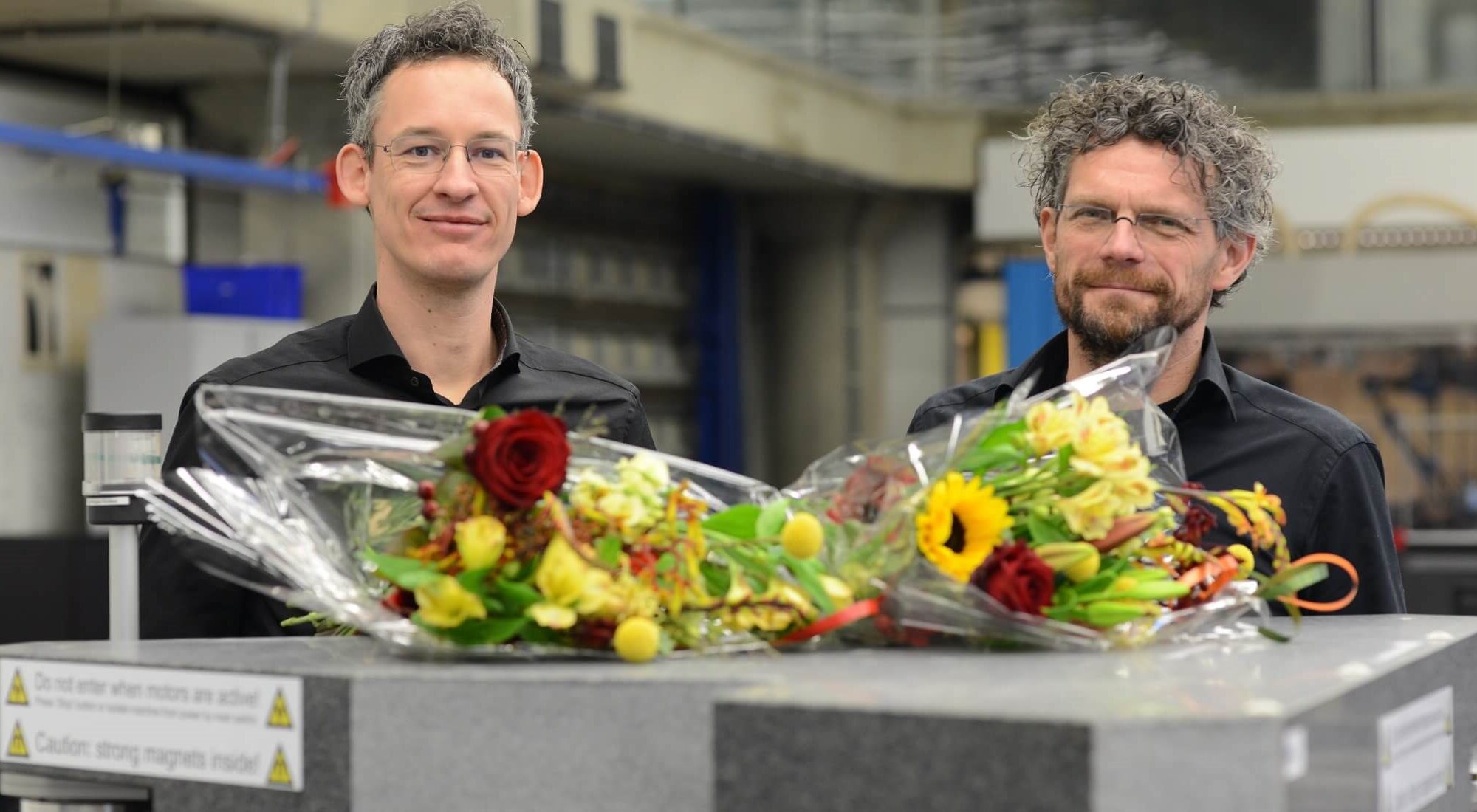
Cultivating responsible AI practices in software development

As AI technologies become embedded in software development processes because of their productivity gains, developers face complex security challenges. Join Balázs Kiss as he explores the essential security practices and prompting techniques needed to use AI responsibly and effectively.

The use of artificial intelligence (AI) in software development has been expanding in recent years. As with any technological advancement, this also brings along security implications. Balázs Kiss, product development lead at Hungarian training provider Cydrill Software Security, had already been scrutinizing the security of machine learning before the widespread attention on generative AI. “While nowadays everyone is discussing large language models, back in 2020 the focus was predominantly on machine learning, with most users being scientists in R&D departments.”

Upon examining the state of the art, Kiss found that many fundamental concepts from the software security world were ignored. “Aspects such as input validation, access control, supply chain security and preventing excessive resource use are important for any software project, including machine learning. So when I realized people weren’t adhering to these practices in their AI systems, I looked into potential attacks on these systems. As a result, I’m not convinced that machine learning is safe enough to use without human oversight. AI researcher Nicholas Carlini from Google Deepmind even compared the current state of ML security to the early days of cryptography before Claude Shannon, without strong algorithms backed by a rigorous mathematical foundation.”

With the surge in popularity of large language models, Kiss noticed the same fundamental security problems resurfacing. “Even the same names were showing up in research papers. For example, Carlini was involved in designing an attack to automatically generate jailbreaks for any LLM – mirroring adversarial attacks that have been used against computer vision models for a decade.”

Fabricated dependencies

When developers currently use an LLM to generate code, they must remember they’re essentially using an advanced autocomplete function. “The output will resemble code it was trained on, appearing quite convincing. However, that doesn’t guarantee its correctness. For instance, when an LLM generates code that includes a library, it often fabricates a fake name because it’s a word that makes sense in that context. Cybercriminals are now creating libraries with these fictitious names, embedding malware and uploading them to popular code repositories. So if you use this generated code without verifying it, your software may inadvertently execute malware.”

In the US, the National Institute of Standards and Technology (NIST) has outlined seven essential building blocks of responsible AI: validity and reliability, safety, security and resiliency, accountability and transparency, explainability and interpretability, privacy, and fairness with mitigation of harmful bias. “The attack involving fabricated libraries is an example where security and resiliency are compromised, but the other building blocks are equally important for trustworthy and responsible AI. For instance, ‘validity and reliability’ means that results should be consistently correct: getting a correct result one time and a wrong one the next time you ask the LLM to do the same task isn’t reliable.”

''If you’re aware of the type of vulnerabilities you can expect, such as cross-site scripting vulnerabilities in web applications, specify them in your questions.''

As for bias, this is often understood in other domains, such as large language models expressing stereotypical assumptions about occupations of men and women. However, a dataset with code can also exhibit bias, Kiss explains. “If an LLM is trained solely on open-source code from Github, it could be biased toward code using the same libraries as the code it was trained on, or code with English documentation. This affects the type of code the LLM generates and its performance on tasks performed on code that differs from what it has seen in its training set, possibly doing worse when interfacing with a custom closed-source API.”
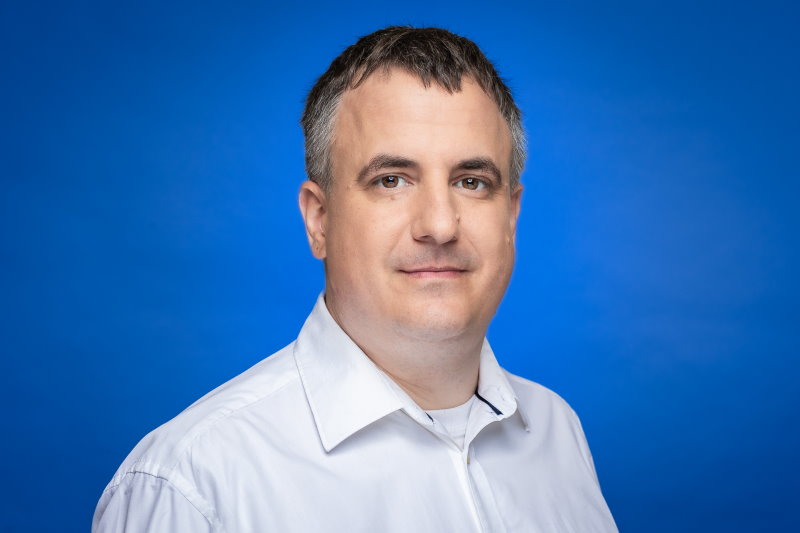
Balasz Kiss
Credits: Egressy Orsi Foto 

Effective Prompting

According to Kiss, many best practices for the responsible use of AI in software development aren’t novel. “Validate user input in your code, verify third-party libraries you use, check for vulnerabilities – this is all common knowledge in the security domain. Many tools are available to assist with these tasks.” You can even use AI to verify AI-generated code, Kiss suggests. “Feed the generated code back into the system and ask it for criticism. Are there any issues with this code? How might they be resolved?” Results of this approach can be quite good, Kiss states, and the more precise your questions are, the better the LLM’s performance. “Don’t merely ask whether the generated code is secure. If you’re aware of the type of vulnerabilities you can expect, such as cross-site scripting vulnerabilities in web applications, specify them in your questions.”

A lot of emerging best practices exist for creating effective prompts, ie the questions you present to the LLM. One-shot or few-shot prompting, where you provide one or a few examples of the expected output to the LLM, is a powerful technique for obtaining more reliable results, according to Kiss. “For example, if your code currently processes XML files and you want to switch to JSON, you might simply ask to transform the code to handle JSON. However, the generated code will be much better by adding an example of your data in XML format alongside the same data in JSON format and asking for code to process data in JSON instead.”

''With the present state of generative AI, it’s possible to write code without understanding programming. However, if you don’t understand the generated code, how will you maintain it?''

Another useful prompting technique is chain-of-thought prompting – instructing an LLM to show its reasoning process for obtaining an answer, thereby enhancing the result. Kiss has assembled these and other prompting techniques, alongside important pitfalls, in a one-day training on responsible AI in software development at High Tech Institute. “For example, unit tests generated by an LLM are often quite repetitive and hence not that useful. But the right prompts can improve them, and you can also do test-driven development by writing the unit tests yourself and asking the LLM to generate the corresponding code. This method can be quite effective.”

Here to stay

With all these precautionary measures, one might wonder whether the big promise of AI code generation, increased developer productivity, still holds. “A recent study based on randomized controlled trials confirms that the use of generative AI increases developer productivity by 26 percent,” Kiss notes, with even greater benefits for less experienced developers. Yet, he cautions that this could be a pitfall for junior developers. “With the present state of generative AI, it’s possible to write code without understanding programming. Prominent AI researcher Andrej Karpathy even remarked: ‘The hottest new programming language is English.’ However, if you don’t understand the generated code, how will you maintain it? This leads to technical debt. We don’t know yet what effect the prolonged use of these tools will have on maintainability and robustness.”

Although the use of AI in software development comes with its issues, it’s undoubtedly here to stay, according to Kiss. “Even if it looks like a bubble or a hype today, there are demonstrable benefits, and the technology will become more widely accepted. Many tools that we’re witnessing today will be improved and even built into integrated development environments. Microsoft is already tightly integrating their Copilot in their Visual Studio products, and they’re not alone. However, human oversight will always be necessary; ultimately, AI is merely a tool, like any other tool developers use. And LLMs have inherent limitations, such as their tendency to ‘hallucinate’ – create fabrications. That’s just how they work because of their probabilistic nature, and users must always be aware of this when using them.”

This article is written by Koen Vervloesem, freelancer for Bits&Chips.
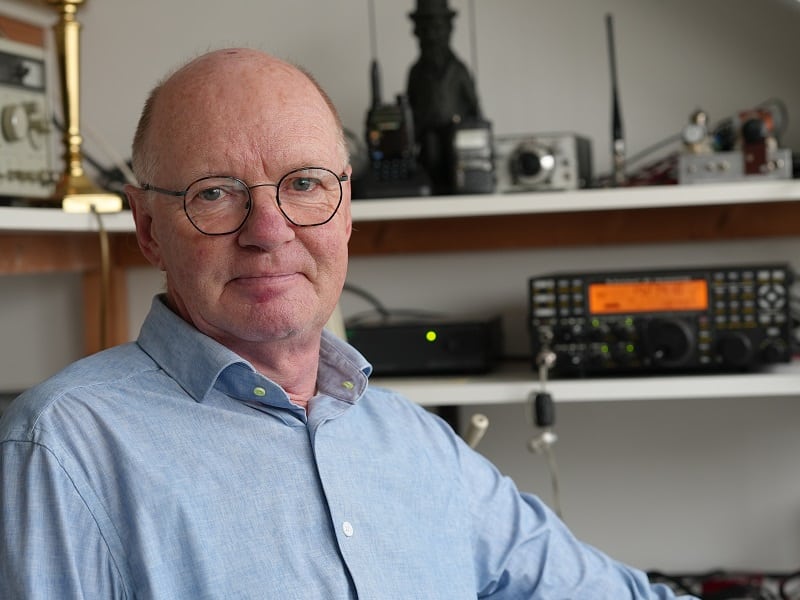
 

“When I talk about my own experiences, my trainees are all ears”

Jack Leijssen enjoys training mainly because participants in his “Signal integrity” workshop recognize the problems from his world. He especially wants to get people to think differently because electromagnetic phenomena often go against intuition.

Jack Leijssen’s cradle literally stood on the High Tech Campus – he was born on one of the farms on the land where the Natlab emerged in the 1960s and an environment for open innovation developed after 2000. Leijssen worked at Philips all his life, as did his parents. “My mother made the PL86 television lamps as a girl, my father was employed by the Natlab. They met outside Philips and got married in 1956. A year later, I was born, so I can rightly say I come from a Philips nest,” he says laughingly.

Leijssen is a seasoned technician who was also trained within the Dutch multinational. After primary technical school (LTS), he was further educated at the company school while working at the Natlab. Following his military service, he attended the MTS and HTS, again at Philips, and took didactic training there. “Philips remained the common thread in my career: I worked in the company workshops, the production departments, the measuring room and electronics repairs.”

Very clever

After 23 years at the Natlab, Leijssen moved to the electronics department at Philips CFT in 1998. Among other things, he designed equipment for measuring interference (jitter). He was also sent by Philips to work for Bang & Olufsen for a year and a half. The Danish company truly inspired him. He was part of the team that developed the HDR1, a recorder for analog TV with an 80 GB hard disk. “You could buy it in the store. You could take it apart and I could point out the parts that contained my thoughts.”

Bang & Olufsen distinguished itself from Philips with a totally different market approach. His boss in hardware development, Pelle Nissen, once confided to him that at B&O, it didn’t all have to be so cheap; it was all about quality. When Leijssen brought up that, in his opinion, Bang & Olufsen distinguished itself through product design, Nissen told him that the difference between B&O and Philips had nothing to do with design. “That’s what everyone thinks,” he said. “Philips makes cost-optimized consumer electronics. So does Sony. We at Bang & Olufsen don’t. We want to meet our customers’ expectations.” “Well,” Leijssen replied, “so do we at Philips, but our customers’ expectations may be a bit lower, as are our price tags.”

Leijssen soon discovered that Bang & Olufsen wasn’t just selling a design experience. “They put extreme demands on EMC immunity and emission. It had to be 20 dB better than the then-strictest standard. When I reported this at CFT’s EMC Competence Centre in 2003, they just laughed in disbelief. The general opinion was that they were never going to succeed. But they did. And the remarkable thing is that they did so without industry-grade connectors. To achieve a signal-to-noise ratio of 100 dB in the audio path with just SCART is very clever.”

Jack Leijssen is an electronics enthusiast. At home, he can usually be found in his hobby room.

Warm feelings

In Leijsen’s experience, electronics was always the darling of the Philips community. CFT’s hundred-person Professional Electronics group, for example, where he worked for 23 years, was established during the infamous large-scale reorganization codenamed Centurion. “Electronics people were made redundant in all product divisions. However, they were too good to lay off, so they were transferred to CFT. What the top executives thought about that, I don’t know, but many managers must have realized that those capabilities had to be saved.”

The many reorganizations at Philips passed Leijssen by without him breaking a sweat. “I went from the Natlab to CFT on my own accord, but after that, I worked in as many as five or six different departments. It all happened to me. Suddenly, I was working at a different business unit. I opened my mailbox in the morning to discover that I had a different boss.”

A lot of colleagues were upset by the changes, but not Leijssen. “That’s the way I am. I’m into technology, and if I’m honest, everything else doesn’t interest me that much. I saw the Philips organization struggling, but I knew that the technology I was working on was sustainable. The things I liked always turned out to be useful and necessary. That’s been a constant throughout my life and my entire Philips career. My warm feelings for Philips also never suffered from all the changes and hiccups. When I retired two years ago, I knew that Philips Healthcare would continue to hire me. I’m still having a great time there.”

''I particularly enjoy training because the people in my class understand what I’m talking about. They come from a world with problems just like the ones I had. When I talk about my experiences, I notice that they’re all ears''

Regular trainer

At Philips CFT, Leijssen also developed his skills as a trainer. It all started with problems at Philips Semiconductors in San Jose. The IC designers there had developed a chip that gave EMC problems on printed circuit boards at customers. An old department manager who had been promoted to North America came up with the idea of asking Leijssen to fix the issues. “I knew him from a digital cassette project I had worked on ten years earlier.”

“The designers had delivered a good design, but they hadn’t taken into account that customers wanted to mount the chip on cheap circuit boards in a low-cost production process,” recalls Leijssen. “They had pushed all the problems out of the chip, to the periphery. As a result, the circuit board was almost impossible to make. Customers, however, want a chip in a simple reference design so they can quickly demonstrate compliance with all EMC and regulatory requirements. They don’t want a headache; they want a cheap circuit board in a cheap plastic box.”

Leijssen came up with a solution on the circuit board without requiring a new chip design and was promptly asked to train Philips employees in the US. “The initial proposal was for me to be there ten times a year for three weeks, but I was able to bring that down to five times.” He set up an EMC course and taught people at both Semiconductors (later NXP) and CFT (merged into Philips Healthcare and ASML). He became a regular trainer at Philips Centre for Technical Training and later High Tech Institute, where his course is now known as “Signal integrity of a PCB workshop.”

Leijssen is an avid radio tinkerer. For his home-made long-wave medium-wave transmitter, a giant antenna is spanning his yard, which can be tuned with this equally home-made tuner.

System-level decisions

“I particularly enjoy training because the people in my class understand what I’m talking about,” says Leijssen. “They come from a world with problems just like the ones I had. When I talk about my experiences, I notice that they’re all ears.”

The training attracts a very broad group of participants, not just IC designers but also PCB layout designers and system architects. The PCB designers especially need rules of thumb, Leijssen observes. “They have a different perspective. We have a guest lecturer in our workshop who knows their world better than I do. It involves, for example, the right selection of components and whether to put them on one or more boards.”

Leijssen especially enjoys teaching people who have to make system-level decisions. “In a low-cost design, everything has to be clearly structured together on one PCB. Unfortunately, that also means that the noise class is the same across the board. If you put a 16-bit analog-to-digital converter on there, it might only do 10 bits because it uses the same three-dimensional electromagnetic environment. In that case, it’s cheaper to use a 10-bit ADC. After all, a 16-bit result doesn’t mean you get that quality. 16 bit means a 96 dB signal-to-noise ratio. You don’t get that for free; you have to put effort into that. You have to partition for that.”

Pretty useless

Signal transmission on printed circuit boards changed significantly under the influence of CMOS chip technology. “CMOS devices became faster and faster, so the flanks of the signals traversing a PCB track became steeper and steeper. The frequency spectrum required for such an edge also became wider and wider. We’re talking gigahertzes.”

In that world, a signal no longer ‘sees’ a PCB track as a capacitor that needs to be charged. “We’re now dealing with transmission lines, over which signals run like trains. Those signals have a flank that moves along the PCB track. The return current is below the edge. The signal doesn’t ‘see’ the entire capacity of the PCB track, only a small piece of about the length of the edge. Add to that that you can have multiple flanks in a PCB trace. On a transmission line, that’s all on the move, traveling. It’s one of the things I cover in my workshop. You can compare it to optical signals but at about half the speed of light.”

With his training courses, Leijssen wants to get people to think differently. “Best engineering practices are pretty useless in my world,” he states. “Many electromagnetic phenomena are contrary to what your intuition tells you. People think they’re charging capacitors, but in fact, such a traveling signal on a PCB track encounters various obstacles. A capacitance here, another capacitance there. Also, the signal experiences some self-inductance. A capacitance meter might measure a 100-picofarad capacitance on a PCB trace, but a signal doesn’t see it that way. It sees distributed capacitance and distributed self-inductance. Your cell phone, all the memories, they all work with transmission lines now.”

This article is written by René Raaijmakers, tech editor of Bits&Chips.

Recommendation by former participants

By the end of the training participants are asked to fill out an evaluation form. To the question: 'Would you recommend this training to others?' they responded with a 8.1 out of 10.

Understanding the benefits of Rust

C++20
Rust, with its guarantee of memory safety, marks its place as a promising programming language. If you’re wondering whether you should invest your time in Rust, computer programming enthusiast Kris van Rens has a highly focused training for you at High Tech Institute.

Rust, an emerging programming language, has started garnering attention among many companies due to its promise of guaranteed memory safety. Of course, there have been novel programming languages before, and the choice to adopt a new one is always a significant decision. If you’re wondering whether Rust could be a useful addition to your software development operations, computer programming enthusiast Kris van Rens has prepared a training for you, “Exploring Rust,” organized by High Tech Institute.

Van Rens likens Rust’s memory safety to guard rails: “It prevents software engineers from shooting themselves in the foot. Essentially, you trade freedom for guaranteed safety and predictable behavior.” Simultaneously, he considers Rust’s expressive syntax as one of its strong suits, making it an attractive language to work with. A third benefit he highlights is the compiler: “It’s a great programming companion, delivering excellent error messages. It also frequently offers suggestions for fixes, literally ‘guiding’ you as you go.”

Production-ready

As Rust is a relatively young programming language, it’s natural to question whether it’s ready for production. According to Van Rens, the answer depends on the application domain, but generally speaking, he would answer with a strong yes. “In fact, many renowned high-tech software engineering companies use Rust in production, for example in application, cloud and web development.”

In more constrained areas like embedded development, full support isn’t always guaranteed, partly because this depends on the support by the manufacturer of the embedded device. Domains like automotive and aeronautics requiring software certification trajectories may also be challenging with Rust at the moment. However, Van Rens indicates, “the German company Ferrous Systems already offers a Rust toolchain that’s ready for use in environments that require an automotive ISO 26262 certification. Efforts toward other requirement levels are underway. It’s just a matter of time.”

''My goal isn’t to deliver Rust experts but to provide participants with a comprehensive understanding of what makes the language different.''

Distinct concepts

Van Rens doesn’t consider Rust harder to learn than advanced C or C++. “Yes, C might be a small language, but mastering C or C++ takes many years of focused work and discipline. Perhaps the learning curve for Rust is steeper in the beginning as the language in itself is larger, but in the long run, it doesn’t make a difference. I often come across software engineering companies publishing articles about their successful Rust adoption, explaining that the language wasn’t particularly hard to learn.”

Part of Rust’s steep learning curve is due to some unique concepts that aren’t found in traditional programming languages like C and C++. In his training, Van Rens focuses on these elements, expecting participants to be software engineers with systems development experience. “This enables me to introduce Rust at an advanced, thorough level. My goal isn’t to deliver Rust experts but to provide participants with a comprehensive understanding of what makes the language different. This assists them in determining whether they should invest their time in Rust and facilitates a successful adoption of the language if they decide to give it a go.”

Because of its focused approach, the “Exploring Rust” training is spread over only two half days, within a two-week time frame. “I immediately jump in at a high level and cover the most important topics in-depth. I spend about 30 percent of the time on hands-on exercises. For those eager to delve even deeper, there are a couple of larger homework exercises.”

This article is written by Koen Vervloesem, freelancer for Bits&Chips.

A deep dive in C++20

C++20
C++ has evolved a lot over time. Software engineers who are still using outdated paradigms of the programming language don’t realize its potential to the fullest. In his “C++ fundamentals” training at High Tech Institute, computer programming enthusiast Kris van Rens introduces C++20, including topics like templates and ranges.

Over the years, many programming languages have been proposed as alternatives to C++. Nevertheless, this hasn’t made C++ any less relevant, computer programming enthusiast Kris van Rens insists. “There are millions of lines of C++ code in production, and a substantial number of engineers in the industry are trained in the popular programming language.”

One of the challenges of mastering C++ is the sheer size of the language, Van Rens notes. “C++ is an old language and it has become quite vast and relatively complex due to the multitude of new features that it has received over time. As a result, many C++ developers have built up their language knowledge in fragments, without a clear, comprehensive view.”

Van Rens aims to offer this comprehensive view on the programming language in his 4-day training course “C++ fundamentals,” organized by High Tech Institute. In this training, he introduces the fundamentals of modern C++ to software engineers of all levels, whether it’s their first contact with the programming language or whether they want to update their knowledge of older C++ versions.

''Many books and online resources are still teaching older versions of C++, thereby restricting you from realizing the language’s potential to the fullest.''

A living language

As C++ and its tooling have changed a lot over time, it’s easy to get stuck learning outdated paradigms. Van Rens cautions: “Many books and online resources are still teaching older versions of C++, thereby restricting you from realizing the language’s potential to the fullest.” C++ as a language is still very much alive, with new versions appearing every three years, and major feature updates at least every six years. “It’s up to software engineers and their employers to keep up-to-date with the language changes and benefit from the new features,” Van Rens opines.

Van Rens covers C++20 in his training, including powerful topics like templates and ranges. “This C++ version from 2020 is fully supported by most of the latest toolchains, and in industrial production environments, its adoption is relatively new. Maybe some participants of the training might not be able to apply C++20 directly in their environment. However, they’ll be able to identify the potential improvements and changes that C++20 will bring to their code. This way, they’ll hopefully be able to contribute to a future migration to newer C++ versions in their company. During the training, I also highlight the features of C++20 that were absent in earlier versions of the language.”

The “C++ fundamentals” training spans over four days in total, divided into two blocks of two full days, with a week’s break in between. “I cover the basic elements of the language in the first two days, followed by a more in-depth dive during the next days. The focus is on building a solid foundational knowledge of C++, and on knowing where to find sources for further professional development in C++,” Van Rens summarizes the training. He spends about half of the training duration on in-class exercises, all derived from his practical experience as a seasoned C++ software engineer. For those eager to delve even deeper, there are a couple of larger homework exercises.

''Perhaps in the distant future, C++ might evolve to accommodate strict safety requirements, but not at this moment. However, using the right discipline, guidelines and tools, working with C++ can be mostly safe.''

Software safety and security

A new theme in the domain of programming languages is the shift to stricter regulations around software safety and security. This will influence every field of software development, Van Rens emphasizes. “Software engineers will likely have to provide more assurances about safety and security.” The two main approaches for this are the use of a memory-safe programming language like Rust or the use of a language with garbage collection to eliminate manual memory management.

Although C++ isn’t a strictly safe programming language, Van Rens attests that C++ code still has its place in the application landscape. “Perhaps in the distant future, C++ might evolve to accommodate strict safety requirements, but not at this moment. However, using the right discipline, guidelines and tools, working with C++ can be mostly safe. This comes without hard guarantees, yet it might be ‘safe enough’ for your purposes.”

This article is written by Koen Vervloesem, freelancer for Bits&Chips.

Project leadership, the art of what not to do

In his project leadership workshop, Wilhelm Claussen aims to empower participants to reflect on their role as project leaders and support them in creating moments in which they align their teams and stakeholders with the project goal. All with a focus on making projects successful and turning work as a project manager into a rewarding personal development path.

At some point in his career, Wilhelm Claussen experienced a pivotal moment while working on a project in America for a German company. Although he adhered to the guidelines set out by the company’s headquarters, he encountered unanticipated challenges in managing his people due to local particularities that were more insurmountable than the technical task itself. This ultimately led to an epic failure of the project but provided him with a profound learning experience.

This setback was the spark for what he now considers his project management style, which he now successfully teaches in his courses at the High Tech Institute. Based on his 26 years of experience in project leadership, he believes that beyond the various schools of project management, there are some universal principles and methods that good project leaders should master. He observed that such individuals are invaluable to organizations, as they can navigate a rapidly changing and dispersed environment.

“Many project managers today have to work internationally and in a multi-polar environment where the rules of the game change quickly. Dealing with this proactively is the key to success. Otherwise, even good technical ideas will never become a successful product due to poor leadership.”

''Project management means having everything on the radar, project management is the art of setting priorities.''

You make a clear distinction between project management and project leadership, why is that?

“This distinction has crystallized for me over time:

For me, project leadership is about how you guide project members and stakeholders to do the important things with the right timing. And it’s about the person who acts as a beacon in the project and provides direction and guidance. That makes project leadership something very personal.

“Project management, in contrast, is the sequence of actions that create the plan for execution. It is covered by a manageable set of tools for a given project environment and is effectively the project manager’s tools of the trade.

“I want to pass on the experience I have gained as a project leader. This means that I want people to become self-aware, to understand where they are in their project and to help them understand how they can influence their environment. That’s what leadership is all about, creating impactful moments and capitalizing on them.”

Does this mean that your project management workshop is not a project management course?

“Yes – and no!

First of all, many many institutions offer project management courses. They explain step by step  following their chosen model  ( e.g. Agile, Waterfall, V-Model…you name it) what to do and how for different types of projects. And of course, we will also look at the basic elements of project management, as this shapes our working environment through and through.

So far -Yes, you get to know the most important project management elements.

However, beyond this we will also look at the leadership aspect and how to deal with uncertainty and volatile environments. In other words, the question of how to plan for the unknown.

For example, how do I structure a technological development project where I CAN’T know what the right path to the result is? How do I avoid all the other sub-projects being swept away by one chaotic sub-project?

In volatile environments, how do you understand which part needs to be done next and drive it forward?

My passion is to teach people how to master this challenge in a highly technical integration driven environment. So, in deliveries where the final purpose of the project only can be gained when ALL  sub deliveries are functioning together like in Automotive, Semiconductor or Special Machine Construction.

For me, that means it’s fun to ride the white waves instead of constantly drowning and swallowing water.

In this respect – no, it’s not a normal project management course!

What was the most important experience that made you promote the relevance of leadership in your own career?

“In my first projects, I often felt like a victim in my role as project manager, trapped in the tasks and schedules set by others without being able to find clear solutions myself. So I joined other project managers complaining about scarce resources, insufficient budgets and a lack of tools. A sad path leading to a dead end.

One day, I understood that I had to accept risks and uncertainties on my path. Part of my leadership philosophy became to manage these risks, accept them and deal with uncertainty. Essentially, this required a willingness to proactively transform “unknown unknowns” into identifiable risks that I could manage and control. That’s how I would put it today.”

''The task of a good project manager is to respond optimally to colleagues without losing their own personality and without becoming completely opportunistic.''

The term “leadership” has become a buzzword, why do you use it?

“I agree with this observation, but I use it because I don’t have a better term.

To expand on this a little: project leadership goes beyond mere methods or manipulative tactics. It is rooted in the persuasive power of a consistent and holistic character. My aim here is to encourage the individual to reflect and grasp the essence of a leader by looking inwards rather than outwards.

Not only do you have to manage your own team, you also have to meet customer expectations!

“Above all, leadership means managing the stakeholders that are everywhere. I will guide participants in identifying these stakeholders and understanding their often-unspoken expectations. This insight is crucial for the effective management of all these stakeholders: customers, suppliers, technical experts and project members. The goal is to constructively engage with them and bring them along on the journey towards a common goal.

So it’s just all about communication again?

That’s not quite it. It starts with a solid foundation of project management tools and experience. However, what really sets a project leader apart is their ability to overcome cultural, linguistic and organizational barriers to achieve successful project outcomes. This requires the development of a unique personal style.

Project management means having everything on the radar. Project management is the art of setting priorities. It is the art of leaving out “what you don’t have to do”.

What impact do these cultural differences have?

“I have worked for a long time in Asia, Germany, the USA, Eastern Europe and the Netherlands. People in the different cultures carry their concerns, their conflicts, but also their disbelief and their differences of opinion in many different ways through the different levels of the organizations. This is normal and can be useful for the progress of the project.

A good project manager can deal with this by recognizing these challenges before they become a problem. And you have to be able to listen to these signs and adapt your management style to these different cultural aspects.

Just a reminder: in most cultures other than Dutch or German, disagreement and non-commitment are silent.

''We will interact more with machines than with people when it comes to routine tasks.''

What are other typical hurdles?

“Different levels of experience and personalities play a crucial role. You have to adapt and understand what kind of people you are dealing with. Because all people prefer communication that speaks their own language. It’s not just about vocabulary and words, but also about feelings, metaphors and cultural or personal beliefs. So a project leader shall translate his message into the different languages of his recipients in the project.

“Responding optimally to colleagues without losing your own personality, without becoming completely opportunistic, that is the task of a good project leader.

Of course, this will develop over time. But the good news is that there are certain questions, certain ideas, and concepts that you can practice. They will help you a lot to take the next step.

What does the future hold for project management if you look to the new options of AI?

I would like to deal with this question in three parts.

Firstly, for repeated deliveries, that we call “projects” the current project management systems already offer a high degree of automation for routine tasks. This trend is likely to continue in the coming years and facilitate the replication of complex projects, as Snowden notes. Project managers must adapt their strategies and project designs to fit these systems programming logic.

Secondly, original projects –  unique and unpredictable projects will still require human leadership due to the uncertain impact of artificial intelligence (AI) on project management. While AI will increasingly handle routine tasks, human oversight is crucial for original projects.

The third aspect is the most fascinating: when we talk about leadership, it is fundamentally about human-to-human interaction. With the advent of true artificial intelligence, we are faced with the challenge of integrating it into leadership roles within projects. This means that tasks, project structures and priorities are defined by intelligent machines and executed jointly within the project team.

However, as artificial intelligence works on rule-based models, the human leadership function will shift from direct task instruction to the definition of fair and effective rules. This means that the responsibility for collaborative and efficient project teamwork remains with the project manager, even if the tools and methods change.

What is essential in leadership today?

Leadership, as I define it, is ubiquitous in our daily lives because it requires the leader to understand the purpose and how to communicate in order to motivate others to contribute. We work in highly specialized organizations, so it doesn’t matter if you are a technician, engineer or group leader. I would expect that each subject matter expert is able and prepared to lead the organization in those aspects that belong to their field of expertise.

Leadership in our working current environment is always about asserting individual goals that are necessary to achieve the overall result. This includes influencing others to understand what we want and vice versa, so that we understand what they want. That’s what leadership is about at all levels, around the clock.”

This article is written by René Raaijmakers, tech editor of High-Tech Systems.

Recommendation by former participants

By the end of the training participants are asked to fill out an evaluation form. To the question: 'Would you recommend this training to others?' they responded with a 9.2 out of 10.

‘Without statistics you are unlikely to find your best performance and realise consistency’

It’s easier than ever to do complex calculations and design simulations. Yet in the end it all boils down to how a design will work out of the lab, in a real product, in a real environment, according to Wendy Luiten. That’s why she’s teaching a new course called Applied statistics for R&D at High Tech Institute. ‘Statistics are often under applied, which is a pity because it can really contribute to success.’

When Wendy Luiten was taught to program, she used punch-cards that were fed into giant computers. Nowadays she can do the most complex calculations and design simulations with the press of a button on her laptop.

During Luiten’s career she witnessed an unprecedented increase in processing power. Graduating in 1984 from the University of Twente, she embarked on a distinguished career as a thermal expert and as a Six Sigma Master Black Belt at Philips. Today she works as a consultant.

That deep experience gave her a better view of statistics and computing than most engineers. New software offers great opportunities for making design simulations and Digital Twins. But the apparent ease of these new methods makes it easy to forget that a simulation is not reality. A simulation model needs to be validated to ensure that it represent reality to a sufficient degree. In addition, simulations describe an ideal world, without random variation. In the real world, random variation can make a product unreliable and disappointing to end customers.

‘Some people do not repeat, but go on a single measurement’, she says. ‘Based on that, they decide whether the design is good or not. That’s risky. You do not know how good the measurement is, you have no idea about the measurement error, you do not know how representative the prototype is, you do not know how representative the use case is.’

“Applied statistics is like driving a car, you do not need to know the working of the engine to go from A to B,” Wendy Luiten

People tend to be very optimistic about their measurement error. ‘I saw cases where people thought their measurement error was in the tenths of a degree, but a repeat measurement showed a difference of 10 degrees C. In the thermal world, that is a huge difference. So, if your repeat measurement shows such a big difference, you really cannot be sure on how well the product performs and you need to dig deeper as to the root cause for this difference.’

This is why Luiten starts her new training on Applied statistics for R&D at the High-Tech Institute with measurement statistics. In this course she will dig into key statistics skills that have shown their worth in her 30+ years of industry R&D experience. ‘First, you need to see how good your measurement is’, she explains. Then you need to be able to estimate the sample size, the number of measurements that you need to show a certain effect with sufficient probability. Once you can measure output performance accurately and with sufficient precision, you can explore different design configurations and choose the best configuration. Finally, you investigate the output mean and variation, which is ultimately how you achieve a successful design.’

''In the real world, we do not have unlimited resources, you need to prioritize.''

Random measurement error

Luiten notes that engineers often are already aware of the systematic measurement error. ‘Systematic errors are a well-known field’, she says. ‘You can measure a golden sample and correct the results, that is a de facto calibration of your measurement. Well known, and part of many lab courses taught in higher education’.

Most people, however, don’t consider the random error or blindly use a default value of 1, 5 or 10%. But in reality, the random error depends on the measurement instrument and also on who is performing the measurements. The statistical method to find out the random error is not usually part of a lab course, so this is less common. But the first time such a test is done, the results are often surprising.’

Luiten mentions some cases she dealt with herself. ‘I have seen cases where people were confident that they had almost no random error because they had a very expensive automated measurement machine. But it turned out that the operators were making the samples in a different manner, and that caused a large random error. In another case different development labs were all claiming a 5% measurement error – but when they measured the same devices in a round robin test, there was a difference of a factor 2, because of differences in the measurement set up that were thought to be irrelevant. I have seen that apparent fluctuations in product quality could be linked to the operator performing the measurements. In all cases people were absolutely convinced that they had a negligible random error in the measurements, and these results were totally unexpected. But you only know your random error and the cause of the random error if you do the statistical test for it.’

“Which design is better? Design C is preferred – Even though B has a higher average performance, C has the lowest failure rate because it performs consistently, ” Wendy Luiten

Measurement repeats

The random measurement error is especially important when it comes to so called statistical power – the probability of measuring a certain effect if it is present. If the effect you want to measure is about the same size as your measurement error, and you repeat your measurement twice, the probability of proving that effect is below 10%. So, if a design change gives you a 5C lower temperature, and your random measurement error is 5C, you will see that in 1 out of 10 measurements, and on average 9 out of 10 times the results are unconclusive, even if you do the measurement in duplicate. If you want to improve the power, you either need to lower the measurement error, or do more repeats. Sometimes people see repeat measurements as a waste of effort, but Luiten does not agree with that. ‘The true waste is to run underpowered experiments, going through all the effort of setting up and executing an experiment – and then finding out that the result is inconclusive.’

Testing different design options

Besides measurement errors and sample size estimation, a key element of the course will be testing of different designs. You can do that in hardware, but that might not be the most effective option. ‘Nowadays you can do a lot by virtual testing’, says Luiten. ‘Before you even make a prototype, you can experiment with your designs using computer simulations. Inputs can range from materials and dimensions to power and control software. You can, for example, model the impact of different materials or dimensions, or the use of a different mechanical layout, or different settings in a control algorithm. In every product there are lots of choices to be made, both on the level of the architecture and in the implementation. Finding out what inputs are the most important, and how these inputs determine your performance is key because you don’t want to realise in a later stage that an earlier decision was wrong. A Trial-and-error approach is often too expensive in time and money.’ The statistical approach is to set up a set of experiments in a special way, varying multiple inputs at the same time and not comparing single experiments but groups of experiments to tease out the effect of a single input or interactions between two inputs. This is a very powerful approach, especially in combination with computer simulations, but for a small number of inputs you can also do this in hardware. If you do the experiments in hardware, the calculated sample size from the earlier stages determines the number of repeats for the different experiments. If the experiments executed virtually, through computer simulations, the sample size is used for the validation experiments for the computer model.

''In innovation, you need to focus on the vital few parameters that really impact your design.''

Making the best choice

The next tool in the statistics toolbelt is optimization or making the best choice. Once you have found out what are the key input parameters and how they relate to the performance, you can make a data driven decision of what design configuration suits your purpose the best. Often there are multiple outputs to consider, for instance if you want high strength but at the same time low weight. Multiple Response Optimization is a well-known tool for this.

The effect of input variation

‘Once you know the impact of an input, it’s also important to look at its variation, and in turn what kind of variation it causes in the performance’, Luiten continues. ‘ This is also something that people are less familiar with but once you know how to do it this is not that difficult, and it is important. For a design to be a success, it’s not just peak performance that matters, but also that you consistently achieve that performance. Using statistical simulations tool, you can make a statistical model to link the mean and variation of your output to the statistical distribution of your inputs.

Sometimes people say that this is no use because they do not know the variation in the inputs. But if an input is important, not considering its variation is risky in terms of consistent product quality. If the statistical model shows that the input is important, you have good cause to discuss with the supplier what the distribution is and how much variation it has. This is common in automotive industry, in fact they have formal procedures in place defining exact requirements not only on the mean but also on the standard deviation of components and sub-assemblies.

Navigate the solution space

Statistical methods, in other words, help to navigate all possible configurations that together form the solution space. Luiten says “You don’t just reach your optimum performance by accident. If you have two inputs that can be high or low, that leaves four possibilities. But if you are designing something with five inputs, that leaves 32 possible configurations. And many modern-day designs have more inputs than that. And that is without even taking all the possible tolerances into account, and all different user cases. Without a structural, statistics-based approach the probability of finding optimum consistent performance is small.’

Driving cars

The components of Luiten’s course are closely interrelated, it is a chain of tools. ‘If you, for example, want to validate results, then you also need measurement statistics to tell you what your random error is. This in turn shows how large your sample needs to be, so that the experimental set up is correct. Only then can you decide whether you can trust your validation’, says Luiten.

''The aim of the training is not to become a statistical expert, but to be able to reach your goal with statistics.''

Luiten takes a practical approach. For her, statistics is an applied skill, a means to an end. ‘Statistics in university is taught in a very theoretical way’, says Luiten. ‘I saw this in my own studies, and I saw it when my children were studying. It’s taught in a way that had limited practical use in my line of work. I compare it to driving a car: You do not need to know exactly how the engine works in order to drive from A to B. The aim of the training is not to become a statistical expert, but to be able to reach your goal with statistics.’ And mathematical tools like excel and statistics software makes application much more accessible nowadays.

Master Black belt Six Sigma

Luiten is a Master Black Belt in Design for Six Sigma, and her career has supplied her with a deep understanding and rich experience in the application of statistics in innovation processes. ‘In my experience, many engineers learn by doing, and that makes sense. You cannot learn swimming by watching the swimming Olympics, you need to get into the water yourself, even if it is only to learn how to float. So, we have practice exercises, either in excel or in a dedicated statistics tool.’ Statistics for Luiten is a general-purpose tool, and familiarity with the techniques and tools she mentions in her course is key for engineers working in a variety of fields from technical experts to designers and team leads to system architects.

‘This is a general course for people in innovation, that develop products and do research. If you measure output in continuous numerical parameters, it doesn’t matter what technical field you are in. I used these techniques in thermal applications, but any field can use them, from mechanics and electronics to optics and even software, this is mathematics. You can decide for yourself what you’ll use it for. ‘

This article is written by Tom Cassauwers, freelancer for High-Tech Systems.

Bearings contribute to accuracy and system behavior

When designing a mechatronic system, the actuation often receives the most attention. But the bearing is just as decisive for the accuracy and the system behavior. Hans van de Rijdt and Marc Vermeulen are therefore developing a new training for Mechatronics Academy that is scheduled at High Tech Institute in March 2024: ‘Bearing principles for precision motion’.

There is a wide choice in machine building when it comes to bearings, from sliding, roller and air bearings to hydraulic, elastic and magnetic bearings. Choice stress is therefore lurking. However, that has not prevented bearing technology from becoming somewhat neglected in the high-tech world in recent decades.

Marc Vermeulen, working as a principal mechanical system architect at ASML, does have an explanation for this. “In mechatronics we often talk about the actuated direction, in which you have to achieve a certain accuracy with a drive and a measuring system.”

However, the direction perpendicular to the driven direction is equally important. “Then you’re talking about the degrees of freedom that you don’t actuate. So, you have to constrain these and how do you do that? Because that ultimately determines the accuracy and the entire system behavior to a large extent. The bearings are indeed important for that.”

At least three errors

In his work as an independent consultant in the high-tech industry Hans van de Rijdt regularly encounters that certain bearing principles are overlooked or that pitfalls are not avoided. Together with Vermeulen, he developed the Bearing Solutions training course that will soon start at High Tech Institute. Van de Rijdt: “It happened recently during a review of a large project, on which 140 people worked. Then you would expect that there are enough of them who know something about bearings. Still, I saw at least three errors in the application of bearings.”

It was a design in which the bearing makes a very small angular movement. “That bearing can jam because the lubricant is not distributed properly. That had not been taken into account. Also, an incorrect ball cage had been used, so that the required number of strokes would not be achieved. Bearing suppliers often don’t tell you that sort of thing. If you call, you will get the salesperson who does not know either and it is very difficult to get in touch with the engineer.”

Hans van de Rijdt (left) and Marc Vermeulen (right).

From performance and service life to noise pollution and delivery time

Many factors play a role in the choice of a certain bearing type. In the first place the performance – think of accuracy, speed and acceleration – and the service life, which can be negatively affected by friction and wear. An air bearing scores high on both, but less on costs. For example, an air supply must be integrated into the system design.

Depending on the application, other factors may come into play. A good example is patient welfare. This is the case with CT scanners, for example, where an X-ray tube provided with bearings rotates in a circular gantry around the patient. At Philips, such a scanner was always equipped with a roller bearing, Van de Rijdt recalls, but at a certain point they switched to a large air bearing. “That was for the sake of performance, but above all to reduce noise pollution from the bearing.”

In coarse applications, the choice of bearing can also be crucial. Van de Rijdt talks about a large offshore crane with a ring bearing of 8 meters in diameter. “The lead time for making that large ring bearing was one and a half years, because it was of course not in stock at the factory. That’s why they looked at a sliding bearing as an alternative, which would be much more favorable in terms of lead time. I then made a complete study of it. In the end, that alternative was dropped because the stick-slip behavior of the sliding bearing with such a large diameter had too much of an impact on the operation by the crane driver.”

''For some applications, the performance of ball bearings is sufficient and then their application is more cost-effective.''

Ingrained patterns and new competences

In addition to rational substantiation, the choice of bearings often also involves ingrained patterns, says Vermeulen. Placement machines, for example, use roller bearings and not air bearings for cost reasons. Roller bearings, on the other hand, are not used in lithography machines, because lubrication and wear could cause contamination. “Not appropriate in a semicon factory; that’s is a kind of dogma for many manufacturers.” However, the question of whether air bearings can still be replaced with roller bearings for cost reasons comes up regularly.

Van de Rijdt recently was faced with it again. “I could just refer to my report from twelve years ago. For some applications, the performance of ball bearings is sufficient and then their application is more cost-effective. I just tested what people were afraid of. You can neatly control the contamination by ensuring that the bearings are in a downflow under the wafer.”

Things are moving in the meantime, Vermeulen sees at ASML. “All kinds of tests with lubricants and measurements of stiffness and friction are now underway for roller bearings, for example. Of course, we already had the competences for air bearings, magnetic bearings and also elastic bearings (leafspring guides are a popular bearing solution for stages with short strokes, because they are accurate, backlash-free and frictionless, ed.). So now a certain competence is also being built up for roller bearings.”

Avoid overdimensioning

That broad range of competences is important, says Vermeulen. “Leafspring guides have become somewhat self-evident for us. You can make them in one piece, monolithic, with wire EDM. At a certain point you just cannot stop adding complexity and costs. ‘Better safe than sorry’ then becomes the motto, ‘let’s do it this way, then we’ll know for sure it’s right’. But you also have to consider the cost aspect; this is becoming increasingly important.”

Van de Rijdt agrees: “If something has to be nanometer accurate, then monolithic and wire EDM will do the job. As soon as you get out of that range and just talk about micrometers, it doesn’t have to be monolithic. For example, I have designed focus modules for different applications, with exactly the same specification. There was a factor of ten price difference, purely due to the chosen design for the guide.” Vermeulen: “So it starts with the assumptions on which you design a device. The same applies to the bearings. Overdimensioning and preventing that should be a common thread here.” In this way, more attention to bearings can lead to less complexity and costs.

Solutions and applications

The new training will be called Bearing principles for precision motion. That’s a conscious choice, says Hans van de Rijdt. “It’s about solutions for concrete bearing problems, about applications of different types of bearings. We do not dive very deeply into, for example, the tribological aspects, but it’s much more about when you can use which type and what you have to take into account. The best thing is to tell about it from your own experience.”

Insight into how a bearing works will be presented, says Marc Vermeulen. “Many people don’t know, for example, that you can pull an air bearing if you pretension it. So, for example, the fundameltal question of what gives a bearing stiffness will be addressed. But we are indeed not going to discuss the differential equations that describe the motions in a bearing.”

''We want to provide the designer and the architect with insight into bearing selection and applications.''

Because that’s usually not where the problem lies in practice, adds Van de Rijdt. “Many people are analytically very strong, but they must have a design to make calculations about. I often notice, not only for bearings but across the entire system scope, that designers and architects have difficulty putting the first lines of a design on paper. If you want to make an initial estimate for a bearing to determine whether it can achieve the required performance and service life, you must first set up a design for it. Going through those iterations is something I want to help people with.”

The training is aimed at designers and architects who regularly have to select a bearing type in their designs. They then have to make a trade-off and optimize the application of the chosen bearing. This is also where control engineering comes into play, for example with magnetic bearings. Think of the ‘flying carpets’ in the ASML machines that have to continuously position a wafer at lightning speed. Vermeulen “They do indeed need to be carefully controlled, but that is not the scope of our training; it is not intended for control engineers.” However, some “basic calculations” will be made to determine the bandwidth and stiffness of the control, adds Van de Rijdt. “We want to provide the designer and the system architect with insight into this.”

Architects Vermeulen and Van de Rijdt form teaching duo

Hans van de Rijdt and Marc Vermeulen both studied Mechanical Engineering in Eindhoven, at the university of applied sciences and university of technology (TUE), respectively. They both did an assignment that suited the Dutch school of design principles for precise movement and positioning. They were colleagues at the illustrious Philips CFT and worked together at ASML on wafer stages, Van de Rijdt on a temporary basis and Vermeulen as an employee. This year, at the request of Mechatronics Academy, they started developing a training on bearing technology together. From next year, they will provide that course, together with ASML employee and TUE part-time professor Hans Vermeulen (indeed, the brother of).

Van de Rijdt worked for Philips CFT for a long time and has now been active for fifteen years as a self-employed professional serving the well-known players in Dutch high-tech, from Philips and ASML to Nexperia. He fulfilled roles as a design engineer, lead design engineer, group leader and department leader. “In the end, I decided that engineering is the most rewarding to do and that the role of system architect suits me.” In 2019, he received the Rien Koster award from DSPE (Dutch Society for Precision Engineering) for his achievements as a developer of multidisciplinary, simple concepts for complex high-tech systems that score well on manufacturability and cost.

Vermeulen obtained his Ph.D. at TUE for the design of a 3D coordinate measuring machine, which was later commercialized by Zeiss. Then he went to Philips CFT. He first wanted to work for different customers and applications before focusing on ASML because of his fascination for the operation of lithography machines. In 2007, he joined the Veldhoven company as an architect for modules of DUV systems. He recently became the mechanical architect for the system that delivers high-pressure tin droplets for the generation of EUV light.

Van de Rijdt gained his first teaching experience 25 years ago, when the prominent companies in the field started with a Mechatronics master class. “I then wrote a booklet for this, Constructeursweetjes (Things a designer needs to know). Things I had experienced in my first ten years of work that you typically didn’t learn in school but were very useful for a designer to know. For example, what you have to take into account concerning with respect to tolerances when milling? Or what you can expect when you start welding a material. So not the design principles, but mainly practical aspects concerning manufacturability. I taught that in the master class and bearings was one of the modules that featured in it.”

Vermeulen also has a long history, at TUE and Philips, of teaching, particularly design principles. “And I have been contributing to the architect training within ASML for a number of years now. As a system architect you have to be a kind of teacher anyway. Involve your people in the making of choices and explain these in such a way that they understand.” As of recently, he also contributes to the trainings Mechatronics System Design and Design Principles for Precision Engineering of Mechatronics Academy. Bearing principles for precision motion is the first one he is developing himself, together with Van de Rijdt. “Our previous collaborations have always been fun; we complement each other well.”

This article is written by Hans van Eerden, freelancer for High-Tech Systems.

Working efficiently with a standardized language

With new developments, engineers often apply proven designs, with or without minor modifications. So why do they still fail to deliver solutions that customers demand? Usually, communication is the major stumbling block. High Tech Institute trainer Eric Burgers explains how SysML helps to successfully communicate design ideas for complex systems. Eric Burgers teaches the course Introduction to SysML and System modelling with SysML.

In an ideal situation, a project starts with perfect requirements: unambiguous, specific and precise, and just enough to describe the problem to be solved, with sufficient room for creativity and innovation. The designs meeting these requirements are complete, specify decomposition, behavior and collaboration completely and are 100 percent consistent and testable in all respects. Ultimately, a system is delivered according to the requirements and fulfilling its intended use.

In a nightmare version, a project departs from inconsistent or contradictory requirements, containing phrases like “the system will facilitate …” or “contribute to …”. The system boundary is difficult to define. The whole is decomposed into vague components, such as (categories of) devices or even arbitrary groups of “things.” Desired behavior, if specified, appears to be separate from the design or is factually incomplete, leaving much room for interpretation. In the ultimate nightmare version of a project, a system is built that’s not based on the actual design. Defects are repaired by piling note upon note, making the design file an absolute mess. Only when everything is read in the correct order can the actual design be derived.

                    Eric Burgers Boehm

Boehm’s second law of engineering: during a software project, costs to find and fix bugs get higher as time goes by.

Most projects aren’t complete nightmares but neither are they ideal. Created designs don’t always meet all requirements and may contain inconsistencies, omissions or other defects. These defects are a potential source of failure costs: defects introduced during requirements analysis or design become more expensive to fix the later they’re resolved. All while they could have been prevented.

This raises a point of conflict: designs are meant to mitigate the risk of building wrong or faulty systems, yet projects very often create designs that don’t reflect the customer’s requirements, thus defeating the whole purpose of a design. Why is this and what can be done about it?

''Only when everything is read in the correct order can the actual design be derived.''

Bottom-up approach

Projects come in all shapes and sizes and solve simple to challenging problems. Relatively simple, small projects aren’t too difficult to complete. The risk of failure increases as a project becomes more complex. The complexity of a project is related to the complexity (in terms of size or difficulty) of the product being made and the size of the organization making it.

Large(er) projects are often organized into discipline-specific development groups. These groups do discuss their interfaces with each other, but there’s usually no overarching approach to describing how to integrate all the components into one working whole. Sometimes it even seems that interfaces are created ad hoc.

This has all the traits of a bottom-up approach, where discipline-specific parts are first designed and produced and then assembled in the hopes of getting a working product. Such an approach may work for less complicated projects where engineers can understand the entire product with all its details. When parts can affect each other through their behavior or properties, however, it can be difficult to assess how the whole will behave, especially if the building blocks come from different disciplines.

Eric Burgers complexity

The risks of increasing complexity

Drawings

One way to deal with large, complex projects is to create extensive documentation to disseminate design ideas to all engineers involved. In technical fields such as mechanical engineering, software engineering, industrial automation and civil engineering, there are often standardized ways to do this. In practice, documentation is supplemented by drawings made in popular tools such as Powerpoint or Visio (Windows) or Omnigraffle (Mac OS). In addition, Excel is used to exchange large amounts of information.

In multidisciplinary projects, the use of supplementary drawings and other project-specific tools increases to bridge the gap between the disciplines. In principle, there’s nothing wrong with this; the transfer of design ideas and information between disciplines is badly needed. Without bridging the interdisciplinary gaps, a project will encounter serious integration problems. However, “project-specific” also means repeatedly inventing the wheel, especially when the work is done by consortia that change from project to project.

Another problem with these drawings is that there’s no general agreement on what they should represent. Moreover, there’s no guarantee that they’re complete and consistent. As a result, there’s a real risk that the drawings, although clear to the author, may be misinterpreted by readers, which in turn leads to defects in the product that aren’t discovered until later stages of the project.

Very often this way of working and the associated integration problems are simply accepted. As the project approaches the completion date, the problems are resolved through rework or patching, or they’re simply left in the project as “future work.” An alternative approach is to standardize the communication of design ideas on a project or even company basis. This has the disadvantage that the conventions are ‘local’ to the project being undertaken – each participant will have to learn them.

It makes more sense to adopt an industry standard, including supporting tools. Then the conventions only need to be learned once to be applied many times, regardless of the project or organization. All the better if the standard allows documents and drawings to be replaced by a single source of truth that’s always up-to-date.

Modeling language

The complexity of projects, or technology in general, is only increasing. Think of the difference between the first phones and today’s smartphones. Or compare the first cars with the vehicles seen on the road today. While the main function has remained the same (communicating, driving), today’s systems are increasingly integrated into a larger whole to provide users with additional services that can’t be provided by the systems themselves. This trend has been identified and described in many sources, including the vision documents of Incose – Vision 2025 and more recently Vision 2035.

To cope with the increasing degree of integration, Incose is promoting the transition to model-based systems engineering (MBSE). This involves using models to design and verify complex systems. One of the first steps toward MBSE is the adoption of a language suitable for building such models. SysML is one such language.

''The complexity of projects, or technology in general, is only increasing.''

Eric Burgers SysML

SysML allows the representation of different types of systems and their behavior, as well as their interactions with the environment.

The Systems Modeling Language (SysML) is a general-purpose modeling language designed to help engineers develop and document complex systems with a large number of components. The language is widely used in industries such as aerospace, automotive, infrastructure and defense. The graphical notation provided allows the representation of different types of systems and their behavior, as well as their interactions with the environment. This enables engineers to effectively and efficiently communicate their ideas and ensure that all those involved in the development process have the same understanding of the product to be built. Because the language isn’t discipline specific, systems can be described at an overarching level.

The four pillars of SysML

  1. Structure: a system can be decomposed into smaller parts, which have interfaces with each other.
  2. Behavior: three types of behavior – flow-based, event-based and message-based – can be specified and related to one another.
  3. Requirements: system requirements and their tests can be defined.
  4. Parametrics: once described, a system can also be simulated.
                    Eric Burgers SysML pillars

Increased precision

When using SysML, the first thing you’ll notice is that the designs are more precise and thus require extra work to complete. However, that precision also ensures that everyone involved can interpret the designs in the same way as the author and that defects and omissions are much easier to identify and prevent. Because it’s almost impossible to create an inconsistent design, failure costs are avoided. If these costs exceed the initial investment, there’s a business case for using SysML.

Implementing SysML can come across as a daunting task. At first glance, it can seem like a considerable challenge to mold an entire complex system into a model suitable for analysis and simulation. In practice, the transition is often incremental and organizations gradually apply SysML more and more to describe designs. Slowly but surely, documents are either being replaced by models or become views on the model, until at the higher levels of maturity, there are no documents at all because all information is encapsulated in models.

As SysML is a comprehensive language, it takes time to master all the details. Proper training will speed up adoption considerably. Engineers will certainly also have to get used to the increased precision with which designs are created from the start. Once successfully adopted, SysML will improve design communication and quality.

For specifications with a lot of geometric information, as often created in civil engineering, SysML is less effective. The language lends itself particularly well to cyber-physical, software-intensive systems. A good example is an infrastructure project in Amsterdam-Zuid, where the designs were created by the supplier and reviewed by the acquiring party. Here, the use of SysML resulted in a significant increase in development speed, with the number of defects found being significantly lower than average. Also elsewhere, SysML is proving that it can prevent nightmares and bring projects closer to the ideal.

This article is written by Nieke Roos, tech editor for Bits&Chips.

Recommendation by former participants

By the end of the training participants are asked to fill out an evaluation form. To the question: 'Would you recommend this training to others?' they responded with a 7.6 out of 10.

“The real competition is in the far east”

Pieter Nuij - Mechatronics trainer
Pieter Nuij, technologist and trainer of the ‘Experimental techniques in mechatronics‘ training at High Tech Institute, is a warm advocate of knowledge transfer within and between companies. ‘The Dutch high-tech ecosystem has grown up with it.’

After a career spanning more than forty years, Pieter Nuij is trying to “retire step by step”. He is gradually scaling back his activities as a machine dynamics consultant, under the company name Madycon. But he still cannot stop teaching.

The role of teacher is the common thread in his career, which, after studying mechanical engineering at TU Eindhoven, took him past various organizations.

Keeping open knowledge transfer alive

Two things concern him. “At the Philips CFT (Center for Manufacturing Techniques) we learned: if you have a question, pick up the phone and find a colleague who can answer it. If that doesn’t work, you make something up yourself. The person you call benefits from the same habit. My generation clearly has this mentality of reciprocity. I think that is at the heart of the success of the Eindhoven open development model.”

Nuij wonders whether future generations will also stick to knowledge exchange. He draws hope from organisations such as the MSKE (Mechatronics Systems Knowledge Exchange), where engineers from different companies talk confidentially yet openly with each other about their technical challenges. Another example is the Mechatronics Contact Group, where it is more about long-term policy and vision for the Dutch mechatronics landscape. “When I left MSKE, my story about the importance of knowledge transfer was widely recognized and supported.”

More and more specialties

Ultimately, the Eindhoven region can only stay in the lead of the high-tech world thanks to knowledge, Nuij emphasizes. He points to a trend that many companies do not yet know how to deal with. “The number of technical specialties in industry continues to grow. Think of cleanliness, fatigue, advanced manufacturing such as 3D printing with different materials, and computational fluid dynamics for predicting heat and flow in systems. This also involves acoustics, for example. For example, flows in cooling channels must be ultra-quiet. The slightest disturbance is already too much.”

Knowledge transfer Pieter Nuij
Trainer Pieter Nuij.

Role for CFT 2.0 or ASML?

How can companies secure all those specialties for themselves, is Nuij’s second head-scratcher. “You can think of a network of independent specialists who can be hired. But I still see too few top specialists available for that. An alternative is companies that offer their specialties in the market.”

This brings Nuij back to the Eindhoven open development model. “One reason not to do it is that you don’t want competitors’ specialists looking into your own kitchen. But we have to realize that the actual competitors are in the Far East. If we want to stay ahead here, we have to cooperate more in development in specialties and create mutual trust for that.”

Nuij can imagine ASML taking the lead in this. “Put flatly, they have the most to lose and are most dependent on suppliers in the area. ASML is the only company that does have all the specialties occupied, but if they continue to grow they will need even more specialists.” Sending those specialists to the companies in ASML’s ecosystem remains difficult, Nuij wants to say.

''If we want to stay in the lead here, we must cooperate more on specialties in development and create mutual trust for that.''

System architect becomes communicator

If the number of specialties keeps growing, what does that mean for the system architect, who after all has to know (a little) about everything in order to guard the coherence in the system design? “The system architect must indeed keep more and more plates in the air at the same time, be able to think about them with sufficient specificity and at the same time keep his distance; that balance is quite difficult. There will always be people with the necessary breadth, but I doubt if there are enough of them.”

The current perception is still that the system architect can fill in the entire system architecture. Nuij no longer believes in that. “It comes much more down to teamwork and breakdowns in the architect role. Someone with good interpersonal skills must then keep the team together and keep the communication flowing well: make sure people respect each other, accept things from each other and dare to ask questions.”

Philips legacy well placed

In any case, what helps is that – for knowledge transfer and deepening of specialties – the Philips legacy has been preserved. Nuij refers to the Philips Centre for Technical Training (CTT), which ceased to exist in 2011. The CTT courses ended up at training institutes such as High Tech Institute and its content partners. He still teaches the course ‘Experimental techniques in mechatronics‘ (ETM) of Mechatronics Academy there. “I set that up over 25 years ago at CFT and later transferred it to CTT.”

He started as a lecturer even earlier. “When I started working on optical disc mastering at Philips in 1985, I was also responsible for knowledge transfer as a mechanical discipline leader. Then I was at Brüel & Kjaer in Denmark for four years, specifically for knowledge transfer in sales support. Later I worked at CFT in the mechatronics group, under Maarten Steinbuch. When he became a professor at TU, I went with him. Among other things, I gave the signal analysis lecture and enjoyed all the young guys who wanted to go into engineering. Then the focus shifted from teaching to produce good engineers to research to get high citation index scores and I left for NTS.”

Nuij wanted to work in industry again, and at NTS he could also indulge in knowledge development and transfer. “Often in a master-family situation.” When he needed more flexibility and freedom in his work for personal reasons, he started for himself as a machine dynamics specialist. “In that role, too, I started focusing more and more on transferring knowledge.”

''The actual craftsmanship is not taught at university; that has to happen in practice.''

Enthusiastic about master-mate

Thus teaching continued to attract Nuij. “Especially because of the increasing number of examples I can give from my own experience. This makes the teaching material much easier to understand. It remains fun to see the penny drop with students and course participants.”

He prefers to work in a master-family situation. “The actual craftsmanship is not taught at university; that has to happen in practice. That is very labor intensive and the first hours of the apprentice are not productive. In the long run, however, it actually saves a lot in product development, because specialists with expertise solve problems in time.”

As a consultant in machine dynamics, Nuij therefore adheres to the master-mate principle. “I have long been doing assignments for mapping and analyzing vibrations in machines. At a company, I always ask for a young guy who would like to work in that field. I show them ‘on the job’ how and why you do it. I also get requests for courses. Then I can nicely refer to my course on experimental techniques and other courses that bridge to control engineering.”

Transfer from clapper to clock

Key to Nuij’s specialty is the transfer function. “If you perform an action on a system, what response comes out of it? Take a church bell. What difference in pitch, timbre and reverberation time do you hear when you excite this system in a different way with the clapper? Or the camera you hold in your hands. The harder you shiver when printing, the fainter the picture. If you shiver differently, the photo will be blurred in a different way. You describe all this with the transfer function; it helps you predict the new output when you have a different input. If I stand next to an electron microscope that magnifies a million times, you will see blurring in the image. The transfer function then describes how the acoustic coupling translates into the image.”

The ETM training at High Tech Institute revolves around determining the transfer function experimentally. “We describe that, following the Eindhoven tradition, in the frequency domain (how often does something happen?). In principle, the function contains the same information as in the time domain (when does something happen?), but it is presented in a different way, which gives different insights.” Mathematically, the Fourier transform is used for this purpose. The course goes into depth about it, because many mistakes are made with it.

Of course, experimental skill is also required: choosing sensors wisely, being able to assess the quality of a measurement and recognizing possible errors in the setup. “The control technician behind the computer must also have knowledge of what can go wrong experimentally, from a wrongly set input sensitivity to an overload somewhere in the system.”

This article is written by Hans van Eerden, tech editor for High-Tech Systems.

Recommendation by former participants

By the end of the training participants are asked to fill out an evaluation form. To the question: 'Would you recommend this training to others?' they responded with a 9.5 out of 10.

“It’s great fun to witness someone really getting the message”

Trainers Hans Vermeulen & Kees Verbaan
Trainers Kees Verbaan and Hans Vermeulen on the fun of training. They look back on the passive damping training at ASML in Wilton, for which they received the highest trainer score in 2022.

Kees Verbaan and Hans Vermeulen, the two High Tech Institute Teachers of the Year 2022, were surprised with their award. But not so much about the high appreciation behind it coming from the participants of the Passive damping training at ASML Wilton in the US. ‘Our story resonated there,’ both say. Vermeulen: ‘ASML is clearly leading in terms of technology development. You see that it has really become necessary to apply passive damping. There are multiple dampers in a lithographic scanner, actually in these machines you find them all over the place.’

Technology professionals at ASML are relatively well trained and have often been involved in many complex problems. Vermeulen: ‘Teaching such a group of engineers on site implies a lot of interaction. They keep up very well in terms of knowledge level. The subject also suits them. Unsurprisingly they came with a lot of critical questions.’ Verbaan: ‘You feel the urgency. It was great fun to have discussions with them on the cutting edge. Many of the engineers also had a dynamic background, so actually all the topics of the course resonated well.’

Hans Vermeulen trainer Passive damping
Prof. Hans Vermeulen at Eindhoven University of Technology.

The need for trainings at ASML is driven by the large influx. ‘At all development sites they bring in a lot of people, also in Wilton,’ says Vermeulen. ‘When I was there for ASML Research in 2017, they had about 350 development engineers on the payroll. I think that number has quadrupled by now.’

The main purpose of the trainings is to get everyone in the organization speaking the same language. ‘Starting mechatronics engineers follow the same curriculum of four basic training courses. The basic ‘Mechatronics’ training part 1 and 2, ‘Dynamics and modeling’ and ‘Passive damping for high tech systems’.’

''The goal is to extract energy from a system to reduce unwanted vibrations.''

Passive damping is the most recent one. The field of knowledge is on the rise because traditional design methods based on masses and springs alone are no longer adequate enough for the latest demands. In the past, it was not necessary. For a long time, technical designers found head room to increase resonance frequencies through lighter and stiffer structures to achieve required precision. But we are running more and more towards limits. ‘Therefore, we started to reduce vibration amplitudes at resonances by means of damping,’ Vermeulen says. ‘It is an element you have to build in carefully. The goal is to extract energy from a system to reduce unwanted vibrations. But it can come at the cost of your positioning accuracy if you don’t apply it properly.’

Should every mechanical engineer in a high-tech company know about it?

‘In any case, it’s good to be aware of it. In civil engineering, damping has been applied in skyscrapers and bridges for decades already.’ Vermeulen finds it difficult to draw a comparison with his own field, but he still sees things going wrong these days. ‘There are sometimes resonances in airplane wings and bridge decks that could have been avoided if the relevant analyses would have been done, as for example for the London Millennium Bridge. Whatever field you come from, as an engineer it’s good to know how to apply it. But it starts with sound mechanical design. The moment you need it, it’s handy to have it readily available.’

Verbaan: ‘Not everyone needs to be able to implement it in full detail, or be able to fully calculate it. But a good understanding of how to create lightweight and stiff structures, after which you might apply damping to get to an optimal result, is something I think you need to have.’

Kees Verbaan passive damping trainer
Dr. Kees Verbaan at Eindhoven University of Technology.

Verbaan says about the fun of the training: ‘It’s great fun when you understand a subject yourself and then witness that someone is really getting the message. That generates a lot of enthusiasm in that person, but also for myself.’

Vermeulen says he recognizes this. ‘I very much like to get things really across. The training is also designed with that goal in mind. We discuss how to deal with damping mathematically, about mass, spring and damping matrices. But in addition, very early in the course, participants practice with an elementary case on how to reduce the vibration amplitude of a mass-spring system say by a factor of one hundred in ten cycles through dissipation of energy. Then it sinks in what it means to apply damping.’

''We awaken the interest they need to tackle in other cases later on.''

Verbaan: ‘They start thinking: ‘What does that mean’?, and then rapidly see what a damper really does and what definitions mean that go with it. In this way, we awaken the interest they need to tackle in other cases later on.’

Besides the elementary basics, the two also cover design and modeling, and a practical exercise to implement it themselves. In addition, also how participants can apply it in their own practice. ‘That combination creates a very nice interaction,’ Verbaan says. ‘Some engineers are very much into modeling, others have more practical experience. We see a lot of interaction between participants there, and we get a lot of energy from that.’

What is the interaction like in the passive damping trainings with open enrollment?

‘There we see more mixed and diverse groups,’ Verbaan says. ‘There it is sometimes more challenging to get everyone to join in immediately on every single topic. For materials scientists, the experience is much different from someone who is used to work with complex dynamic models. In Wilton, all the topics resonated well with all the people.

This article is written by René Raaijmakers, tech editor of High-Tech Systems.

Recommendation by former participants

By the end of the training participants are asked to fill out an evaluation form. To the question: 'Would you recommend this training to others?' they responded with a 9.2 out of 10.